

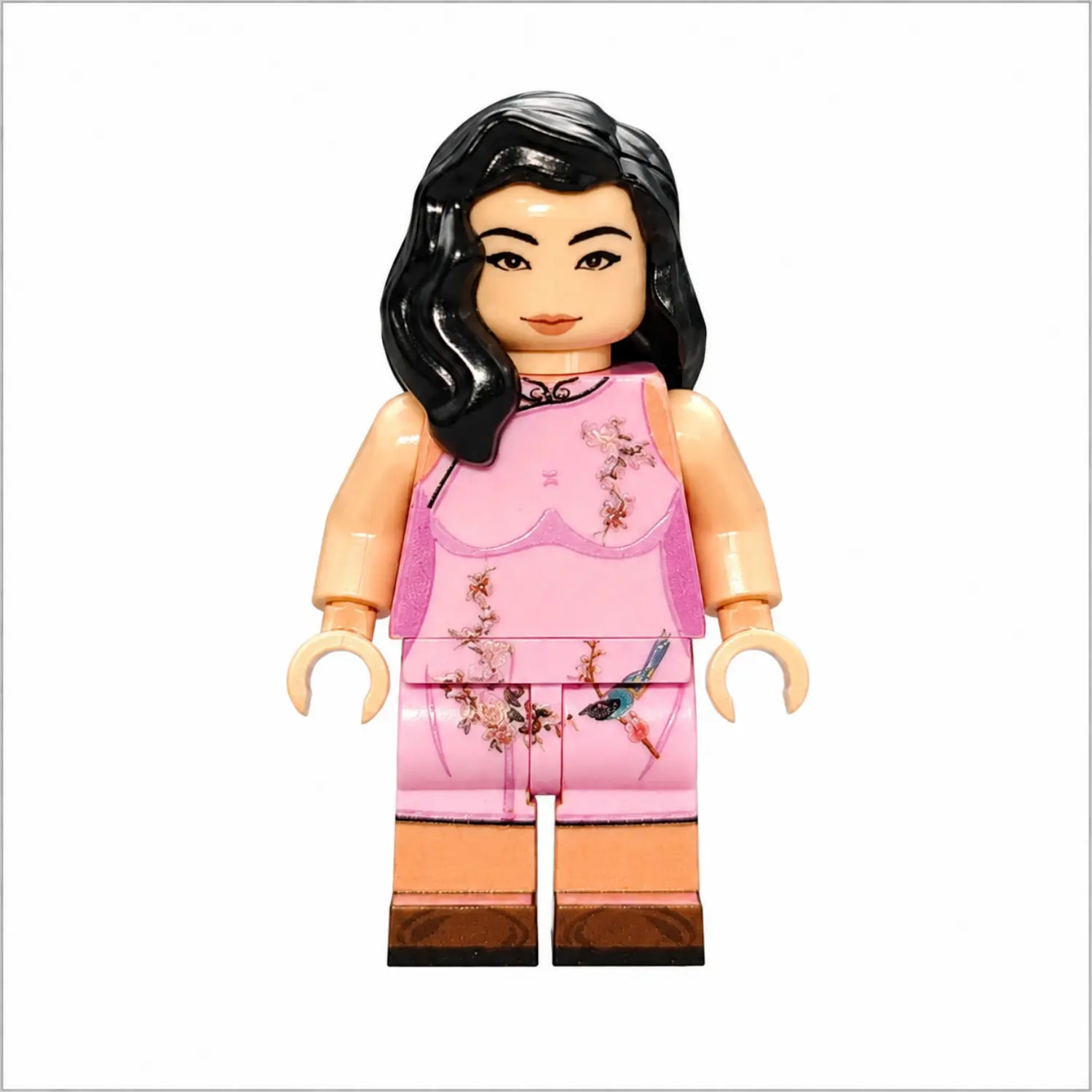
Character Identification: 1930s Shanghai Bund High-Society Lady
This beautifully crafted Custom Printed Brick Block Figure captures the romantic glamour of a fashionable woman from the Republic of China era (specifically the 1930s Golden Age of Shanghai). She is dressed in a sleeveless, tailored soft pink Qipao (Cheongsam) featuring traditional Chinese bird-and-flower artistry fused with a modern, westernized silhouette.
Detailed Visual Breakdown
-
Headpiece (The Classic Finger Wave): The figure features a glossy black hairpiece sculpted into vintage finger waves with a deep side part. This specific look perfectly mirrors the roaring twenties and thirties perm styles made famous by Shanghai’s jazz singers and movie stars.
-
Facial Details: She has a calm, confident expression featuring elegant arched eyebrows and warm red lipstick, encapsulating the retro aesthetic of classic Chinese calendar poster girls.
-
The Modernized Pink Qipao: * The Palette: The dress uses a soft, romantic baby pink base contrasted by vibrant magenta side panels that create a slimming, hourglass illusion.
-
The Collar: It features a traditional, rigid high mandarin collar outlined with delicate black piping and secured with a tiny traditional frog button (Pankou) at the throat.
-
The Cut: It is entirely sleeveless, reflecting the bold, modern fashion movements of urban Chinese women breaking away from conservative old-world styles.
-
-
Auspicious Bird & Blossom Printing: The true highlight of this figure is the stunning, high-definition UV printing on the dress:
-
A beautiful traditional Chinese songbird (resembling a magpie or swallow) with blue and black plumage is depicted perching on a flowering pink cherry or plum blossom branch across the lower waist and skirt.
-
A smaller, matching floral branch subtly accents her upper left chest.
-
-
Footwear: Her legs transition smoothly to match the dress, finishing in a pair of elegant dark brown high heels with gold trim.
Historical Background: The “New Woman” and Auspicious Symbolism
This figure is a perfect micro-representation of the cultural and social changes sweeping through cosmopolitan China during the mid-war era.
-
The Symbolism of the Magpie and Blossom (Xi Que Deng Mei): In traditional Chinese art, a magpie perched on a plum blossom branch is a deeply auspicious motif meaning “happiness up to one’s eyebrows” or a herald of joyous news. Incorporating this delicate brush-painting style onto a vibrant pink fabric was a favorite choice for young, high-society Shanghainese women during festive gatherings, spring outings, or high-class tea parties on the Bund.
-
The Rise of Hai-pai (Shanghai Style): During the 1930s, Shanghai was celebrated as the “Paris of the East.” Wealthy socialites, writers, and artists rejected the heavy, concealing robes of the old imperial dynasty. Instead, they took the traditional Manchu garment and hybridized it with Western tailoring—shortening the sleeves, tightening the waist, and adding slits—to celebrate the natural grace of the “New Woman” (Xin Nüxing).
-
A Pastel Revolution: The choice of soft pastels like pink combined with bold, contrasting side inserts showed the influence of Western Art Deco trends that were simultaneously dominating Shanghai’s architecture, interior design, and textiles.
Reviews
There are no reviews yet