

Variations
Introduction
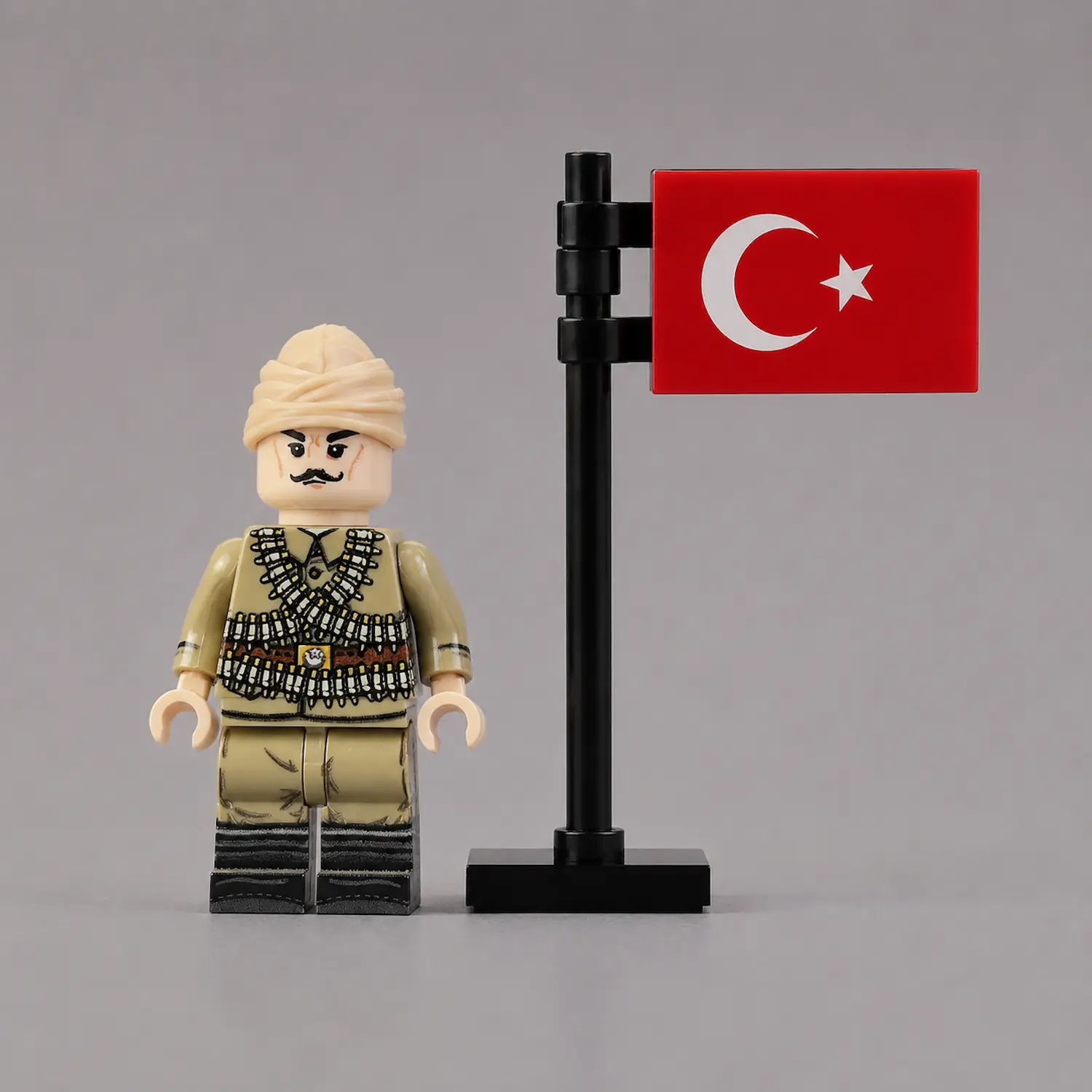
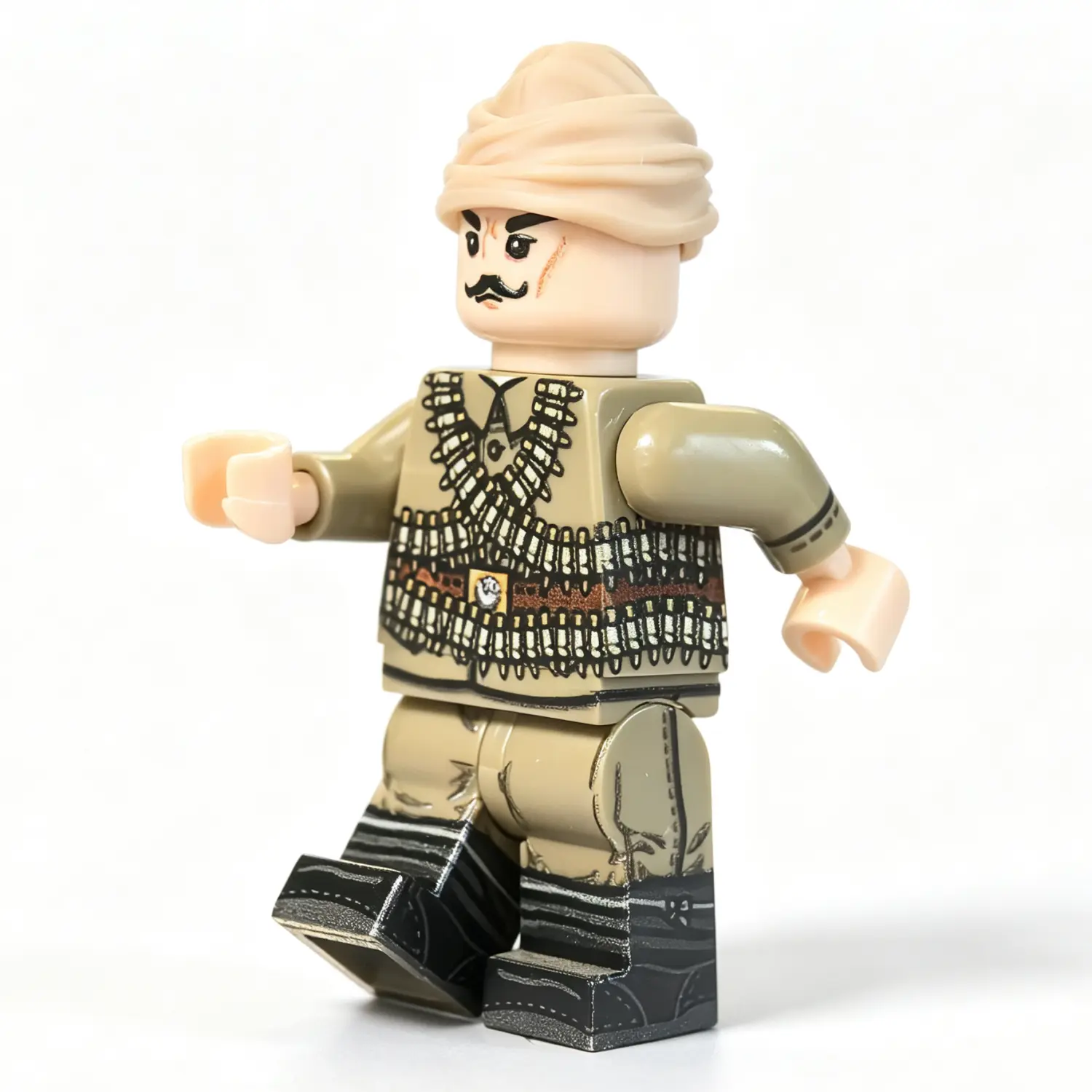
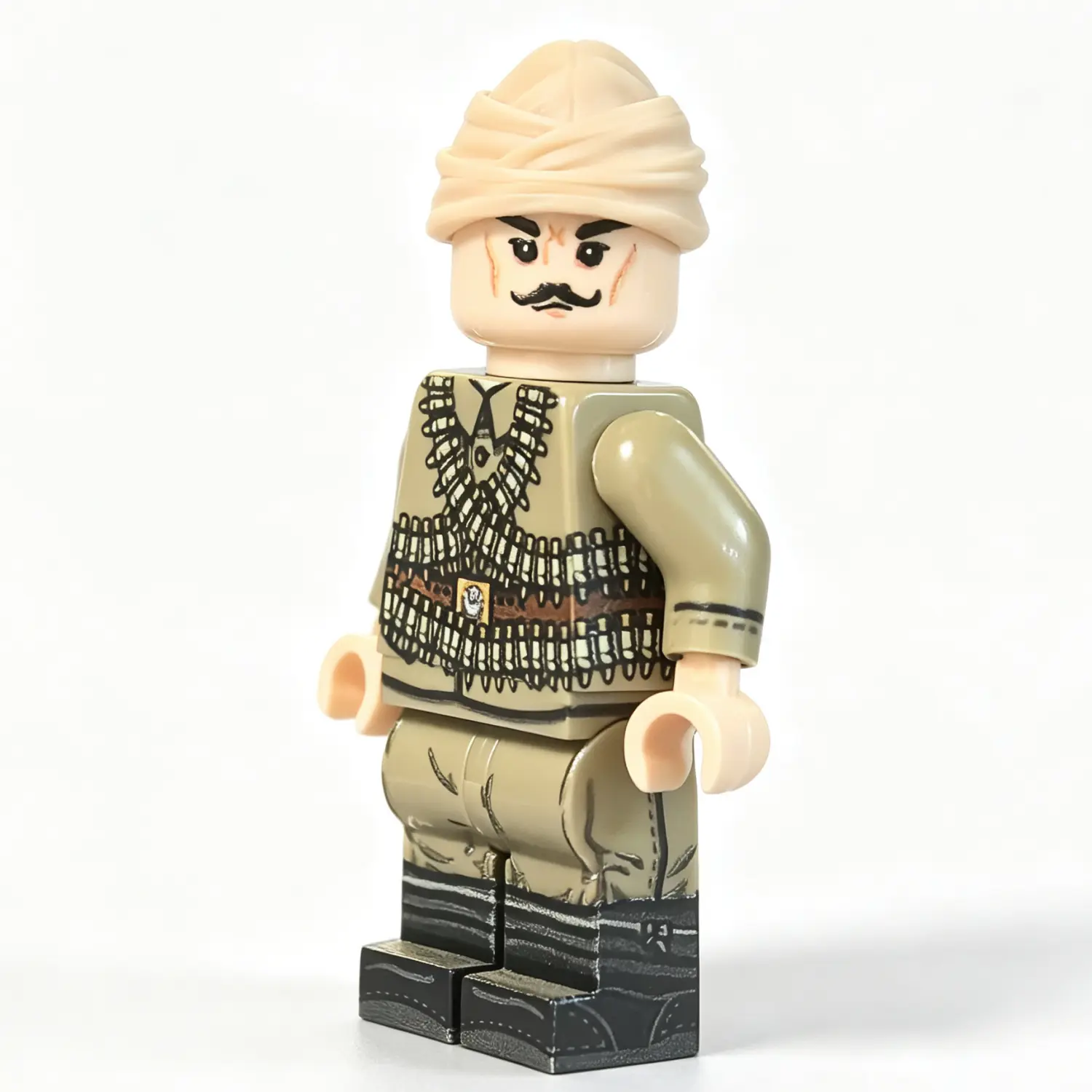
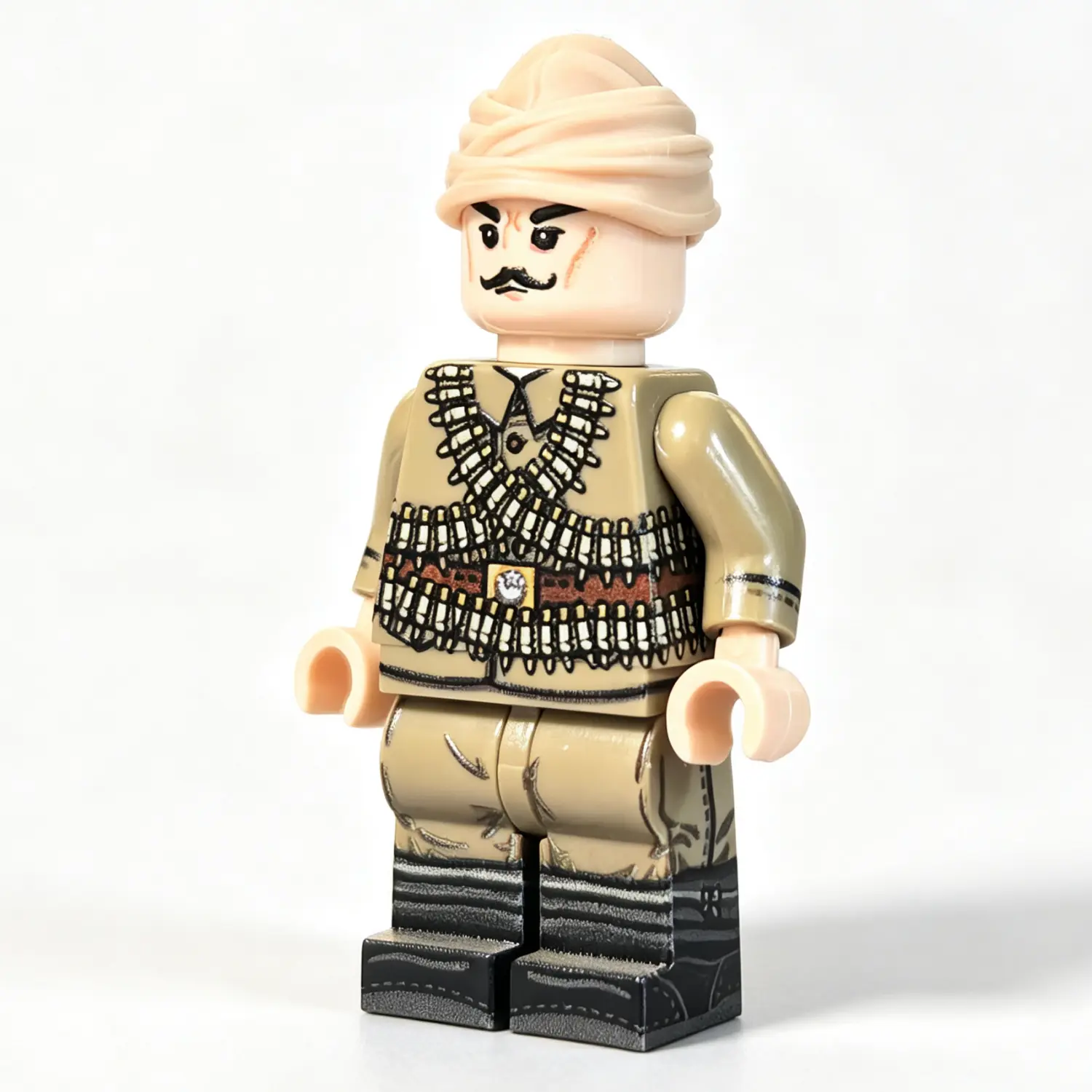
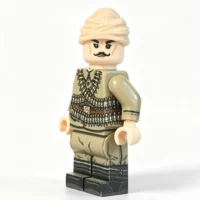
these images display a single, highly detailed custom combat figure from different perspectives.
Here is the detailed English description, specific character identification, and historical background for this heavily armed guerrilla fighter.
Character Identification: The Ottoman / Turkish Irregular
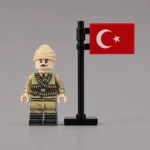
This Custom Printed Brick Block Figure represents an irregular guerrilla fighter—a militiaman—from the chaotic period immediately following the end of World War I (circa 1918–1923) during the collapse and partitioning of the Ottoman Empire. Specifically, he reflects the iconic look of the Kuva-yi Milliye (National Forces) or similar regional militias in the Middle East and Anatolia, characterized by their lack of standard uniforms and their heavy reliance on massive quantities of carried ammunition.
Detailed Visual Breakdown
Specific Name: Post-WWI Ottoman Irregular Militiaman (Bandolier Variant)
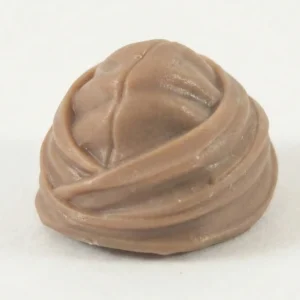
Headgear (The Turban): The figure wears a wrapped, light khaki/tan turban. During the post-war period, irregular fighters often wore traditional, civilian, or improvised headwear rather than standardized military helmets or fezzes, allowing them to blend into the local population.
Facial Features: He features a fierce, battle-hardened expression with a classic, thick black Middle Eastern mustache. A printed scar across his left eye and cheek tells the story of a veteran who has survived brutal close-quarters combat.
Upper Body & Tactical Gear (The Bandoliers):
He wears a simple, unadorned khaki tunic.
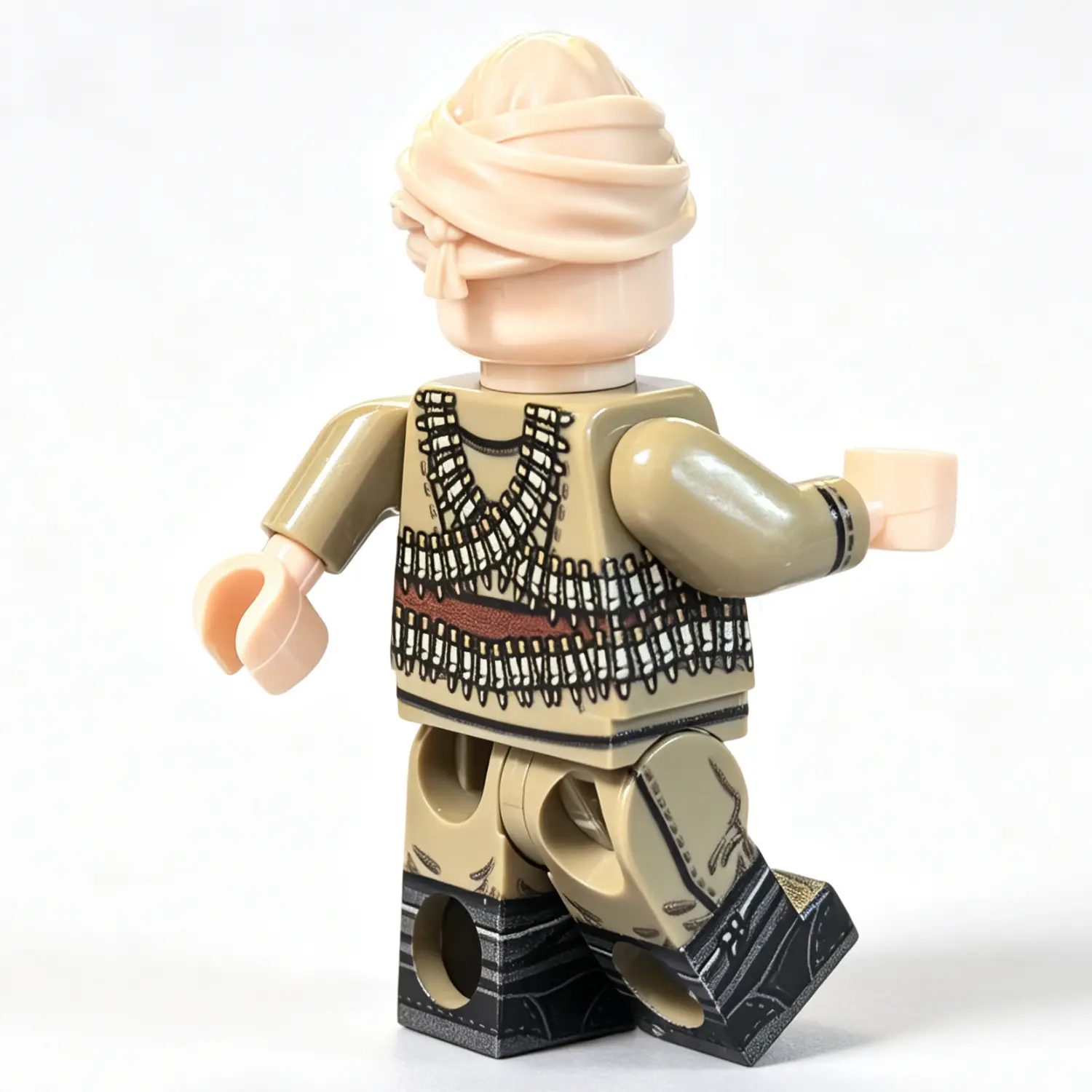
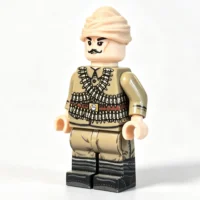
The Ammo Belts: The absolute defining feature of this figure is the incredible, 360-degree printing of bullet bandoliers. He wears two bandoliers crisscrossed over his chest and shoulders, and several more wrapped tightly around his waist like a cummerbund.
The Belt Buckle: Beneath the waist bandoliers, a brown leather belt is visible, featuring a silver buckle printed with what appears to be a crescent or star emblem, hinting at his Ottoman allegiance.
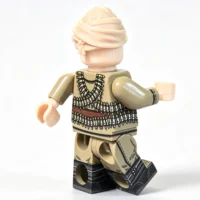
The rear view (
详情-03.webp) perfectly demonstrates the continuous printing of the crisscrossed bullets wrapping fully around his back.
Lower Body & Footwear: He wears matching khaki trousers wrapped in dark grey/black puttees (fabric leg wraps), ending in black combat boots. This mix of civilian clothing and military-surplus leg wear is perfectly accurate for a militia fighter of this era.
Historical Background: The Collapse of an Empire
This figure embodies a period of intense global upheaval, representing the fighters who rose from the ashes of a fallen empire.
The Post-WWI Power Vacuum: After the Ottoman Empire was defeated in World War I (1918), the Allied powers attempted to partition its territories. The regular Ottoman army was largely disbanded or severely restricted by armistice treaties.
The Rise of the Militias: In response to the foreign occupation of Anatolia and the Middle East, local populations, former soldiers, and regional leaders formed irregular militia groups. In what would become modern Turkey, these were known as the Kuva-yi Milliye (National Forces). They waged a fierce guerrilla war against occupying armies.
The “Bandolier” Aesthetic: Why so many bullets? Because irregular militias did not have organized supply trains or logistical support like a regular army. A fighter had to carry all his ammunition on his person. Draping oneself in heavy canvas or leather bullet bandoliers was a practical necessity for prolonged firefights in the mountains and deserts, and it quickly became the legendary, intimidating silhouette of the Ottoman/Turkish guerrilla fighter.
Reviews
There are no reviews yet