

Variations
-
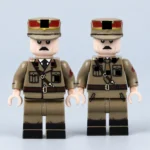
German SA Leader Ernst Röhm (Service Uniform) (WWII) – Custom Printed Brick Block Figure
$24.99 -
German SA Leader (Ernst Röhm – Service Tunic Variant) (WWII) – Custom Printed Brick Block Figure
$24.99 -
German Kepi-Style Cap (Schaftmütze) WWII – Custom 3D Printed Miniature Accessory Parts Pieces for Brick Block Figures
$9.99
Introduction
this figure represents a prominent and highly controversial historical figure from the early Nazi regime, outfitted in a more formal variation of his organizational attire.
Here is the detailed English description, specific character identification, and historical background for this custom military figure.
Character Identification: The Chief of Staff of the SA
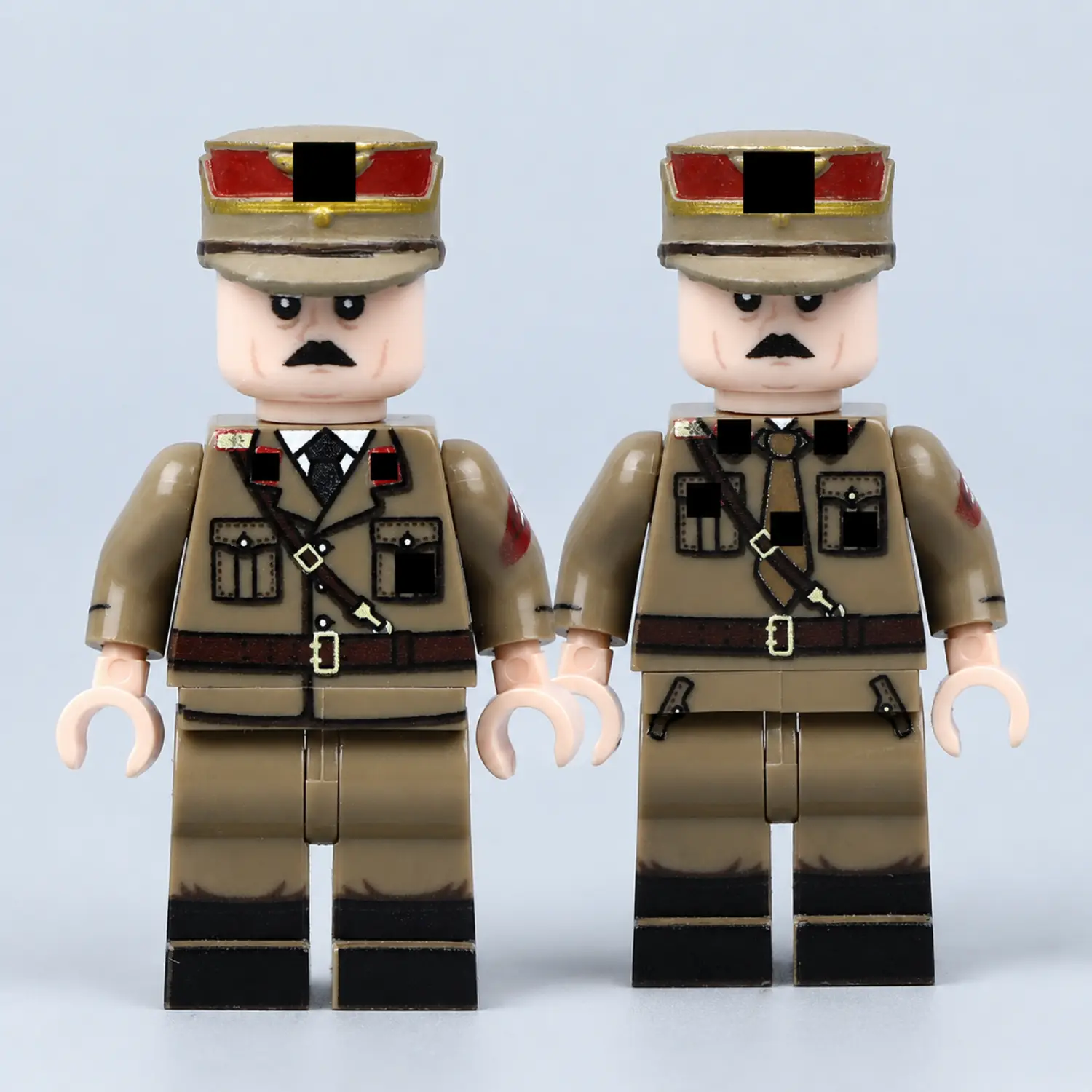
This Custom Printed UV Brick Block Figure portrays Ernst Röhm, the commander and co-founder of the Sturmabteilung (SA), the Nazi Party’s original paramilitary wing. Unlike the basic brown shirt variant, this specific figure depicts Röhm wearing the more formal SA Service Tunic (Dienstrock), which was adopted by higher-ranking officers as the organization grew in power and bureaucracy.
Detailed Visual Breakdown
Specific Name: German SA Leader Ernst Röhm / SA Chief of Staff (Service Uniform Variant)
Headgear (The SA Kepi): He wears the distinctive brown SA kepi (Schaftmütze). The top edge features a gold cord, and the red colored trim historically denotes his position in the Supreme SA Leadership. A prominent black censorship square covers the front center where the party eagle insignia would be.
Facial Features: The figure is printed with a stern, heavy-set face featuring his characteristic thick, dark mustache, accurately capturing Röhm’s historical likeness.
Upper Body Uniform (The Service Tunic):
Instead of a simple shirt, he is dressed in an open-collar, four-pocket khaki-brown Service Tunic (Dienstrock).
Beneath the tunic’s lapels, he wears a formal white collared shirt and black necktie.
A brown leather cross-strap (Sam Browne belt) is worn diagonally across his chest.
Censored Details: To comply with international platform regulations, the manufacturer has applied heavy self-censorship. Black squares cover his collar tabs (rank insignias), his left breast pocket (medals/party badges), and his left sleeve.
The Armband: Visible in the “Side-Left” view, the traditional red party armband with a white circle and a black swastika can be seen, partially obscured by the censorship square.
Lower Body: He wears matching brown riding breeches (Breecheshosen) tucked neatly into highly detailed, 360-degree printed black leather officer boots.
Historical Background: The Formalization of the Brownshirts
This figure captures a specific era of the SA, reflecting its peak power before its sudden downfall.
The Evolution of the Uniform: Originally, the SA were known simply as the “Brownshirts” because they wore cheap, surplus tropical shirts from Germany’s former African colonies. However, as the Nazi Party seized power and Ernst Röhm became the Stabschef (Chief of Staff), the SA leadership adopted more formal, tailored uniforms—like the open-collar tunic and tie depicted on this figure—to mirror the professionalism of the regular army (Reichswehr).
A State Within a State: By early 1934, Röhm commanded millions of SA men, vastly outnumbering the official German army. He viewed his SA as the true revolutionary core of the Nazi movement and intended for his paramilitary force to absorb and replace the traditional military entirely.
The Night of the Long Knives (1934): Röhm’s massive, unruly army and his radical ambitions deeply threatened the traditional German military generals and conservative elites. Needing the army’s support to secure absolute power, Adolf Hitler turned on his old friend. During the violent purge known as the Night of the Long Knives, the SS arrested and executed the top SA leadership. Röhm was assassinated in his cell, ending the SA’s dominance and securing the supremacy of the SS and the regular army.
Reviews
There are no reviews yet