

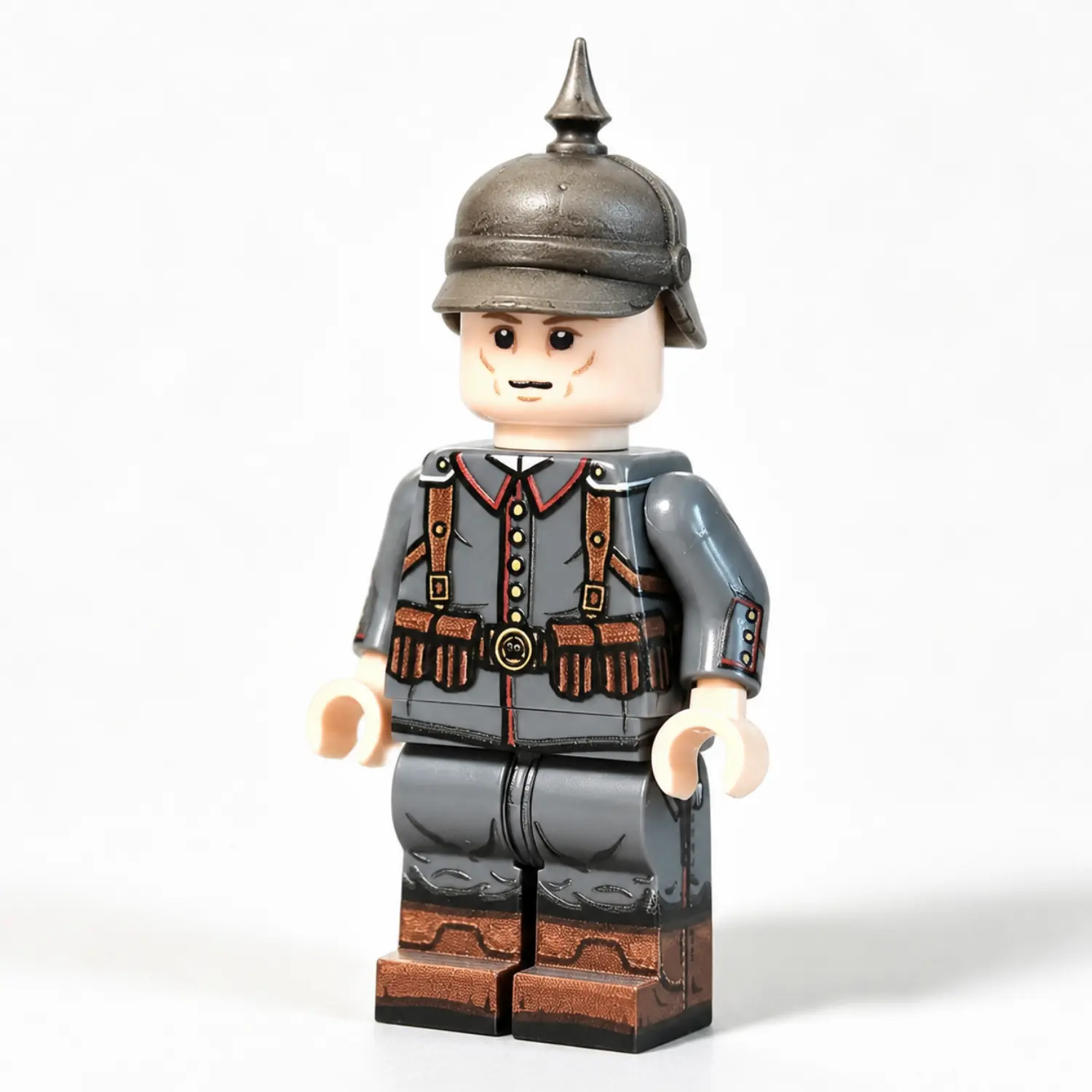
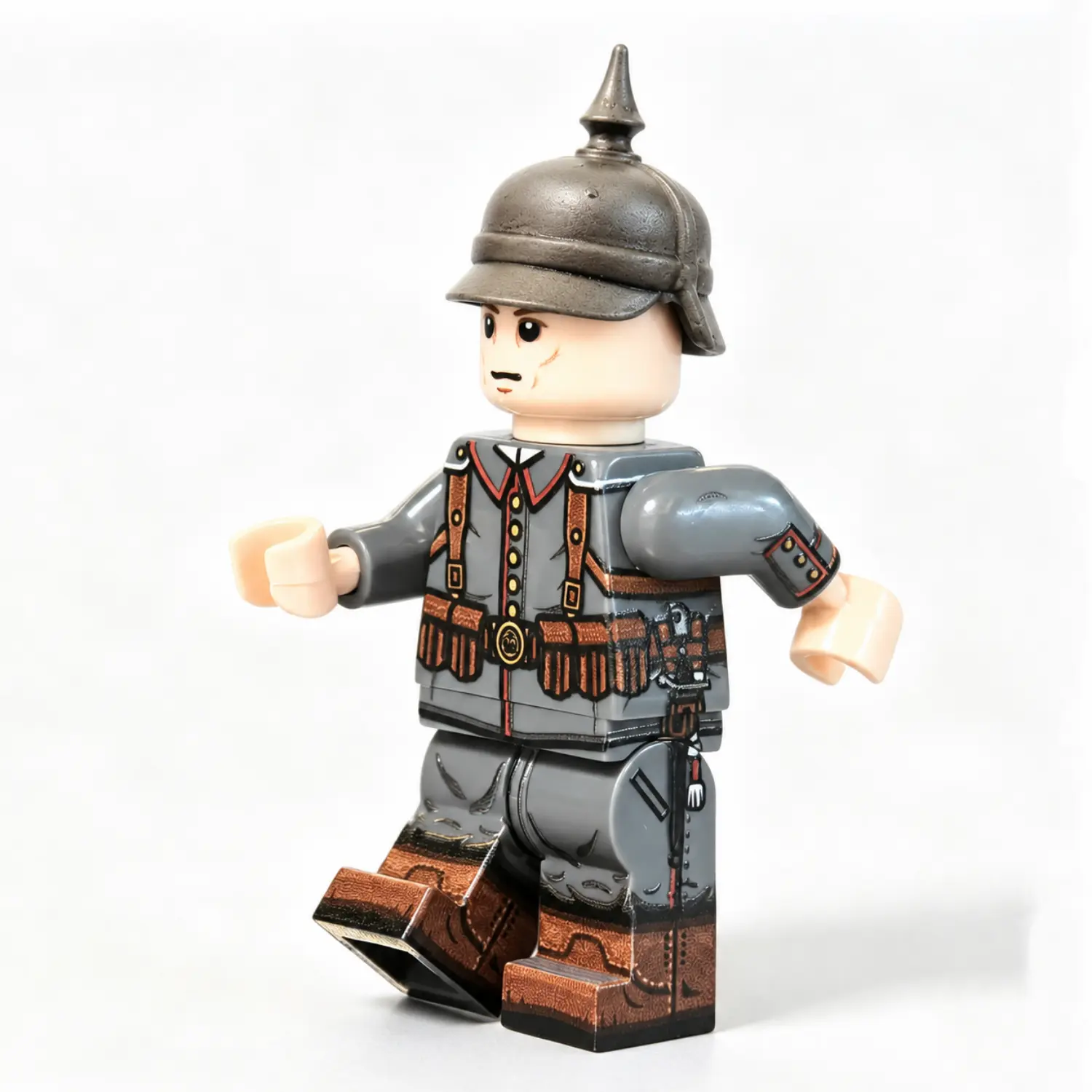
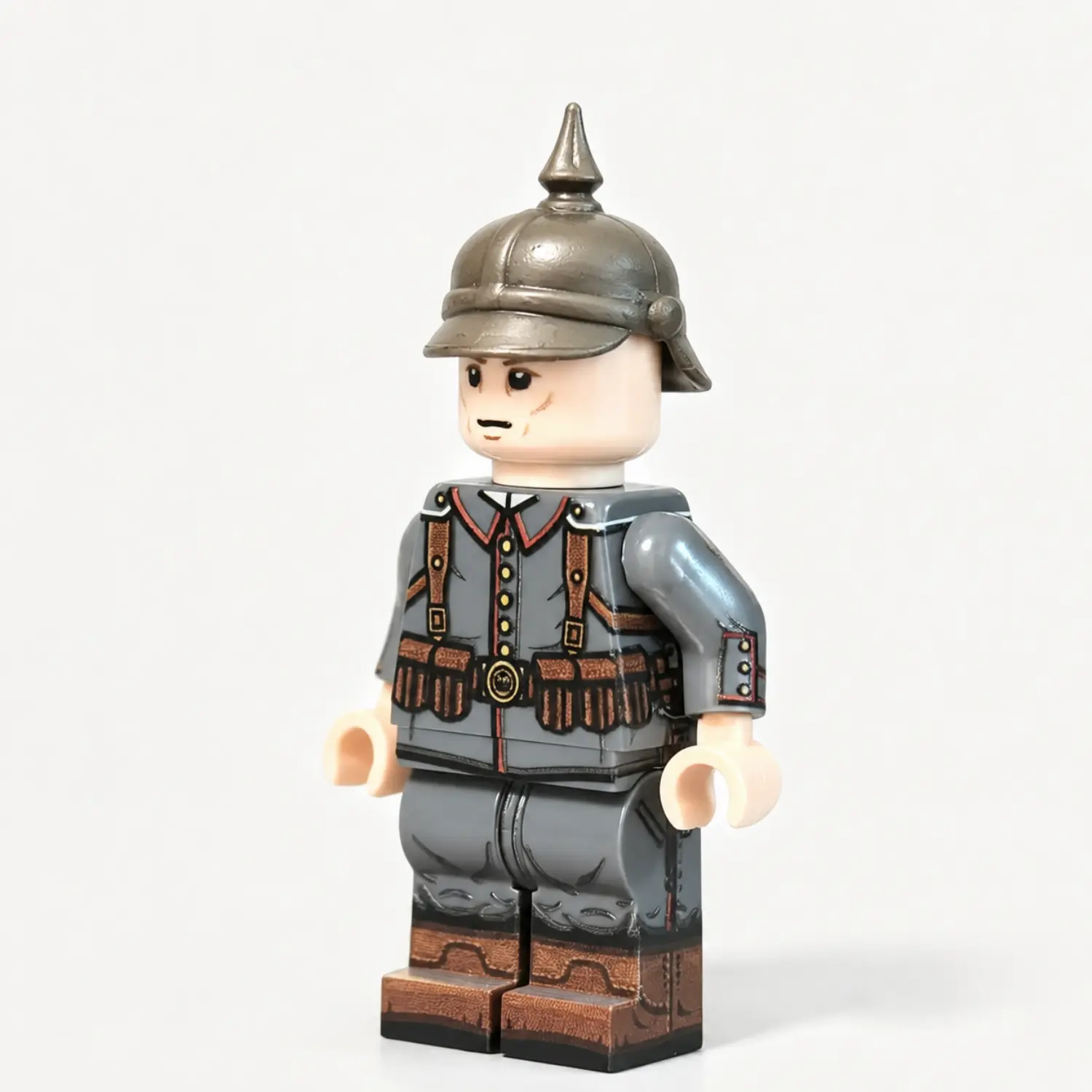
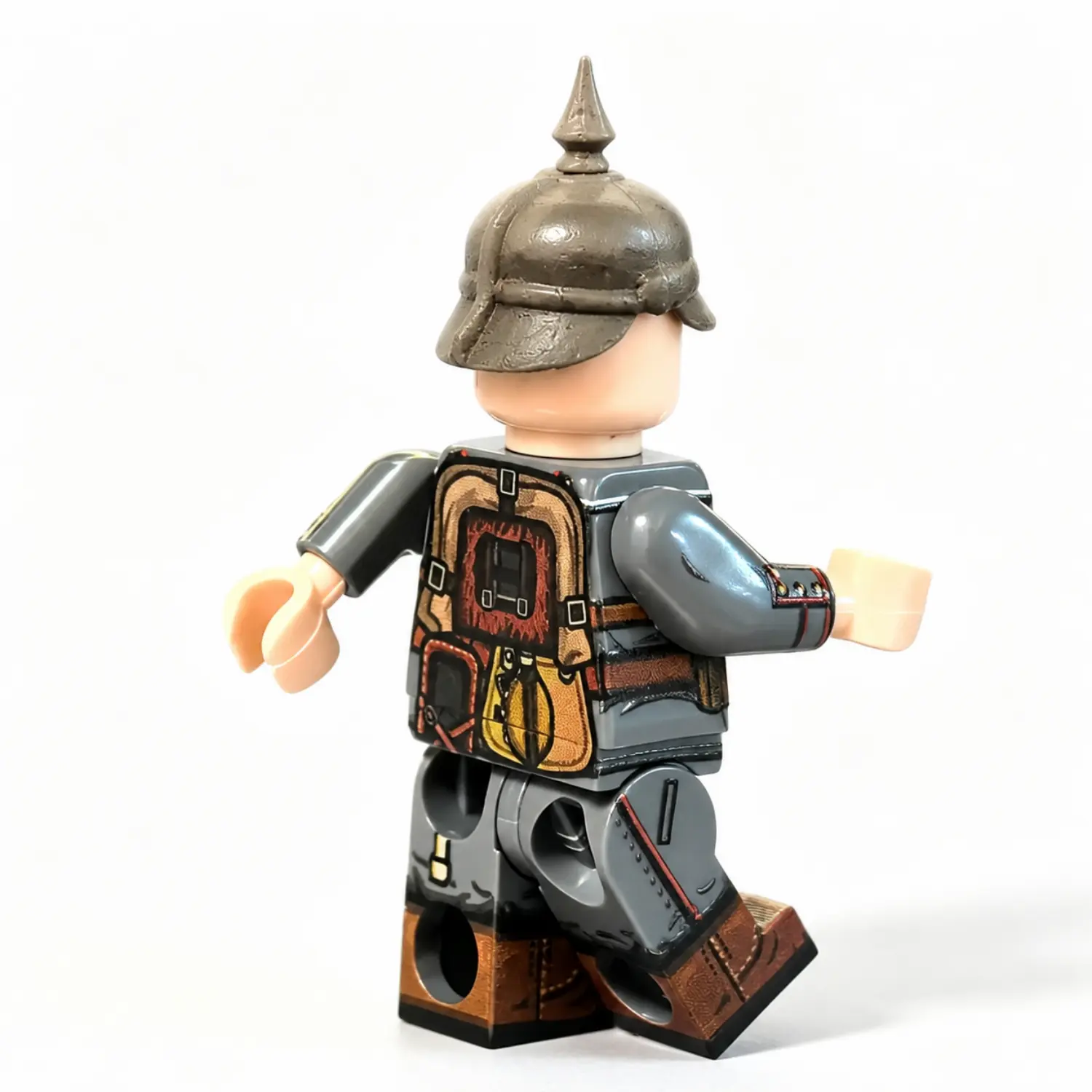
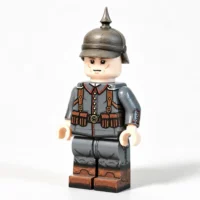
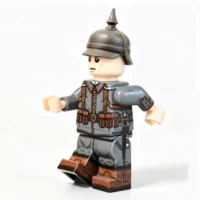
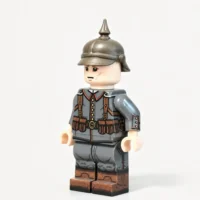
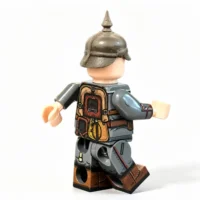
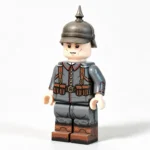
this showcases a single, highly detailed custom building block figure.
This character represents a frontline infantryman of the Imperial German Army (Deutsches Heer) at the outbreak of the First World War.
Here is the detailed English description, specific character identification, and historical background for this early-war soldier.
Character Identification: The 1914 Frontline Infantryman
-
Specific Name: WWI Imperial German Infantryman (Early War / 1914) / Infanterist
-
Role: A standard enlisted rifleman marching into combat during the opening months of World War I (circa 1914–1915), before the realities of trench warfare drastically altered military equipment.
Detailed Visual Breakdown
-
Headgear (The Combat Pickelhaube): The figure wears the iconic Spiked Helmet (Pickelhaube). Unlike parade versions with shiny black leather and bright brass, this helmet is molded in a muted, dark grey tone. This represents either the canvas field cover (Überzug) used to camouflage the shiny helmet in combat or a late-1914/1915 metal Ersatz (substitute) helmet.
-
Facial Features: He features a disciplined, weary expression with subtle dirt and scuff marks, reflecting the grueling marches and early combat of the 1914 offensives. He sports a period-accurate thin mustache.
-
Upper Body Uniform (The Feldgrau Tunic):
-
He is dressed in the standard Field Grey (Feldgrau) M1907/10 enlisted tunic.
-
Insignia & Details: The tunic features highly accurate red piping printed down the front closure, around the collar, and on the cuffs. This colored piping was a holdover from 19th-century uniforms to denote infantry branches.
-
-
Tactical Gear (The Webbing):
-
Front: Over his tunic, he wears printed brown leather Y-straps connected to a brown waist belt with a brass Imperial buckle. Attached to the belt are detailed Model 1909 ammunition pouches, designed to hold stripper clips for the Gewehr 98 rifle.
-
Side: Visible on his left hip is a printed bayonet (Seitengewehr) in its scabbard, complete with a tactical knot.
-
Back (The Tornister Pack): The rear view reveals a stunningly detailed printed backpack known as a Tornister. It features the historically accurate reddish-brown calfskin fur flap, surrounded by brown canvas straps. A yellow/tan mess tin (Kochgeschirr) and a rolled grey blanket/shelter-half are strapped to the outside of the pack.
-
-
Lower Body: He wears matching Feldgrau trousers with red piping running down the outer seams. These are tucked into tall brown leather marching boots (Marschstiefel), commonly known as Jackboots.
Historical Background: The March to Paris
This figure perfectly encapsulates the classic appearance of the German army as it initiated the Schlieffen Plan in August 1914.
-
The Feldgrau Innovation: Before the 20th century, armies wore bright, colorful uniforms. The German military was among the first to realize that modern smokeless powder and long-range rifles made brightly colored troops easy targets. They transitioned to the muted Field Grey (Feldgrau) uniform depicted here, which was one of the first modern attempts at mass military camouflage.
-
The Vulnerable Helmet: The spiked Pickelhaube was a symbol of Prussian martial pride, but it was disastrously obsolete for modern warfare. Originally made of boiled leather, it offered absolutely no ballistic protection against artillery shrapnel. The shiny spike also made soldiers visible over trench parapets. To reduce visibility, soldiers were issued cloth covers (Überzug), which this figure’s muted helmet attempts to replicate. By 1916, it was entirely replaced by the steel Stahlhelm.
-
The Burden of the Infantryman: The Tornister printed on the back of the figure carried the soldier’s entire life: spare clothes, rations, grooming kits, and ammunition. During the rapid advances of 1914, German infantrymen routinely marched over 20 miles a day carrying this heavy load in the sweltering August heat.
Reviews
There are no reviews yet