

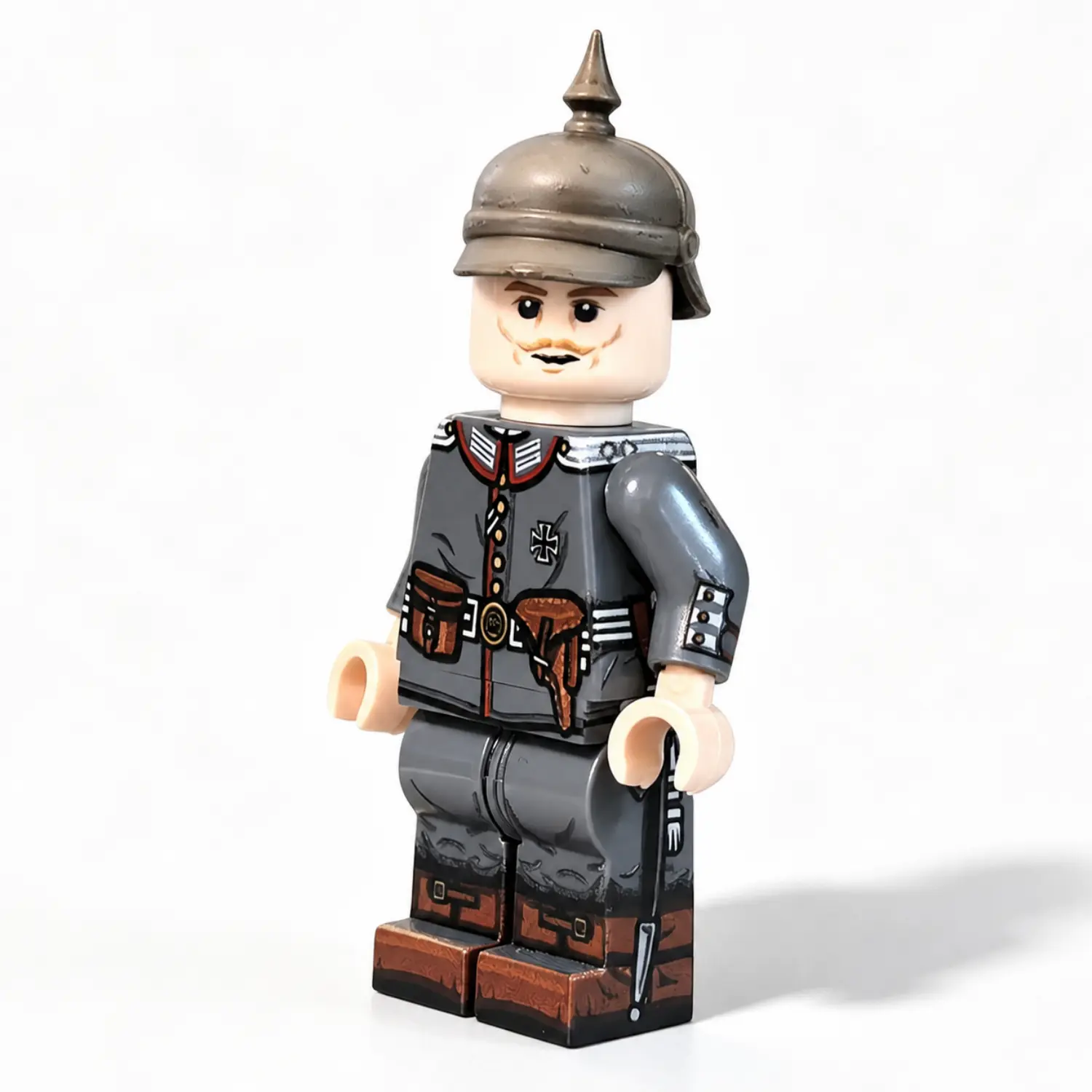
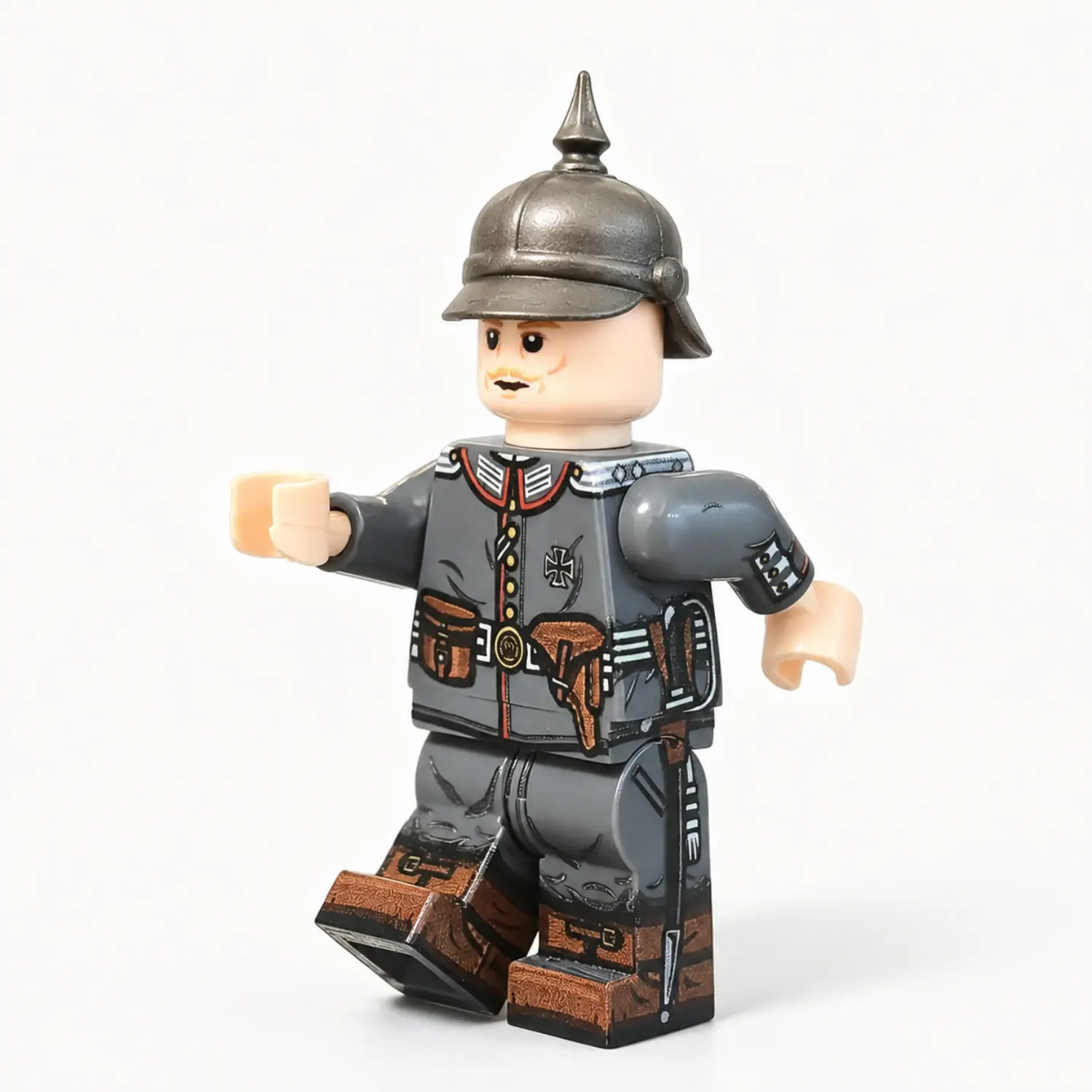
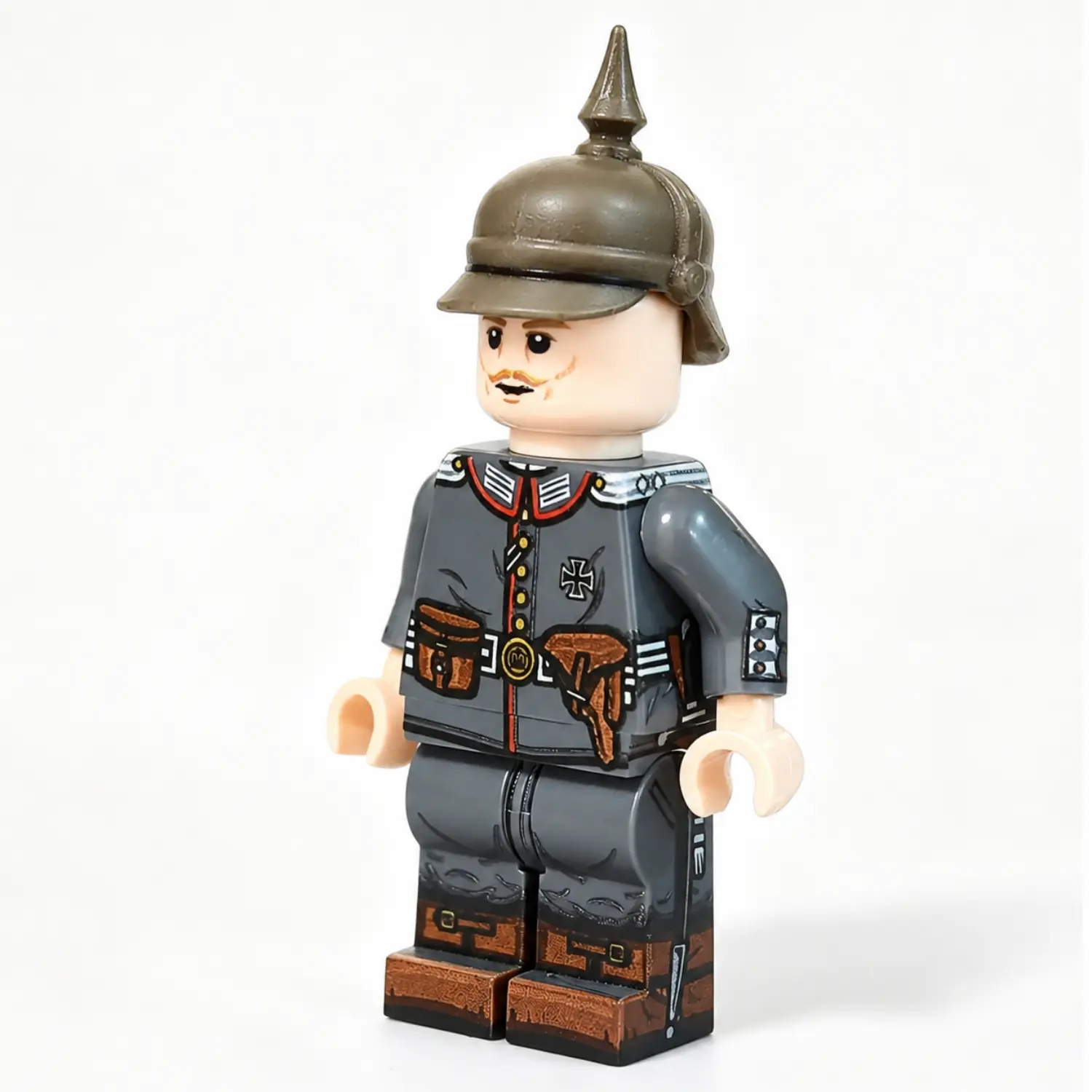
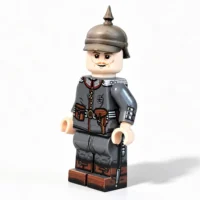
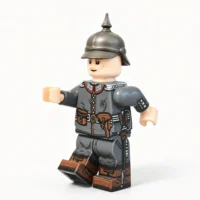
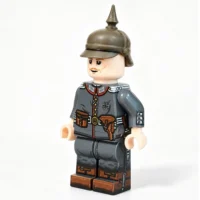
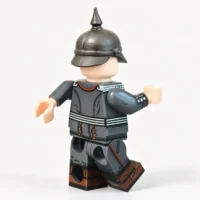
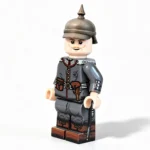
this showcases a single, highly detailed custom building block figure.
This character represents a junior officer of an elite regiment within the Imperial German Army (Deutsches Heer) during the opening stages of the First World War.
Here is the detailed English description, specific character identification, and historical background for this early-war officer.
Character Identification: The Elite Junior Officer
-
Specific Name: WWI Imperial German Guards Lieutenant (1914) / Garde-Leutnant
-
Role: A commissioned junior officer (Lieutenant / Leutnant) tasked with leading a platoon or company of elite Prussian Guards infantry into combat during the initial 1914 campaigns of World War I.
Detailed Visual Breakdown
-
Headgear (The Covered Pickelhaube): The figure wears the traditional Spiked Helmet (Pickelhaube). Like the frontline infantrymen, it is molded in a dark, muted grey. This accurately reflects the canvas field cover (Überzug) that officers wore over their shiny leather and brass helmets to prevent sunlight from reflecting off the spike and drawing enemy sniper fire.
-
Facial Features: He features a calm, confident expression, complete with a well-groomed light-brown mustache, typical of the aristocratic officer class of the era.
-
Upper Body Uniform (The Guards Feldgrau Tunic):
-
He is dressed in the Field Grey (Feldgrau) officer’s tunic.
-
The Guards Lace (Litzen): The most defining feature of this specific figure is the double silver braids (Doppellitzen) printed on his collar and cuffs. In the Imperial German Army, this specific silver lace was a prestigious mark denoting that the wearer belonged to a Guards Regiment (Garde-Regiment).
-
Rank & Awards: He wears silver shoulder boards denoting his officer rank. Prominently printed on his left breast is the Iron Cross 1st Class (Eisernes Kreuz 1. Klasse), indicating he has already demonstrated significant bravery in combat.
-
-
Tactical Gear (The Officer’s Rig):
-
The Belt: Unlike the enlisted men’s leather belts, he wears a printed black-and-silver striped officer’s waist belt.
-
Equipment: As an officer, he does not carry a rifle or heavy ammo pouches. Instead, his belt features a brown leather pistol holster on the left side and a small brown leather pouch (likely for a compass or field binoculars) on the right.
-
Sidearm: Visible in the side-profile images, a long officer’s sword or dagger scabbard is printed hanging from his left hip.
-
-
Lower Body: He wears matching Field Grey trousers with red command piping down the outer seams, tucked into tall, pristine brown leather officer’s riding boots.
-
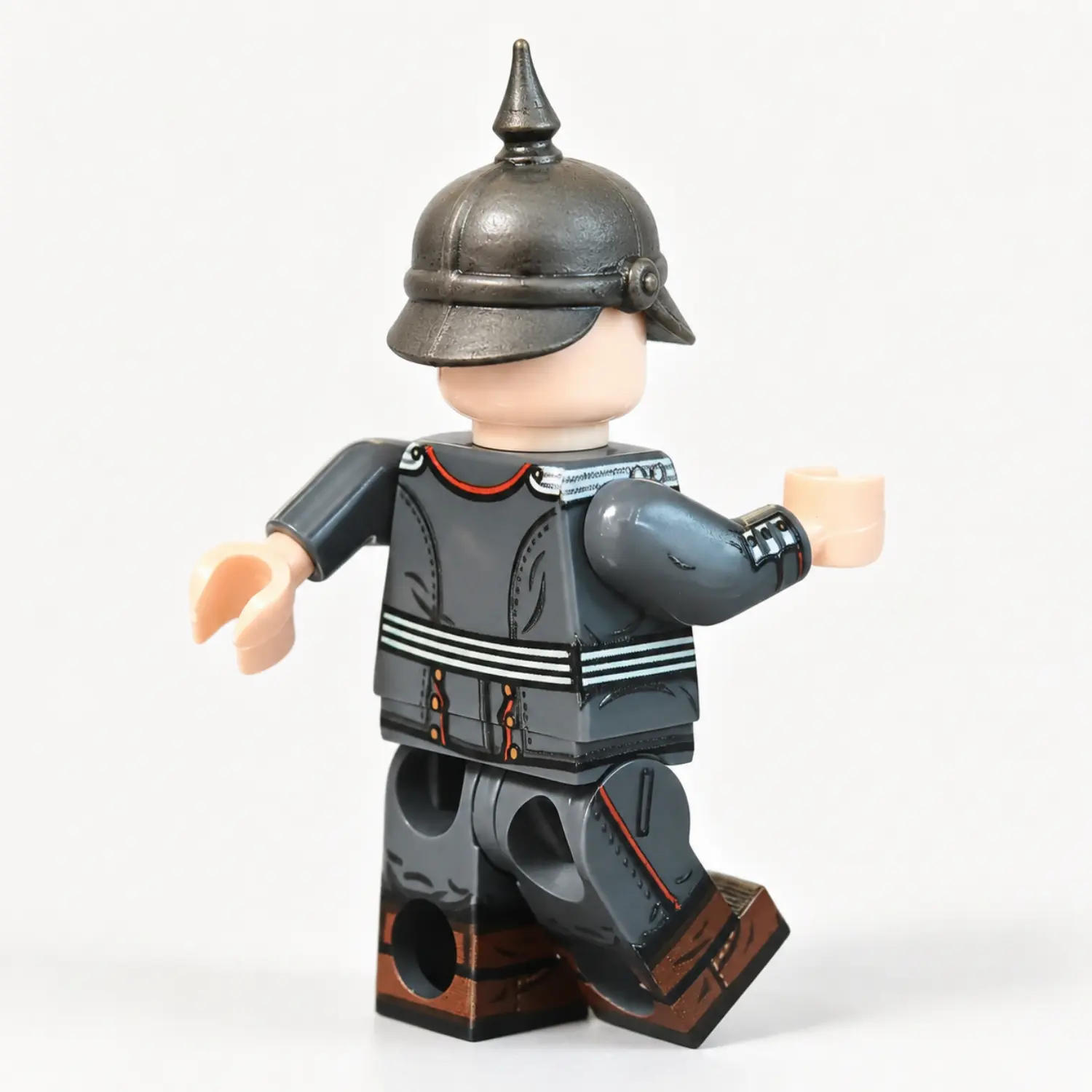
Back Profile (from “10_43_57 PM.webp”): The rear view shows the clean, tailored tailoring of the officer’s tunic, distinct from the heavily burdened enlisted men. The red piping borders the rear skirt flaps, and the striped officer’s belt wraps seamlessly around the waist.
Historical Background: The Prussian Guard in 1914
This figure perfectly captures the aristocratic and highly disciplined nature of the Imperial German officer corps as they marched into the Great War.
-
The Elite Guards (Garde-Korps): The Prussian Guard was the most prestigious unit in the Imperial German Army, serving as the personal bodyguard to the Kaiser and the premier shock troops of the military. Their uniforms were distinguished by the silver Litzen (braids) on the collar and cuffs. Officers in these regiments were almost exclusively drawn from the German nobility (Junker class).
-
Leading from the Front: In 1914, junior officers like Lieutenants were expected to lead their men directly from the front, often standing while their men took cover. Armed only with a pistol and a sword, they suffered staggeringly high casualty rates during the early battles of the Frontiers and the Marne.
-
The Evolution of Camouflage: While the army had adopted the camouflaged Field Grey to avoid the deadly accurate fire of modern rifles, the officers’ distinct striped belts, shiny boots, and trailing swords easily gave their ranks away to French and British marksmen. As the war progressed into the mud of the trenches, officers would quickly abandon these flashy items in favor of enlisted gear to survive.
Reviews
There are no reviews yet