

Variations
Introduction
Please note that these brick figures are all compatible with major standard building blocks.
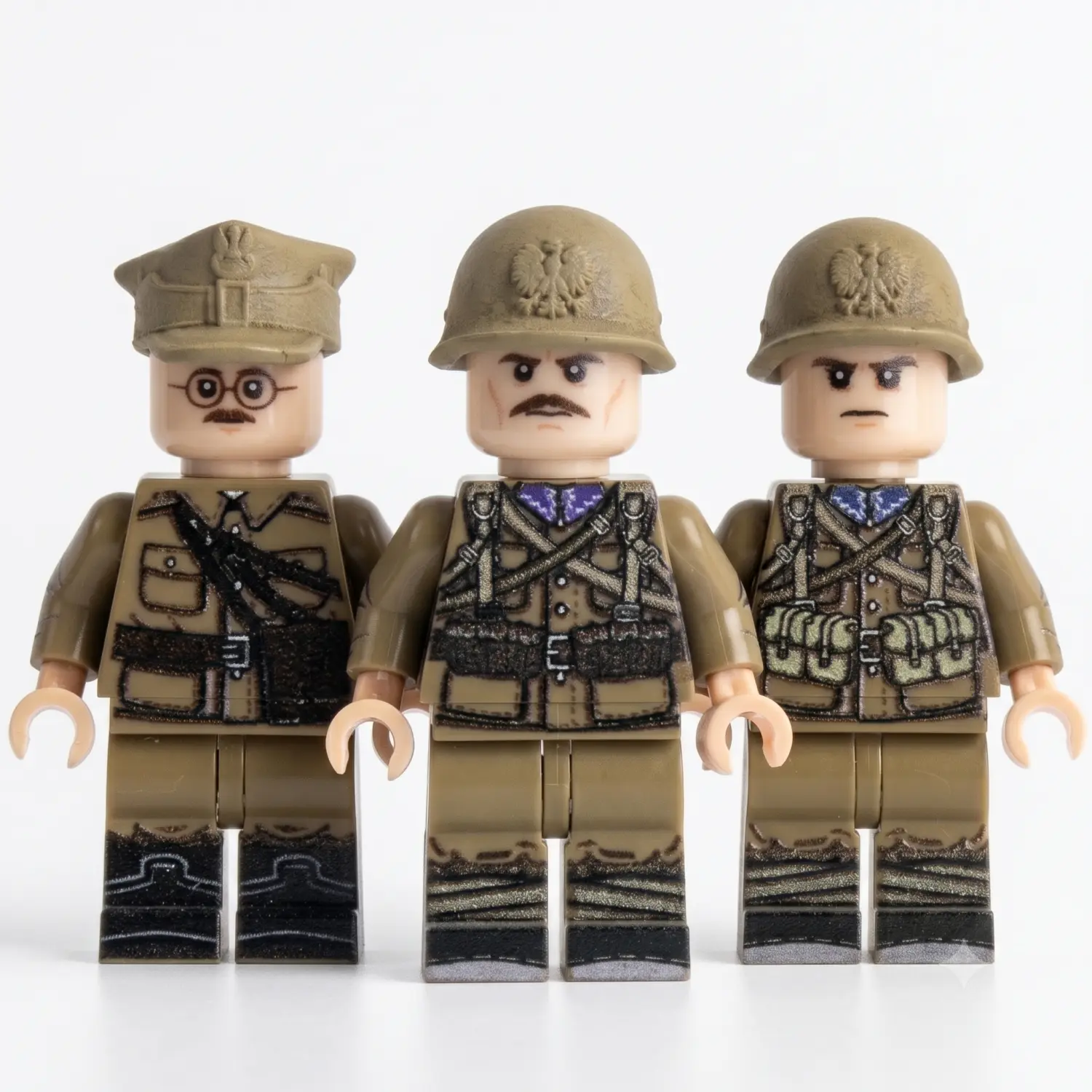
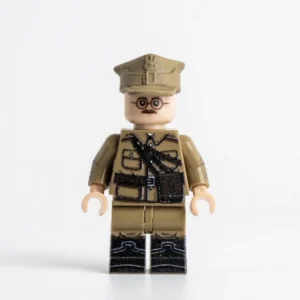
1. WWII Polish Army Captain (Left Figure)
-
Character Identification: WWII Polish Army Captain (Kapitan)
-
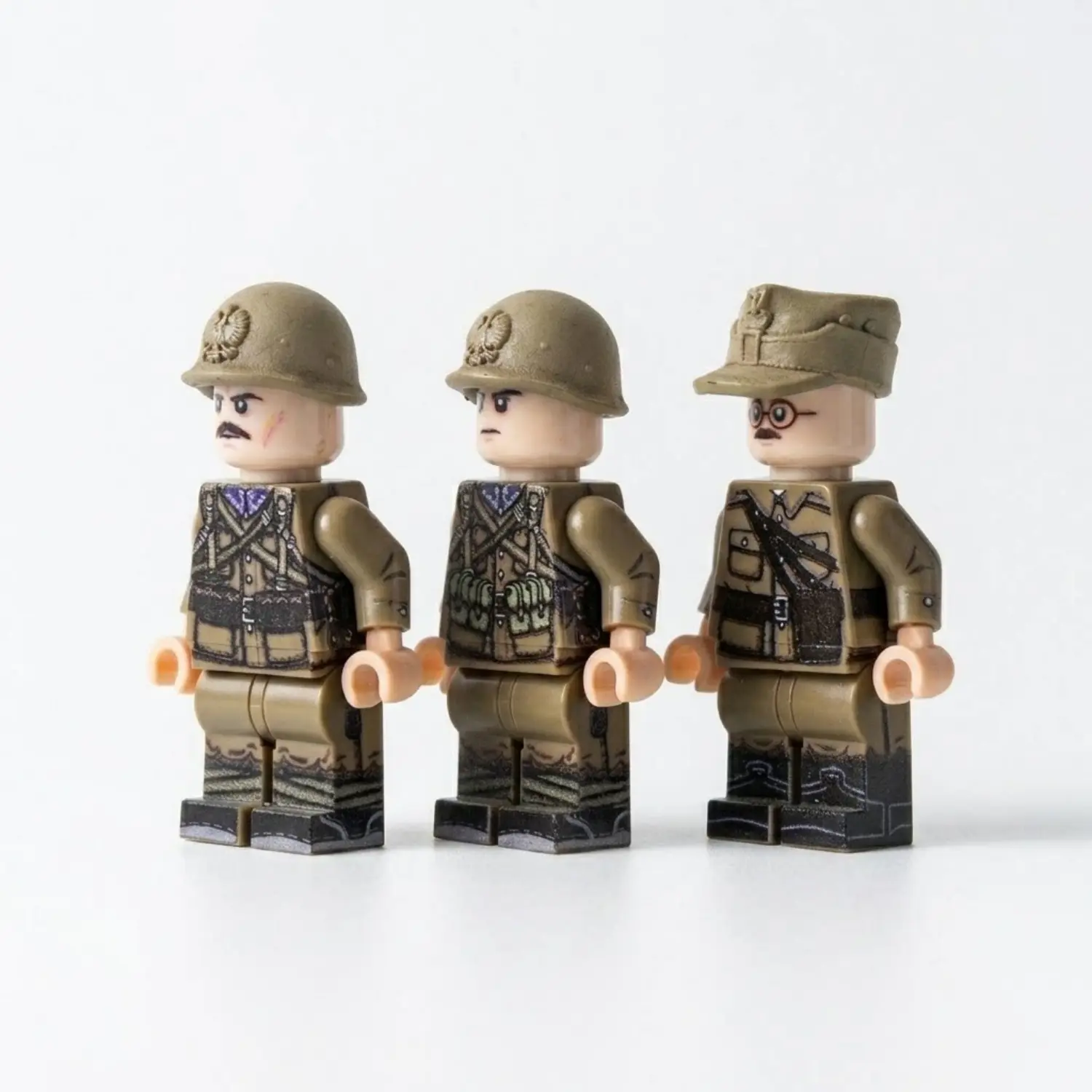
Detailed Character Description: This figure represents a commanding officer from the Second Polish Republic. He wears a custom-molded khaki rogatywka, the traditional four-pointed Polish field cap, which features a sculpted crowned Polish eagle insignia on the front. His face is detailed with round wire-rimmed spectacles and a prominent mustache. The torso features a tailored khaki officer’s field tunic. Over this, he wears a printed black leather cross-belt harness equipped with a black leather map case or dispatch bag resting at his waist. The legs feature khaki riding breeches that transition into highly detailed, polished black leather officer’s riding boots (oficerki) with printed crease lines.
-
Historical Background: During the 1939 September Campaign, Polish officers like this Captain were responsible for leading infantry companies against the dual invasions of Nazi Germany and the Soviet Union. Polish officers of this era were required to purchase their own uniforms and gear, which is why their equipment—such as the tailored riding boots, leather cross-belts, and map cases—distinctly differed from standard enlisted infantrymen. The rogatywka cap is an iconic symbol of Polish military heritage dating back to the 18th century.
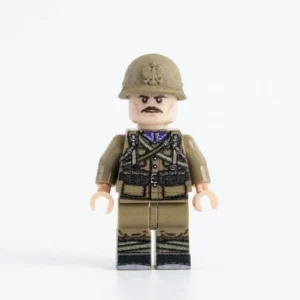
2. WWII Polish Army Rifleman (Center Figure)
-
Character Identification: WWII Polish Army Infantryman (Rifleman)
-
Detailed Character Description: This figure depicts a standard frontline rifleman. He wears a custom-molded khaki-green wz. 31 combat helmet featuring the raised crowned Polish eagle insignia. His face is printed with a stern expression and a thick mustache, along with subtle battle scrapes. The torso features the standard-issue khaki wz. 36 field tunic adorned with vivid purple collar pennants (proporczyki). He is equipped with standard printed leather combat webbing, featuring suspenders that cross over his chest and connect to a waist belt holding small leather ammunition pouches, designed for standard rifle stripper clips. His lower legs feature wrap-around printing of cloth puttees (owijacze) that tuck tightly into standard black leather ankle boots.
-
Historical Background: The standard Polish rifleman in 1939 was primarily armed with the Karabinek wz. 29, a highly effective Mauser-pattern bolt-action rifle. The wz. 31 helmet was one of the most advanced of its time, famously coated in a rough, anti-reflective cork mixture known as the “Salamander” finish. The collar pennants were part of a detailed identification system used to denote specific regiments or battalions within the Polish Land Forces.
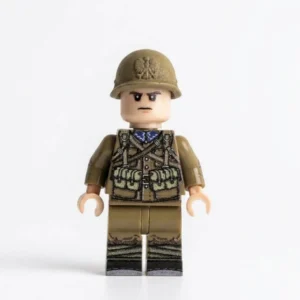
3. WWII Polish Army Machine Gunner (Right Figure)
-
Character Identification: WWII Polish Army Machine Gunner (Mitrailleur)
-
Detailed Character Description: This figure represents a specialized heavy support soldier. Like the rifleman, he wears the wz. 31 combat helmet with the Polish eagle insignia. His face, however, is clean-shaven with an intense, focused expression. He wears the same khaki wz. 36 field tunic, but his collar is detailed with blue collar pennants. The key distinguishing feature of this figure is his specialized webbing: his chest rig features large, oversized canvas ammunition pouches printed in a light green-khaki tone. These bulky pouches are historically designed to hold 20-round box magazines. His legs match the rifleman, featuring cloth puttees and black combat boots.
-
Historical Background: In the Polish military, the automatic rifleman (mitrailleur) provided the crucial base of fire for the infantry squad. They were heavily burdened, carrying the Ręczny Karabin Maszynowy (RKM) wz. 1928, which was a Polish variant of the American Browning Automatic Rifle (BAR). The distinct, large pouches on his webbing were necessary to distribute the weight of the heavy 7.92×57mm Mauser ammunition magazines required to keep the automatic weapon firing during intense defensive stands against invading armored units.
Reviews
There are no reviews yet