

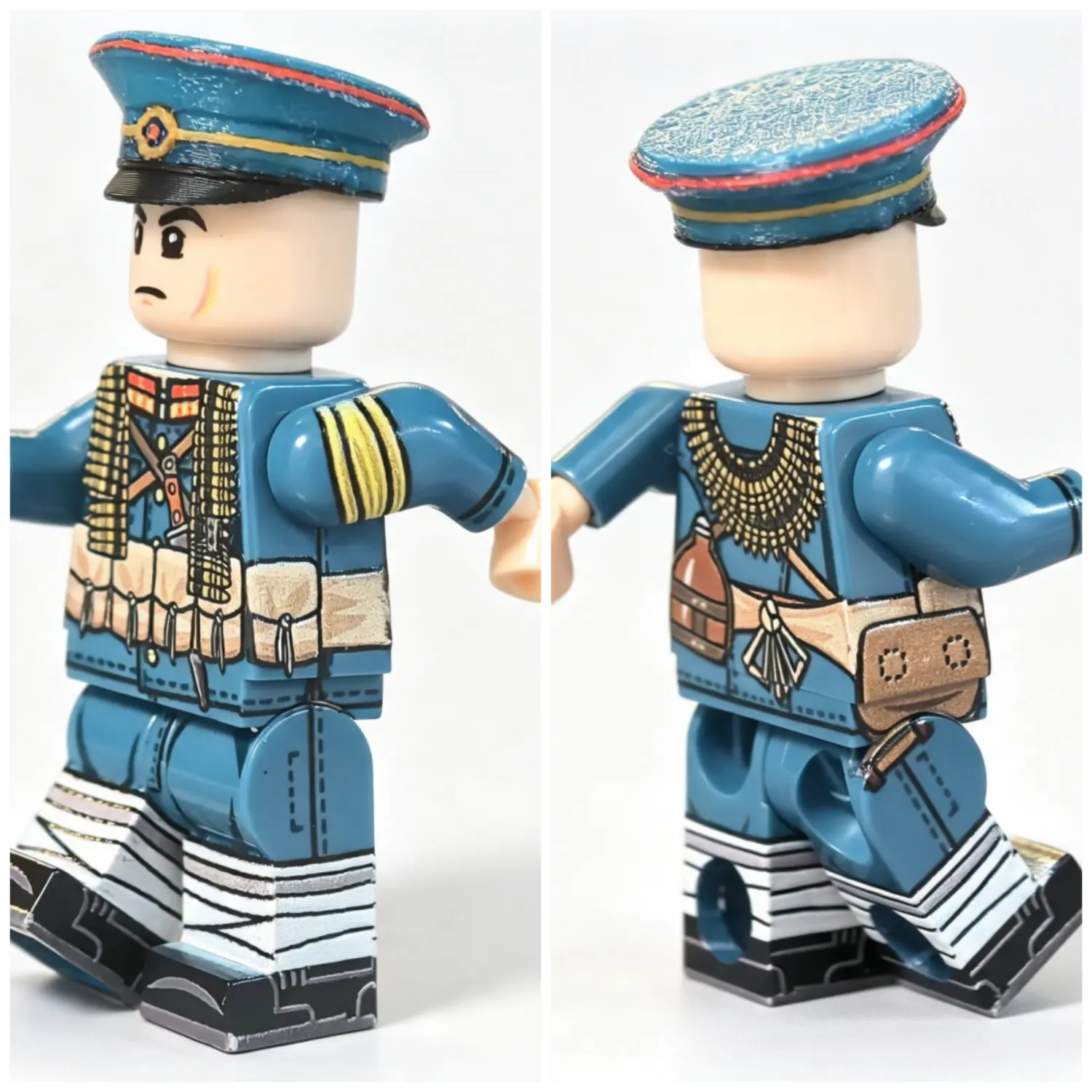
Character Identification
-
Character Name: Late Qing Dynasty New Army Support Soldier (Beiyang Army Machine Gunner / Heavy Weapons NCO)
-
Faction / Origin: The Qing Empire (Modernized Xinjun / New Army divisions)
-
Historical Era: Late Qing Dynasty to the Xinhai Revolution (c. 1901–1911)
-
Block Compatibility: This brick figure is 100% compatible with major standard building blocks.
Detailed Character Description
(This premium building block figure utilizes advanced 360-degree UV printing to depict a heavily burdened support soldier, specifically a machine gunner or heavy weapons specialist, from China’s late imperial modernized army.)
-
Headgear & Accessories:
-
The figure is equipped with the regulation light blue military peaked cap (visor cap).
-
The cap features a sleek black visor, prominent red piping around the upper crown, a yellow/gold hat band, and the central multi-colored Qing imperial cap badge (cockade).
-
-
Facial Printing & Expression:
-
The face print shows a fierce and hardened combat expression, marked by bold black eyebrows.
-
A prominent red combat scar runs down his left cheek, indicating heavy frontline combat experience.
-
-
Torso & Upper Body Clothing (Front & Back):
-
The torso block depicts the standard Western-style light blue infantry tunic with a high stand collar, adorned with regulation red and gold rectangular rank tabs.
-
Similar to the NCO variant, this support soldier features three yellow rank stripes printed on the left arm sleeve, denoting his status as a veteran specialist or Non-Commissioned Officer entrusted with heavy weaponry.
-
The most striking feature of this figure is the massive payload of ammunition he carries. Heavy brass machine gun ammunition belts (linked cartridges) are draped thickly around his neck and over both shoulders, cascading down his chest and back.
-
Around his waist, he wears a specialized light tan canvas webbing system featuring a row of large, deep canvas ammunition or tool pouches, secured with printed toggle closures.
-
The back of the torso shows the continuation of the heavy linked ammo belts resting across his shoulder blades. The rear waist belt secures a brown field canteen, a square leather/canvas utility pouch, and decorative braided knot details hanging from the canvas belt.
-
-
Legs & Footwear:
-
The upper leg blocks match the tunic with light blue trousers.
-
The lower legs are tightly wrapped in highly detailed white cloth puttees (leggings), featuring black shading that realistically highlights the horizontal overlapping fabric folds.
-
The footwear consists of standard black leather infantry combat shoes, complete with printed grey soles.
-
Historical Background
Following the catastrophic military defeats of the First Sino-Japanese War and the Boxer Rebellion, the Qing Dynasty initiated massive reforms to replace its outdated banner forces with the New Army (新军, Xinjun). The most powerful of these modern divisions was the Beiyang Army, which was heavily influenced by Western and Japanese military doctrines.
A key component of this modernization was the introduction of modern heavy weaponry, most notably the Maxim machine gun. These devastating rapid-fire weapons required specialized support crews to operate, maintain, and supply them with massive amounts of ammunition.
This building block figure represents one of these vital heavy weapons specialists. Because early machine guns consumed thousands of rounds in minutes, support soldiers were heavily burdened, often draping heavy linked brass ammunition belts directly over their shoulders for rapid transport across the battlefield. The yellow sleeve stripes suggest this soldier is a veteran or NCO, a necessary rank for squad leaders tasked with commanding machine gun teams and directing suppressing fire.
Despite being trained and equipped to defend the Qing emperor, these heavily armed, modernly educated troops were instrumental in the empire’s downfall. Machine gunners and support troops of the New Army played a pivotal role in the Wuchang Uprising of 1911, providing the necessary heavy firepower that helped spark the Xinhai Revolution and establish the Republic of China.
Reviews
There are no reviews yet