

Variations
Introduction
English Translation & Specific Name
-
User Provided Name: Republic of China Era Movie Warlord (Da Shuai / Generalissimo)
-
Figure Title: Republic of China Era Warlord “Da Shuai” (Grand Dress Uniform)
-
Historical Era: Warlord Era (1916–1928) / Early Republic of China
-
Faction: Regional Chinese Warlord Cliques (e.g., Beiyang Army, Fengtian, Zhili)
Detailed Character Identification, Description, and Historical Background
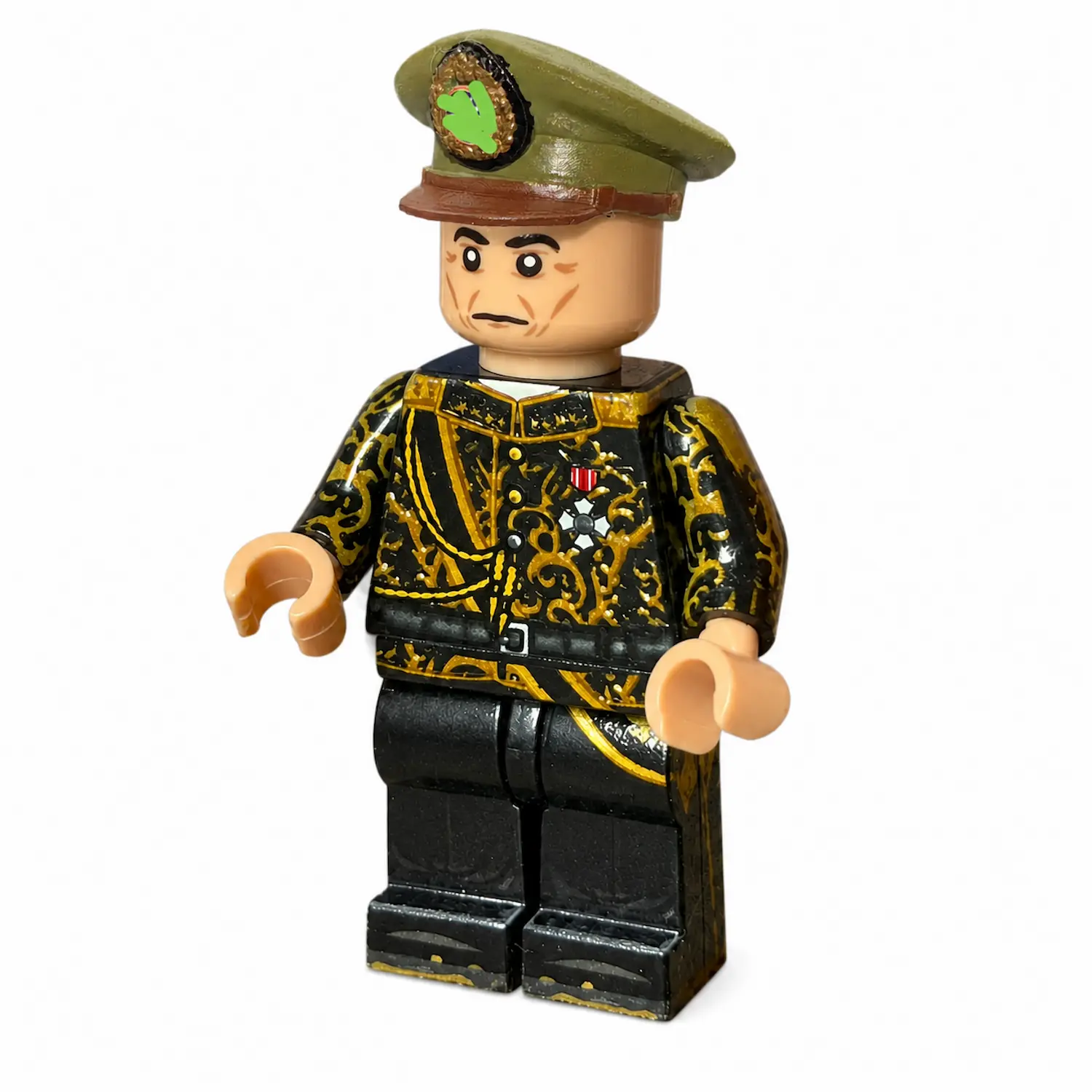
Character Identification This custom building block figure represents a “Da Shuai” (Grand Marshal or Generalissimo), a title commonly used to address the powerful regional military dictators during the fractured Warlord Era of the early Republic of China. His appearance is highly stylized, taking heavy inspiration from Chinese historical cinema and television, where these warlords are famously depicted wearing extravagantly opulent, gold-laced uniforms to project their absolute regional dominance and wealth.
Detailed Character Description (Utilizing incredibly sharp, 360-degree UV printing, this figure captures the sheer extravagance and ostentatious military fashion favored by China’s regional dictators of the early 20th century.)
-
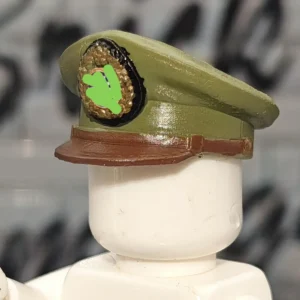
Headgear & Face (The Authoritarian Visage): The figure is crowned with an olive-green military peaked cap featuring a brown visor. The front of the cap bears a massive, ornate badge—a gold wreath surrounding a central green emblem, mimicking the grand national or personal crests worn by early Republic commanders. His face print displays a heavily lined, stern, and ruthless expression, befitting a combat-hardened warlord who rules his territory with an iron fist.
-
Torso (The Opulent Dress Tunic): The most striking feature of this figure is his black high-collared dress tunic, which is absolutely covered in excessive, sprawling gold bullion embroidery.
-
Embroidery & Cords: The intricate gold floral and scroll patterns wrap around the chest, sleeves, and back, symbolizing immense wealth and status. Across his right chest, he wears braided gold aiguillettes (ceremonial cords).
-
Insignia & Medals: His standing collar is decorated with gold stars, a common rank indicator for high command. Pinned to his left breast is a distinct Cross Medal hanging from a red and white ribbon, resembling a high-ranking Order of Merit awarded (or self-awarded) for military conquest. A black leather belt with a silver buckle cinches the waist.
-
-
Legs & Footwear: His lower half features matching black dress trousers. Continuing the theme of opulence, the trousers feature thick, ornate gold command stripes running down the outside seams. The legs transition into polished black dress shoes with printed grey highlight reflections.
Historical Background Following the death of President Yuan Shikai in 1916, the fledgling Republic of China fragmented into dozens of independent military fiefdoms. This period, known as the Warlord Era (1916–1928), saw powerful generals—often former commanders of the Beiyang Army—ruling over entire provinces as their own personal kingdoms. These men were referred to colloquially as Da Shuai (大帅).
To legitimize their rule and project power, these warlords adopted heavily embellished military uniforms. They drew inspiration from late 19th-century Prussian, Russian, and Japanese grand dress uniforms but exaggerated them with excessive gold braiding, massive epaulettes, and self-awarded medals. In modern Chinese cinema (such as the film Let the Bullets Fly), this specific highly decorated, almost theatrical “black and gold” aesthetic is frequently used to instantly identify a character as a wealthy, corrupt, or immensely powerful local warlord. While this era technically predates WWII, many of these warlords or their successors eventually integrated into the National Revolutionary Army to fight the Japanese invasion in the 1930s.
Reviews
There are no reviews yet