

English Translation & Specific Name
-
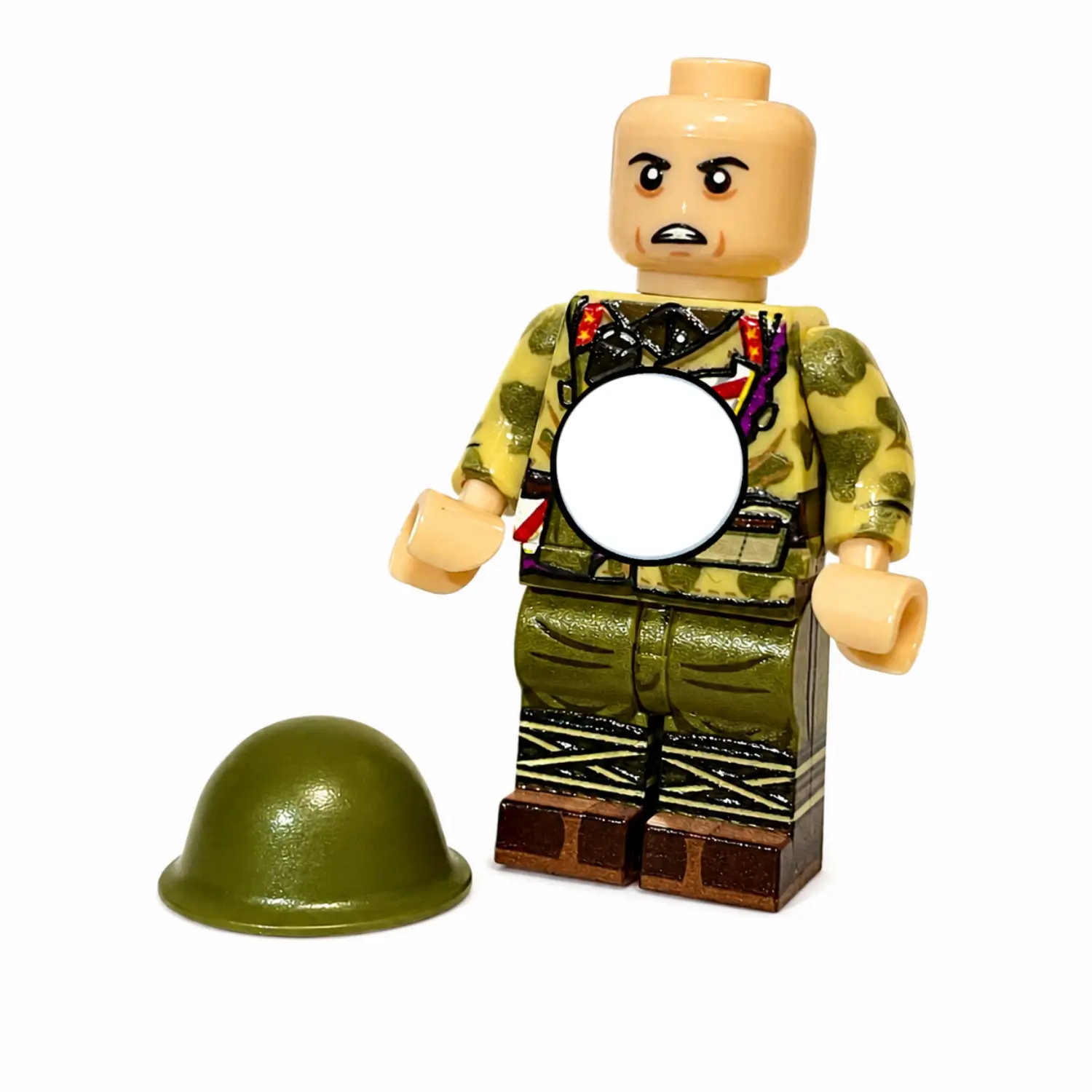
English Translation: WWII Pacific Series Iwo Jima – Imperial Japanese Army (IJA) Anti-Tank Soldier (Captured Camouflage)
-
Faction: Imperial Japanese Army (IJA)
-
Historical Era: World War II (Pacific Theater / Battle of Iwo Jima, 1945)
Detailed Character Identification, Description, and Historical Background
Character Identification This custom building block figure represents a highly motivated, desperate Imperial Japanese Army (IJA) Anti-Tank Soldier during the intense final months of the Pacific War. Driven by extreme supply shortages, this soldier is wearing a captured American camouflage uniform that he has customized with his own Japanese rank insignia, while carrying specialized webbing or harnesses intended for close-quarters anti-tank warfare.
Detailed Character Description (Utilizing precise 360-degree UV printing, this figure perfectly captures the gritty, patchwork appearance of a Japanese holdout soldier preparing for a perilous anti-tank assault.)
-
Headgear & Face: The figure is shown without his helmet, displaying a bald head. His face print conveys a furious, determined expression with furrowed brows, capturing the fierce resolve required for close-quarters anti-tank combat. An unequipped olive drab steel helmet, styled after the Japanese Type 92 pot, rests neatly at his feet.
-
Torso (Scavenged Uniform & Specialized Harness): He wears a scavenged US Marine Corps “Frog Skin” camouflage jacket. Reclaiming his national identity, he has affixed standard red and gold IJA collar tabs to the lapels of the stolen jacket. Across his chest is a complex diagonal harness featuring vivid purple, red, and white straps. This likely represents a traditional Senninbari (thousand-stitch belt) worn over the shoulder for spiritual protection, or a specialized webbing system used to carry heavy satchel charges or magnetic anti-tank mines. (Note: A blank white circular graphic obscures the center of the chest, likely a digital sticker to hide a watermark). His waist features a combat belt with a green canvas utility pouch printed on the left hip.
-
Legs & Footwear (Traditional Infantry Gear): The lower half grounds the figure in his true faction, featuring solid olive green trousers. The lower legs are intricately printed with standard Japanese cross-tied cloth puttees (Kyahan), which transition into worn, brown leather combat boots. This blend of American upper camouflage and Japanese lower infantry gear visually tells the story of an army fighting with whatever they could salvage.
Historical Background The Battle of Iwo Jima (February – March 1945) saw some of the most horrific combat of World War II. The Japanese forces were completely cut off from the mainland, meaning no reinforcements or supplies could reach them. As their standard cotton uniforms quickly deteriorated in the abrasive volcanic ash, it became common for Japanese soldiers to scavenge the durable “Frog Skin” camouflage uniforms from fallen US Marines to survive the elements and conduct confusing night raids.
The Japanese lacked effective anti-tank artillery to stop the heavy American M4 Sherman tanks pushing across the island. Consequently, Japanese anti-tank tactics became desperate and frequently suicidal. Infantrymen were tasked with destroying tanks using close-quarters weapons like the Shitotsubakurai (lunge mine), magnetic turtle mines, or heavy satchel charges. Soldiers assigned to these incredibly dangerous anti-tank squads often wore Senninbari—belts or sashes stitched by the women in their families back home—to grant them courage and luck before they launched themselves at the American armor.
Reviews
There are no reviews yet