

Character Identification
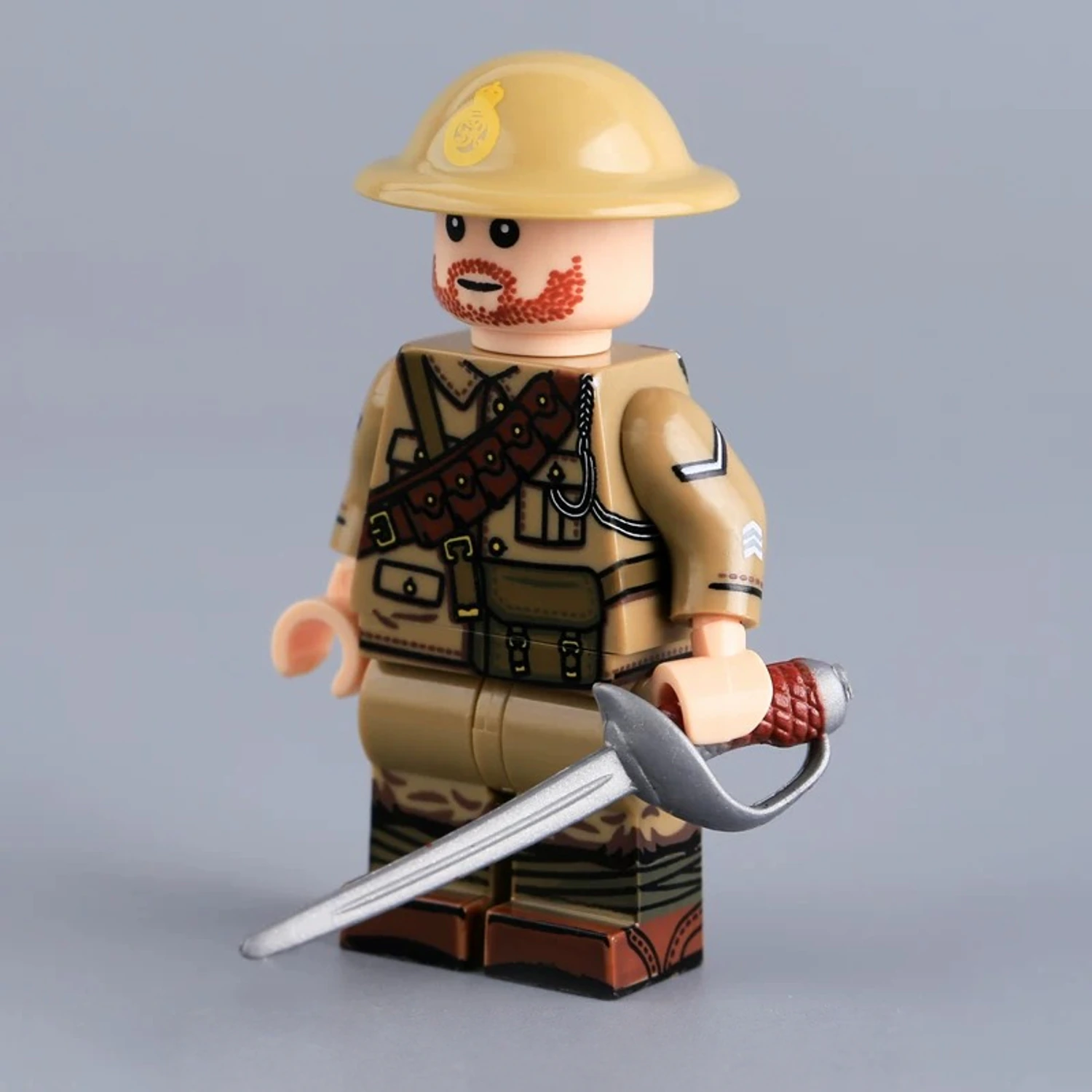
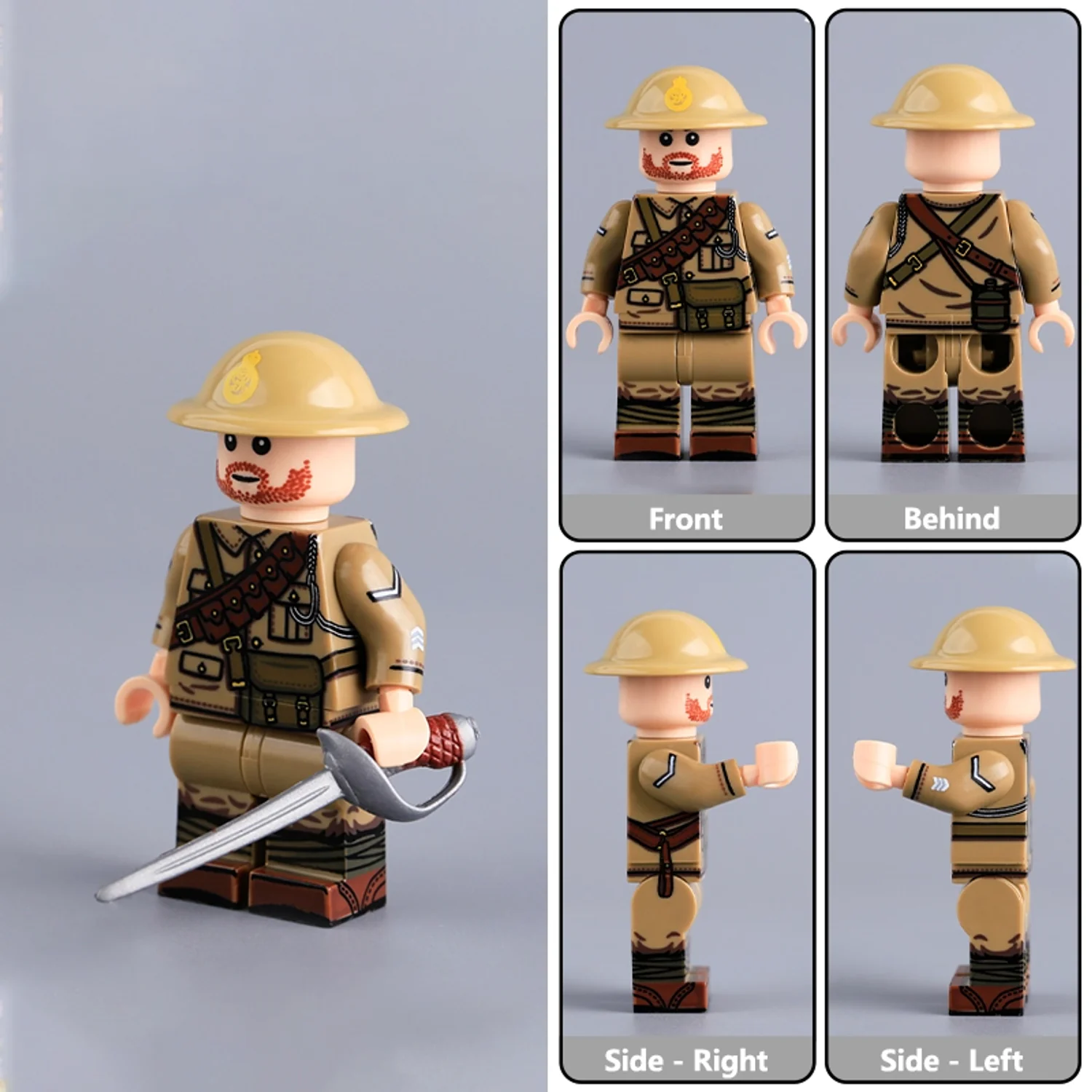
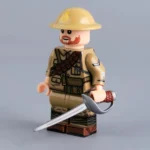
This custom building block figure represents a veteran British Cavalryman of the 1st Life Guards, the premier regiment of the British Army’s Household Cavalry, during the First World War. Unlike the yeomanry units fighting in the desert, this trooper is outfitted for the grueling conditions of the Western Front, easily identifiable by his standard-issue Mk I Brodie steel helmet bearing the regimental crest, his Khaki Service Dress, and his iconic cavalry leatherwork.
Detailed Character Description
(Utilizing pristine 360-degree UV printing, this figure meticulously captures the specialized equipment and iconic uniform of a senior British cavalry trooper operating in the European theater.)
-
Headgear & Face: The figure wears a highly accurate, khaki-painted Mk I Brodie helmet (the famous “tin hat” introduced to protect troops from airborne shrapnel in the trenches). The front of the helmet features a printed gold regimental badge, representing the prestigious crest of the 1st Life Guards. His face print displays a battle-hardened expression framed by a thick, rugged red beard and mustache, indicating months spent on the frontline.
-
Torso (Khaki Service Dress & Bandolier): The trooper is dressed in the standard British Khaki Service Dress (SD) tunic. Printed diagonally across his chest is the 1903 Pattern leather cavalry bandolier, featuring five distinct pockets designed to hold 50 rounds of .303 ammunition for a Lee-Enfield rifle. Adding to the authenticity, a printed braided lanyard cord loops over his left shoulder and across his breast pocket, a common accessory used to secure a service whistle or sidearm.
-
Back & Side Gear: The 360-degree printing seamlessly wraps the bandolier and uniform seams around his back. His rear equipment features a standard blue enameled water bottle (canteen) secured in a leather cradle. His sleeves are detailed with printed rank and service chevrons, indicating his status as a veteran non-commissioned officer.
-
Legs & Footwear: His lower half features khaki cavalry breeches that transition into dark green puttees (tightly wrapped cloth strips for leg support in the mud). The legs terminate in heavy brown cavalry riding boots, complete with printed leather straps and metal heel spurs necessary for controlling a cavalry mount.
-
Weaponry: The trooper is armed with a molded silver and brown Pattern 1908 Cavalry Sword, historically regarded as the most effective cavalry saber ever issued. The weapon features a large, bowl-shaped guard to protect the hand and a textured reddish-brown grip optimized for thrusting during a charge.
Historical Background
The 1st Life Guards are the senior regiment of the British Army, traditionally serving as the monarch’s personal bodyguard. However, upon the outbreak of World War I in 1914, they were immediately deployed to France as part of the Household Cavalry Regiment to halt the German advance.
The realities of the Western Front quickly forced a shift in cavalry tactics. While they arrived with their Pattern 1908 swords and 1903 bandoliers expecting sweeping mounted maneuvers, the advent of barbed wire, machine guns, and static trench warfare made traditional cavalry charges nearly impossible. Consequently, the Life Guards spent much of the war serving dismounted as regular infantry, fighting in the mud of Ypres and Passchendaele. The Brodie helmet worn by this figure was introduced in late 1915 specifically to protect these men from the devastating artillery shrapnel raining down on the trenches. Despite fighting mostly on foot, these elite troopers proudly retained their distinct cavalry boots, spurs, and bandoliers, maintaining their prestigious cavalry identity until the war’s end.
Reviews
There are no reviews yet