

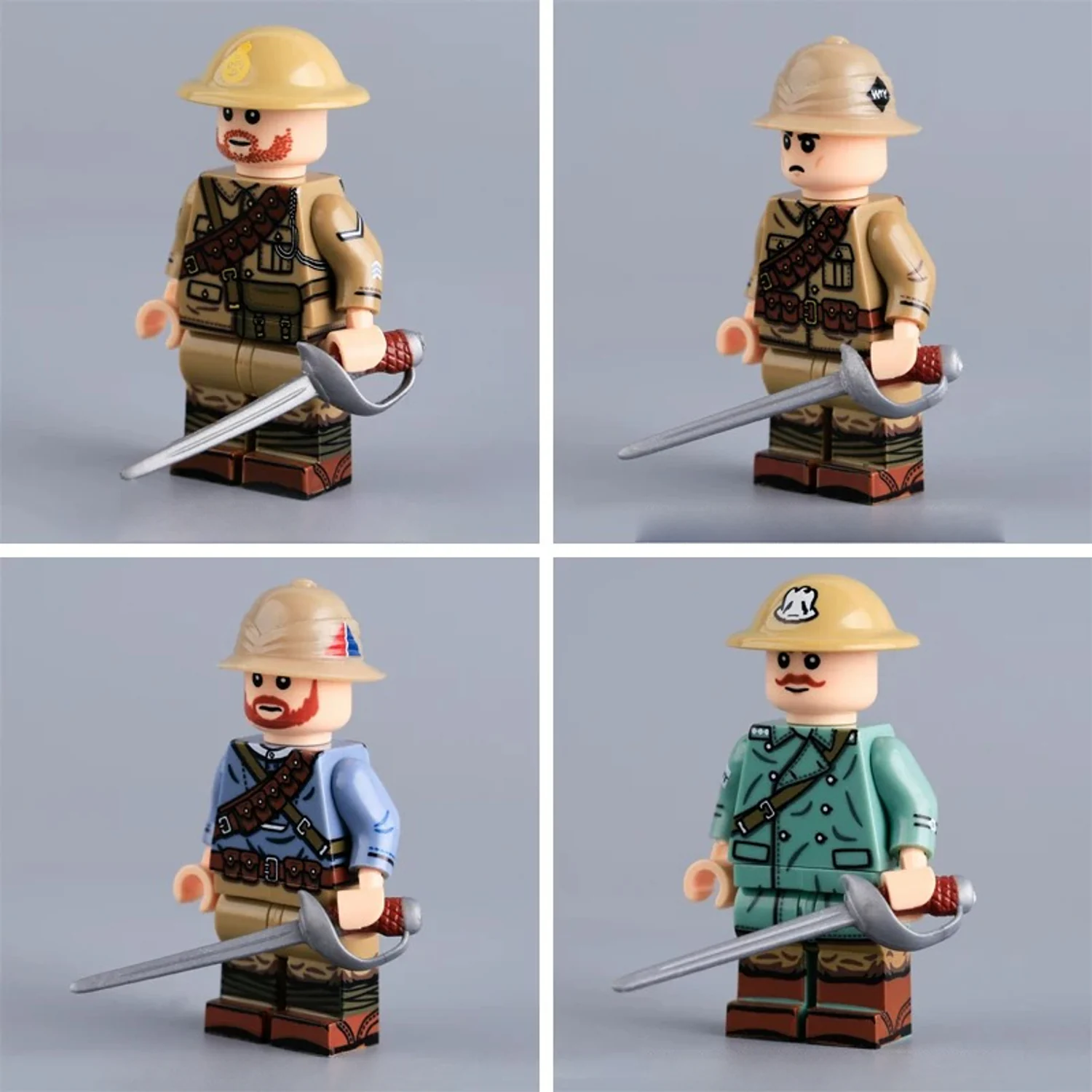
Variations
-
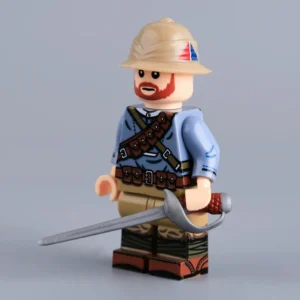
British Westminster Dragoons (Sword Pose) WWI – Custom Printed Brick Block Figure
$14.99 -
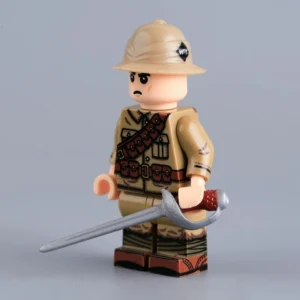
British Warwickshire Yeomanry Cavalry (Sword Pose) WWI – Custom Printed Brick Block Figure
$14.99 -
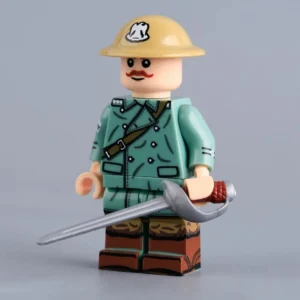
British Royal Scots Greys (Sword Pose) WWI – Custom Printed Brick Block Figure
$14.99 -
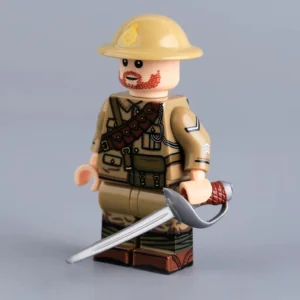
British 1st Life Guards Cavalry (Sword Pose) WWI – Custom Printed Brick Block Figure
$14.99
Introduction
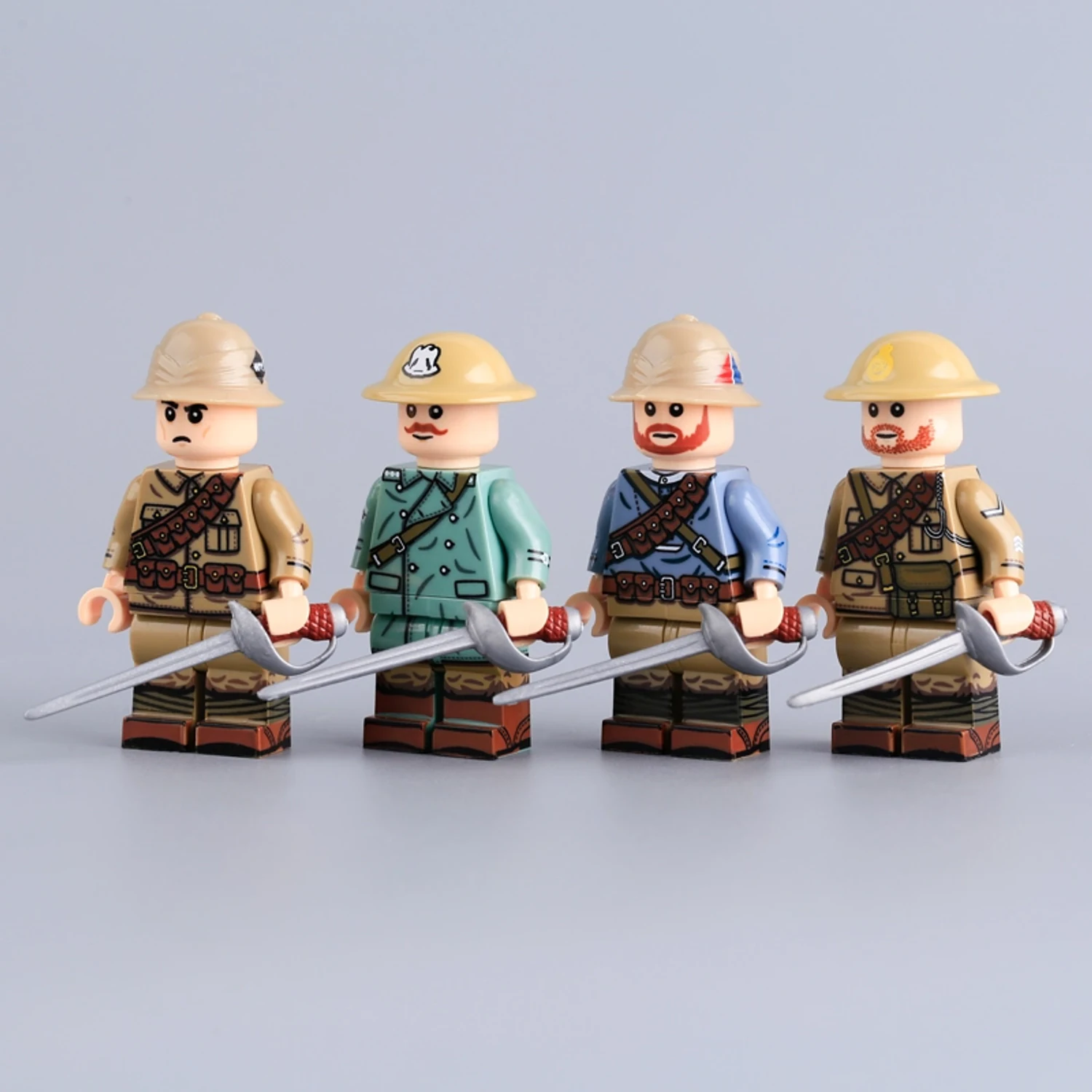
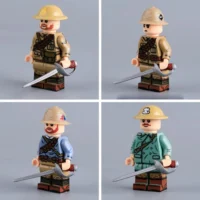
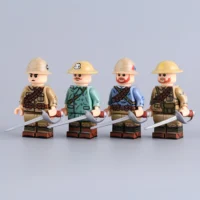
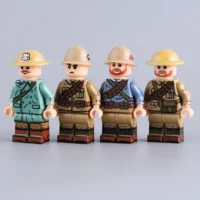
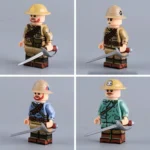
This custom building block set features a highly detailed, historically accurate four-man collection of British Cavalrymen from the First World War. Showcasing the stark contrast between the specialized hot-weather gear of the Middle Eastern theater and the grueling trench-warfare modifications of the Western Front, each figure is armed with a Pattern 1908 Cavalry Sword and customized with regimental insignia.
1. British Warwickshire Yeomanry Cavalry
Character Identification
This custom building block figure represents a trooper of the Warwickshire Yeomanry, a volunteer cavalry regiment deployed to the blistering deserts of the Middle Eastern theater.
Detailed Character Description
-
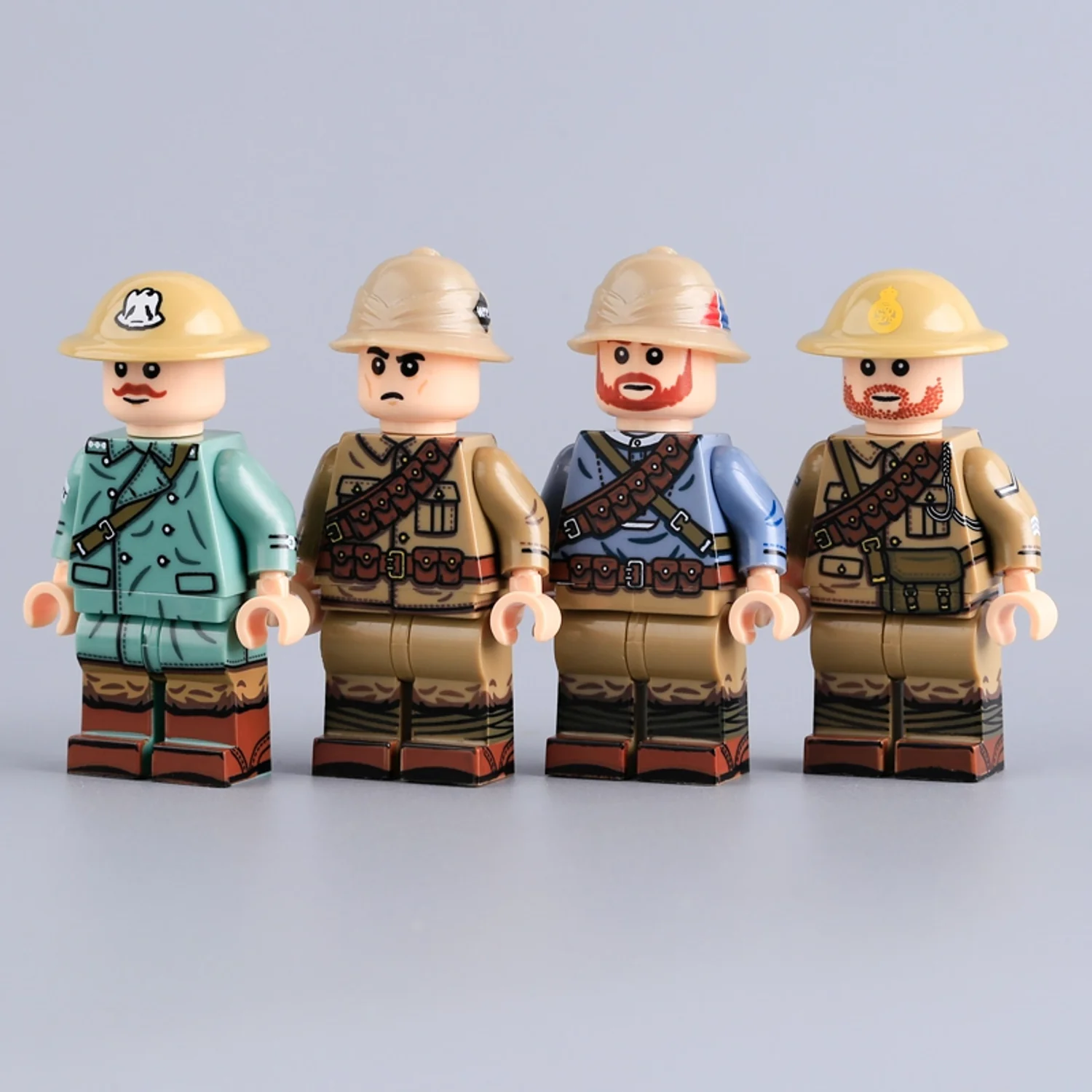
Headgear & Face: The figure is crowned with a sand-colored Wolseley pattern pith helmet, essential for sun protection. A black diamond flash featuring the white letters “WY” is printed on the left side, identifying his regiment. His expression is stern and focused.
-
Torso: He wears a standard lightweight Khaki Drill (KD) tunic. Printed diagonally across his chest is the iconic 1903 Pattern leather cavalry bandolier, intricately detailed with five pouches for Lee-Enfield ammunition.
-
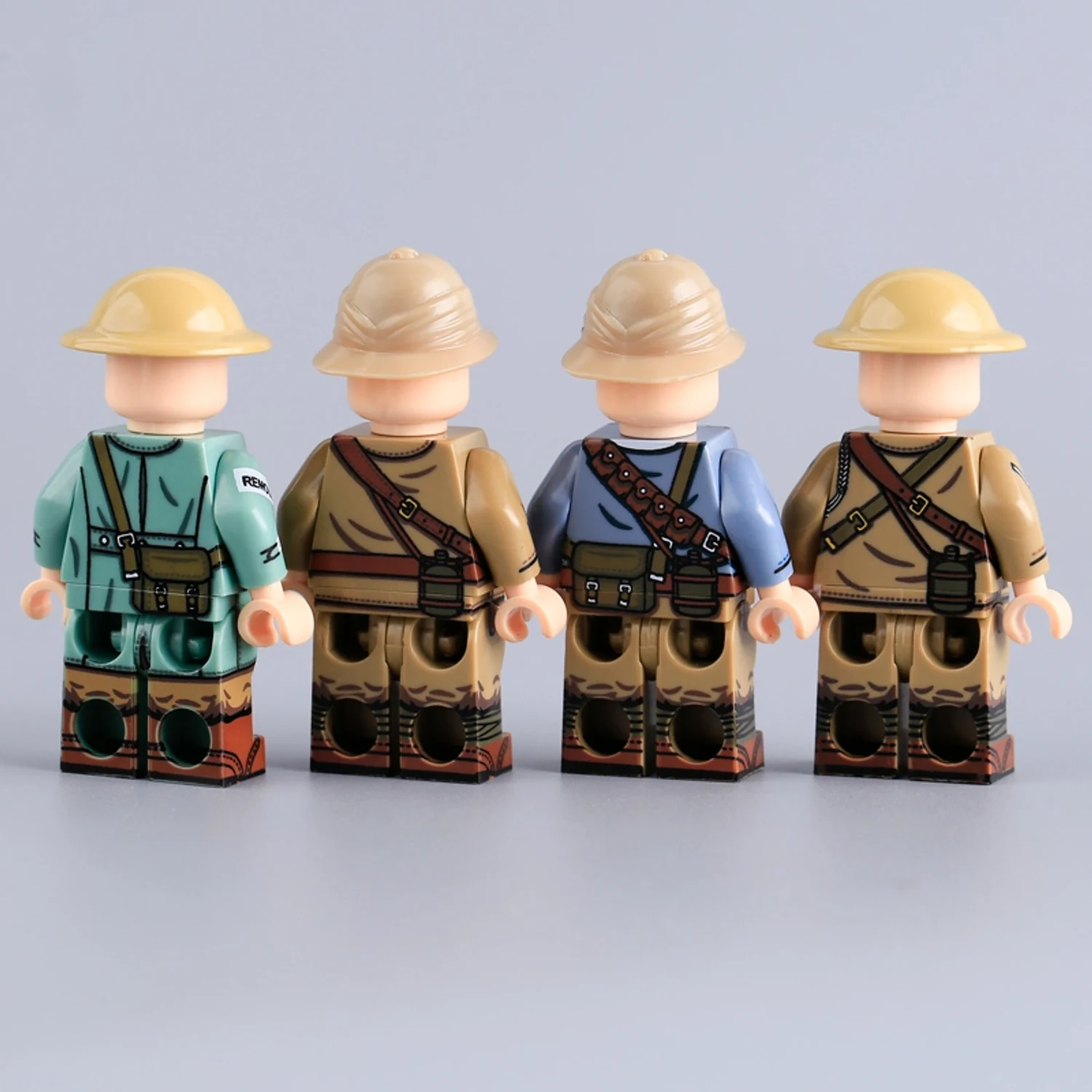
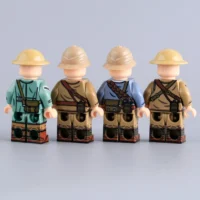
Back & Legs: His rear printing features a standard-issue blue enameled water bottle secured in a leather carrier. His khaki trousers tuck into wrapped olive-drab puttees, ending in brown cavalry riding boots equipped with metal heel spurs.
Historical Background
Operating in the Sinai and Palestine Campaign against the Ottoman Empire, the Warwickshire Yeomanry famously participated in the Charge at Huj in 1917. In the open deserts, horse cavalry remained highly effective, and this figure’s lightweight uniform and pith helmet reflect the necessary adaptations for surviving extreme heat while conducting rapid mounted charges.
2. British Royal Scots Greys (2nd Dragoons)
Character Identification
This figure represents a specialized cavalryman of the prestigious Royal Scots Greys deployed to the Western Front, specifically tasked with logistical horse management.
Detailed Character Description
-
Headgear & Face: He wears a khaki Mk I Brodie steel helmet stamped with the regiment’s French Imperial Eagle crest. His face features a distinctive, stylized red handlebar mustache.
-
Torso: He is outfitted in a light blue/grey double-breasted cavalry tunic with silver buttons. A single leather cross-strap secures his gear. His right arm proudly bears a white brassard (armband) printed with the word “REMOUNT”.
-
Back & Legs: A square leather dispatch pouch rests on his lower back. His riding breeches transition into brown leather field boots printed with intricate leather paneling and riding spurs.
Historical Background
Because traditional cavalry charges were rendered obsolete by the trenches and machine guns of the Western Front, many experienced cavalrymen from elite regiments were reassigned to the Army Remount Service. The “REMOUNT” armband indicates this soldier’s vital role in training and managing the millions of horses required for artillery transport and logistics during the Great War.
3. British Westminster Dragoons
Character Identification
This figure depicts a battle-hardened trooper of the Westminster Dragoons (2nd County of London Yeomanry), outfitted for extreme heat in the Sinai and Palestine Campaign.
Detailed Character Description
-
Headgear & Face: He wears a textured Wolseley pattern pith helmet featuring a distinctive red, white, and blue triangular flash on the side. His face is printed with a rugged, full red beard and mustache, reflecting relaxed frontline grooming standards.
-
Torso: To survive the desert heat, he has discarded his heavy tunic in favor of a breathable light blue “greyback” undershirt. He wears the standard 1903 Pattern leather cavalry bandolier across his chest.
-
Back & Legs: His back features a printed canvas haversack and a canteen. His legs are wrapped in dark olive-drab puttees that meet heavy brown cavalry riding boots equipped with spurs.
Historical Background
Serving alongside other Yeomanry regiments in the Middle East, the Westminster Dragoons utilized sweeping mounted maneuvers across the open desert. The choice to fight in light blue “greyback” shirts instead of issued wool tunics was a pragmatic and widespread modification among British imperial troops struggling to endure the scorching temperatures of Egypt and Palestine.
4. British 1st Life Guards Cavalry
Character Identification
This figure represents a senior non-commissioned officer of the 1st Life Guards, the premier regiment of the British Household Cavalry, enduring the muddy realities of the Western Front.
Detailed Character Description
-
Headgear & Face: He wears a standard-issue Mk I Brodie helmet (designed to protect against trench shrapnel), emblazoned with the gold regimental crest of the 1st Life Guards. He features a thick red beard and mustache.
-
Torso: He is dressed in the standard British Khaki Service Dress (SD) tunic. He wears the 1903 Pattern leather cavalry bandolier alongside a printed braided lanyard cord looping over his left shoulder. His sleeves bear printed rank chevrons.
-
Back & Legs: His rear printing seamlessly continues the bandolier and includes a canteen. His khaki breeches tuck into dark green puttees and traditional brown cavalry boots with metal spurs.
Historical Background
As the monarch’s personal bodyguard, the 1st Life Guards were deployed to France in 1914. Forced into the trenches, they spent much of the war fighting dismounted as infantrymen in the mud of Ypres. Despite serving on foot and adopting the steel Brodie helmet for shrapnel protection, these elite troops proudly retained their cavalry bandoliers, boots, and spurs to maintain their prestigious regimental identity.
Reviews
There are no reviews yet