

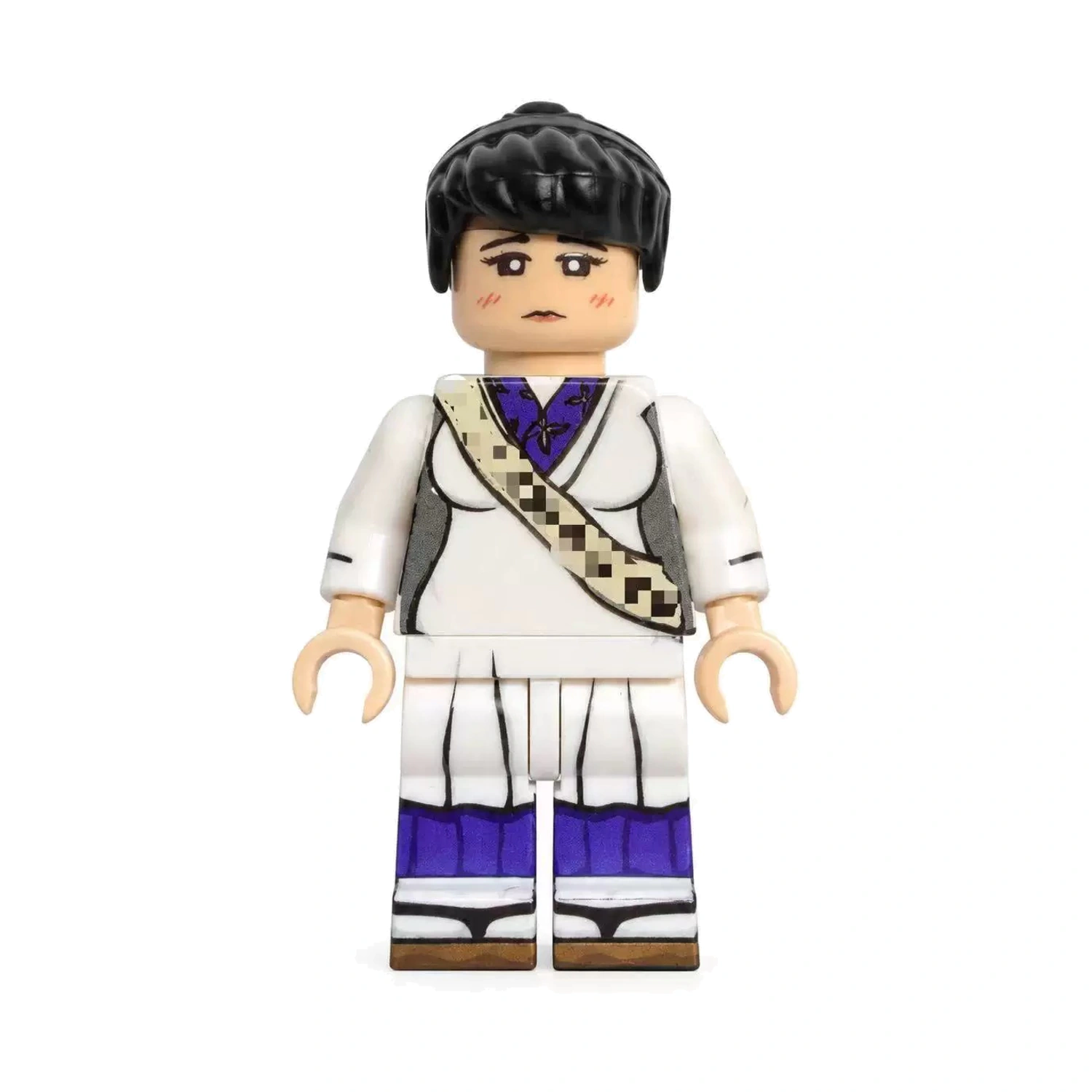
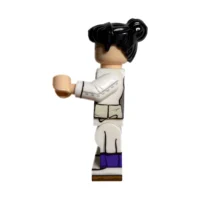
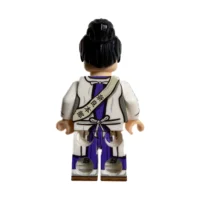
Character Identification This custom building block figure represents a Japanese Woman on the home front during the early Showa era (1920s–1940s). The figure is instantly identifiable by her traditional purple kimono worn beneath a crisp white kappōgi (a traditional Japanese smock-style apron) and a distinctive diagonal sash, marking her as a dedicated member of a women’s patriotic or national defense association during the World War II era.
Detailed Character Description
(Utilizing precise 360-degree UV printing, this figure meticulously captures the daily civilian attire and organizational uniform of a Japanese woman during the wartime Showa period.)
-
Head & Face: The figure features a light nougat face print with a gentle, stoic expression, highlighted by rosy blushed cheeks. Her traditional black hair is styled pulled back into a neat, classic bun.
-
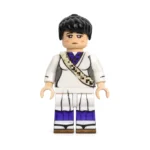
Torso & Uniform (Front): She is outfitted in a highly detailed white kappōgi (smock apron) with full sleeves. Beneath the V-neck opening of the apron, the collar of a purple kimono featuring a subtle dark pattern is clearly visible. Draped diagonally over her right shoulder and across her chest is a printed sash adorned with a checkered border pattern.
-
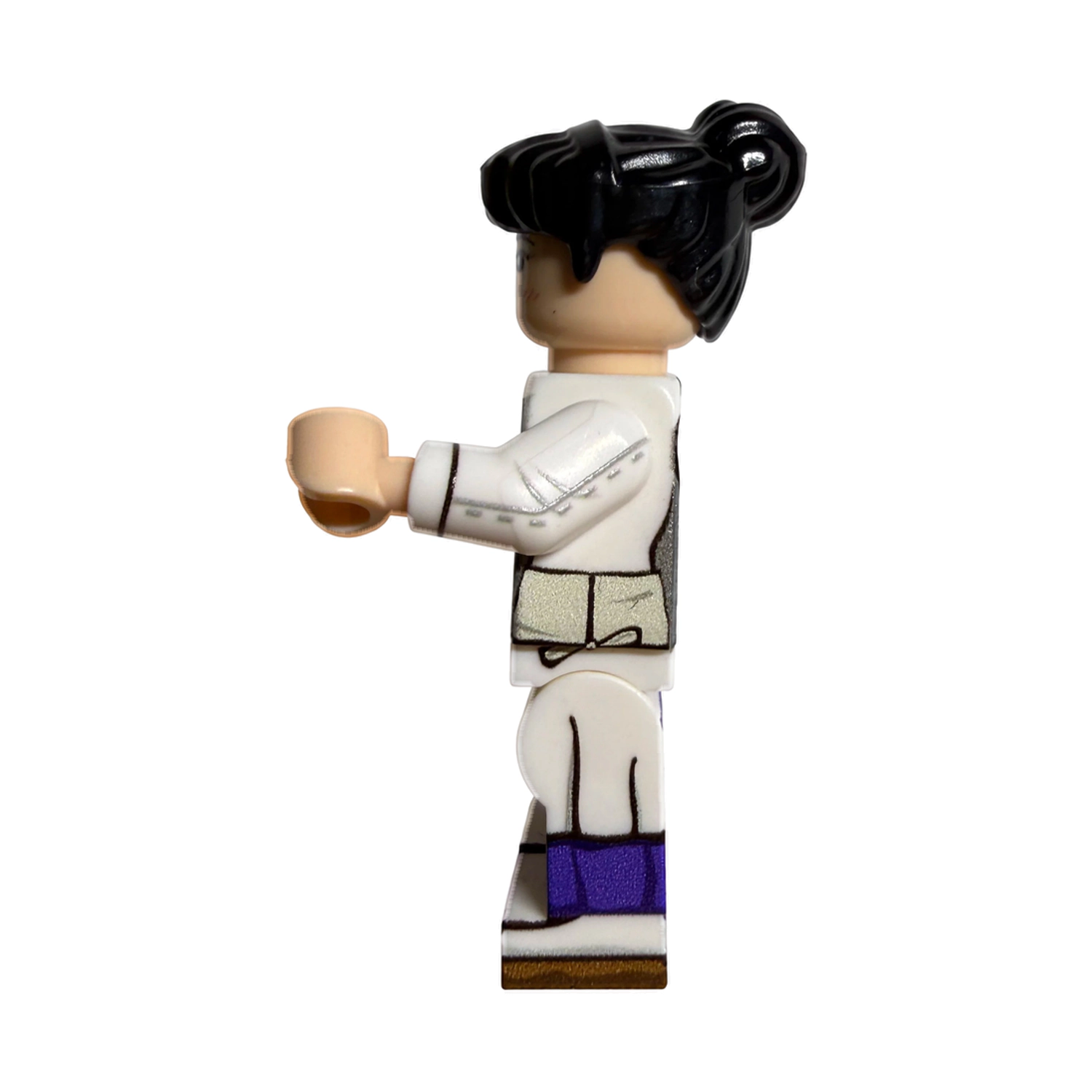
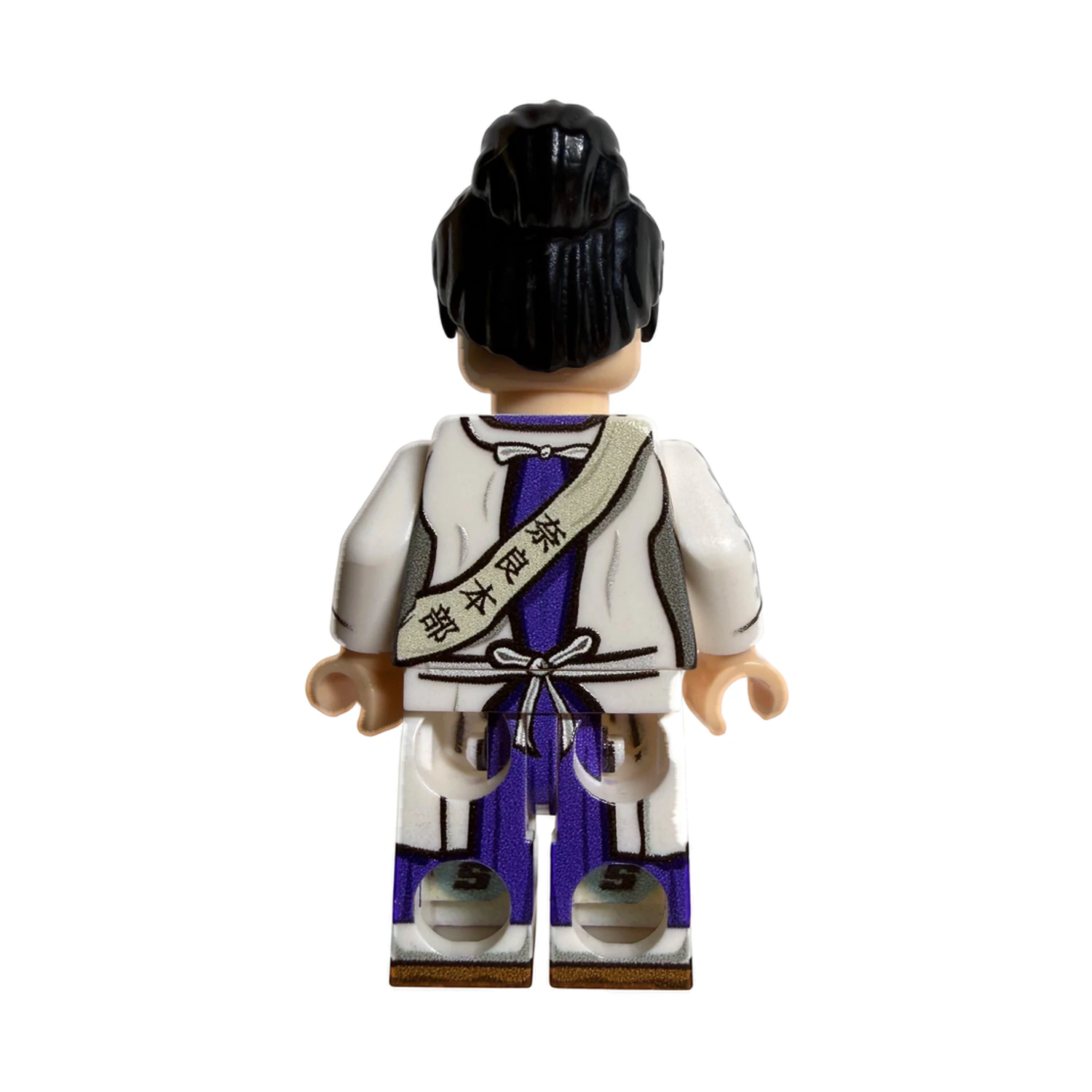
Back & Side Views: The left-facing side view shows the tailored drape of the white apron sleeves and the profile of her traditional hairstyle. The rear view highlights the meticulous printing of the apron strings tied neatly at the lower back. The diagonal sash continues across her back, featuring printed Japanese kanji characters (designating a regional branch headquarters, such as Nara).
-
Legs & Footwear: The lower body features the skirt of the white apron parting to reveal the flowing purple kimono underneath. Her feet are detailed with traditional white tabi (split-toe socks) and geta or zōri (traditional sandals) with dark thong straps.
Historical Background
During the early Showa era, spanning the Second Sino-Japanese War and World War II, Japanese women on the home front were heavily mobilized to support the national war effort. Millions of civilian women joined state-sponsored organizations such as the National Defense Women’s Association (Kokubō Fujinkai). The standard, ubiquitous uniform for these active members was the highly practical kappōgi—a white coverall apron originally designed in the early 20th century to protect delicate kimonos during housework. This was worn with a distinctive diagonal sash (tasuki) bearing the name of their specific association or local branch. These women performed crucial home front duties, including seeing off deploying soldiers at train stations, rolling senninbari (thousand-stitch belts for good luck in battle), collecting donations, and organizing neighborhood air-raid defenses.
Reviews
There are no reviews yet