

Please note that these brick figures are all compatible with major standard building blocks.
Character Identification
-
Original Chinese Designation: 一战协约国北洋步兵小队 – 小队长 (Yīzhàn Xiéyuēguó Běiyáng Bùbīng Xiǎoduì – Xiǎoduìzhǎng)
-
English Name: WWI Allied Powers Beiyang Army Infantry Squad Leader (Officer)
-
Specific Identity: A junior officer (such as a lieutenant or captain) serving in the Beiyang Army of the Republic of China during the World War I era (roughly 1914–1918).
Detailed Character Description
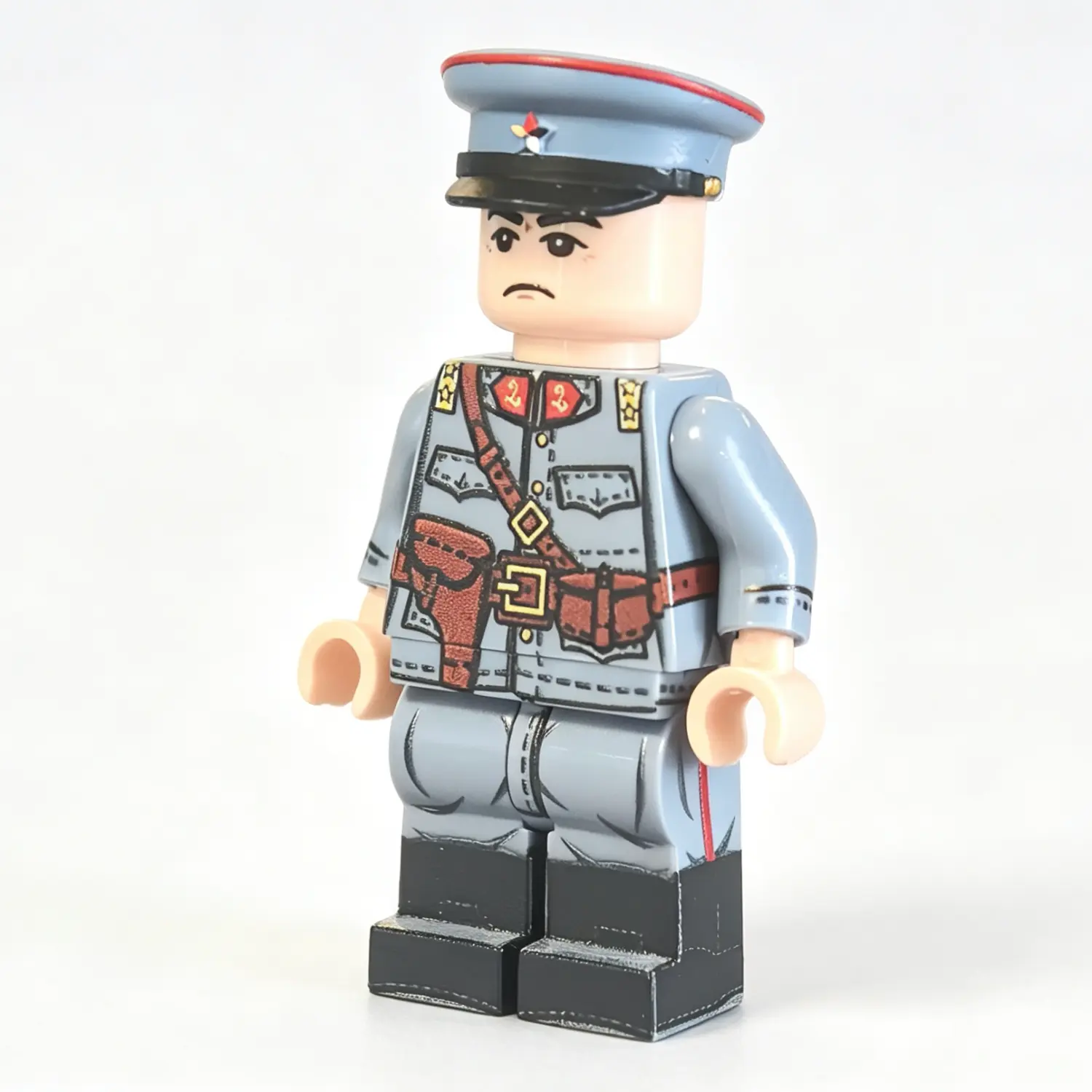
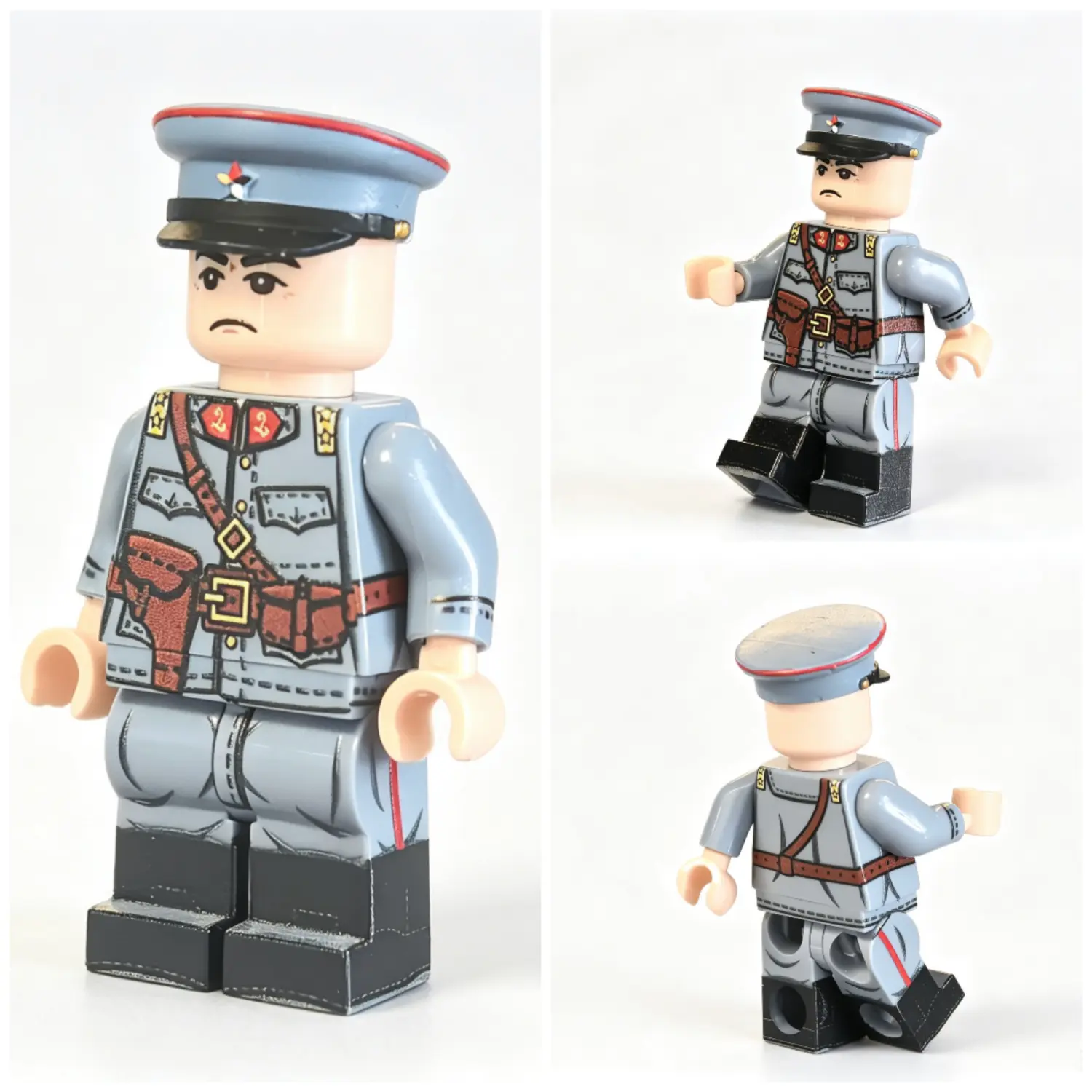
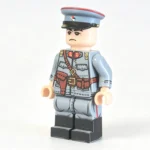
This figure features crisp, clean custom printing that accurately depicts the distinct early 20th-century uniform of the Chinese Beiyang Army.
-
Headgear & Face: The figure wears a custom-molded peaked cap (visor cap) matching the uniform’s light blue-grey color. The cap features a distinct red band around the top edge and a black visor. Pinned to the front center of the cap is the Five-Colored Star cap badge (representing the Five Races Under One Union flag of the early Republic of China). The figure’s face has a stern, clean-shaven expression.
-
Torso & Uniform Details: The figure is dressed in the standard Beiyang Army light blue-grey tunic. The collar features bright red collar tabs (gorget patches) adorned with gold numerals (“2” on each side), indicating the officer’s specific regiment or division. The shoulders bear printed gold epaulettes (shoulder boards) adorned with stars, signifying his officer rank.
-
Combat Webbing (Sam Browne Belt): Over the tunic, the figure wears a printed brown leather officer’s harness, similar to a Sam Browne belt. This includes a waist belt with a gold buckle and a diagonal cross-strap over the right shoulder. Attached to the right side of the belt is a leather pistol holster, and on the left side are small leather ammunition pouches, typical gear for a squad leader armed with a sidearm rather than a long rifle.
-
Legs & Footwear: The legs continue the light blue-grey color of the uniform trousers, featuring a distinctive red stripe (piping) running down the outer seam of each leg. The trousers are tucked into tall, highly polished black leather officer’s riding boots (Jackboots). Unlike the heavily mud-splattered trench fighters of the Western Front, this figure’s uniform is remarkably clean and parade-ready.
Historical Background
-
The Beiyang Army: The Beiyang Army was the most powerful, Western-style military force in China at the twilight of the Qing Dynasty and the dawn of the Republic of China (established in 1912). Created by Yuan Shikai, it was heavily influenced by German and Japanese military advisors, which is reflected in their uniform design (such as the peaked caps, collar tabs, and jackboots).
-
China in World War I: Although China was geographically far from the main theaters of WWI, the Beiyang government actively sought to join the war on the side of the Allied Powers (Entente) to elevate China’s international standing and reclaim German concessions in Shandong province. China officially declared war on Germany and Austria-Hungary in August 1917.
-
The Five-Colored Star: The badge on the officer’s cap represents the “Five Races Under One Union” (Han, Manchu, Mongol, Hui, and Tibetan), which was the guiding political philosophy and national flag of the early Republic of China from 1912 to 1928.
-
The Officer’s Role: In the Beiyang Army, junior officers (like this squad leader) were responsible for the direct tactical command of infantry squads. They were typically armed with imported semi-automatic pistols (like the Mauser C96 “Broomhandle”) or revolvers, which explains the prominent pistol holster printed on the figure’s belt.
Reviews
There are no reviews yet