

Character Identification
-
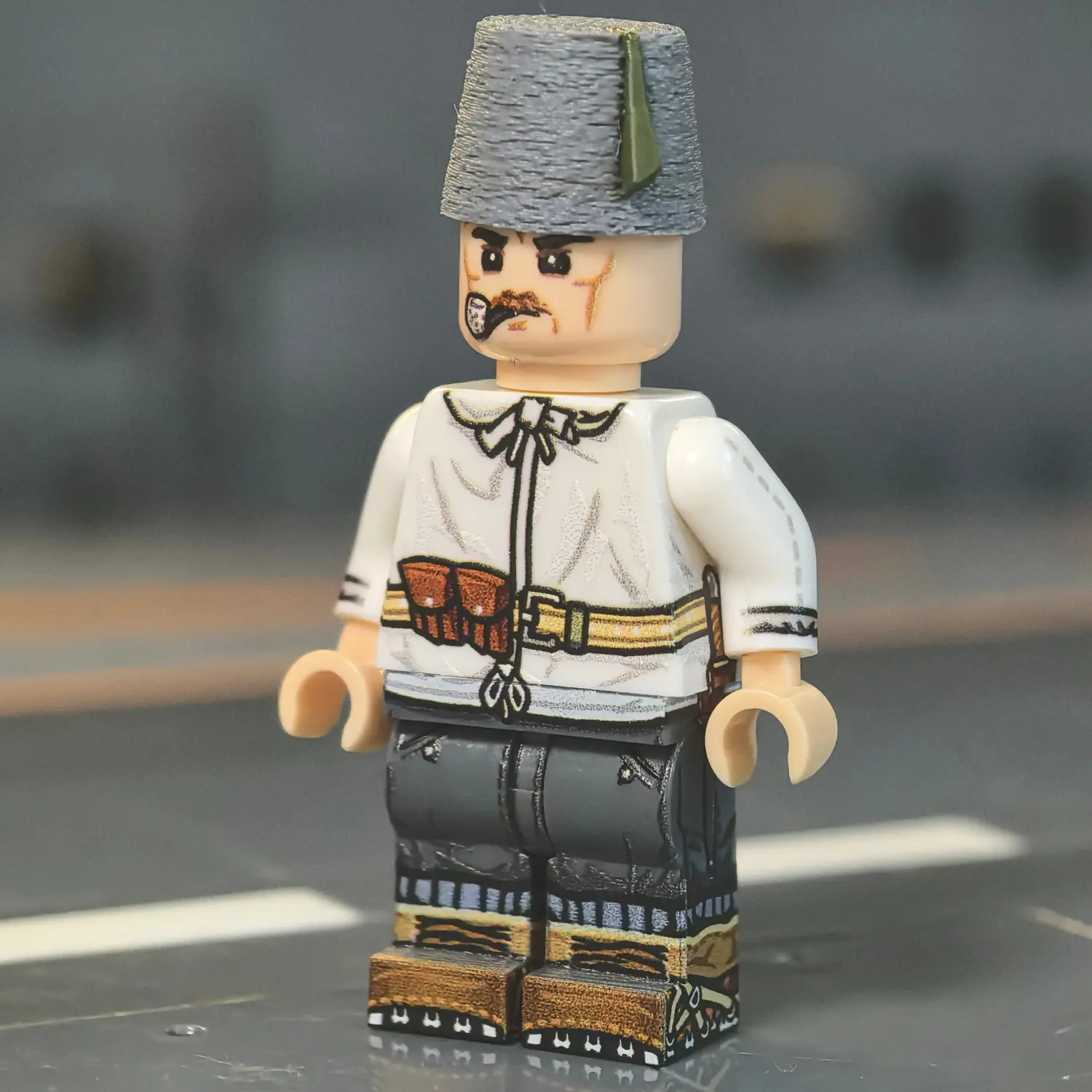
Character Name: Austro-Hungarian Serb Irregular (Balkan Guerilla / Chetnik)
-
Faction / Origin: Serbs of the Austro-Hungarian Empire (specifically from regions like Bosnia, Vojvodina, and the former Military Frontier)
-
Historical Era: Late 19th Century to the World War I Era (c. 1908–1918)
-
Block Compatibility: This brick figure is 100% compatible with major standard building blocks.
Detailed Character Description
(This premium building block figure features high-precision 360-degree UV printing and custom 3D-printed accessory components designed to authentically represent a traditional Balkan irregular fighter.)
-
Headgear & Accessories:
-
The figure is equipped with a custom 3D-printed grey textured tall fur hat (Šubara), carefully shaped with a highly realistic fabric finish.
-
A detailed dark green tassel hangs down the right side of the headpiece, adding a vibrant and authentic regional folk motif.
-
-
Facial Printing & Expression:
-
The head print showcases a fierce, battle-hardened facial expression with intense brown eyes and dark eyebrows.
-
It features a classic brown handlebar mustache and a prominent facial scar running diagonally across the left cheekbone.
-
Clamped firmly in his mouth is a traditional smoking pipe, complete with printed wood grain and bowl details.
-
-
Torso & Upper Body Clothing:
-
The torso block depicts a crisp white traditional linen tunic (košulja) with realistic fabric shading, wrinkles, and grey fold lines.
-
The neck collar features a realistic tied cord fastening at the center of the chest.
-
The arms display subtle fabric seams along the shoulders and finish with black embroidered wrist cuffs.
-
-
Waist Gear & Webbing:
-
Strapped across the lower torso is a brown leather combat belt equipped with twin dual-pocket ammunition pouches for carrying rifle cartridges into battle.
-
Directly beneath the leather ammo belt is a multi-colored traditional woven fabric sash (pojas) featuring yellow, black, and white decorative stripes.
-
-
Legs & Footwear:
-
The upper leg blocks feature charcoal-grey tapered trousers (čakšire) with realistic crease lines.
-
The lower legs transition into traditional wrapped fabric leggings (obojci), featuring detailed crisscross strap patterns wrapped tightly around grey and blue socks.
-
The footwear depicts traditional Balkan leather sandals (opanci), complete with woven leather uppers, side straps, and detailed grip soles printed directly onto the base of the feet.
-
Historical Background
During the late 19th and early 20th centuries, millions of ethnic Serbs lived within the borders of the Austro-Hungarian Empire, primarily in territories such as Bosnia and Herzegovina, Vojvodina, Croatia, and the former Military Frontier (Vojna Krajina).
Following Austria-Hungary’s controversial formal annexation of Bosnia in 1908, political and ethnic tensions surged across the Balkan peninsula. Many Serbs living under Habsburg rule formed fierce nationalist organizations, youth movements (such as Young Bosnia / Mlada Bosna), and armed paramilitary irregular groups known as Chetniks or Komitadji.
Because these fighters were irregular guerrillas and local militiamen rather than formal standing soldiers, they rarely wore standardized military uniforms. Instead, they took up arms in their everyday traditional regional folk attire—wearing white linen tunics, woven sashes, leather opanci sandals, and thick fur caps (šubara). As war broke out, they augmented their civilian clothing with military leather bandoliers, ammo pouches, and surplus rifles. These irregular forces played a major role in local resistance, intelligence gathering, and fierce skirmishes leading up to and during the outbreak of World War I.
Reviews
There are no reviews yet