
English Title & Specific Name
Figure Title: Chinese Nationalist Infantry Style Soldier with Printed Mesh Goggles Khaki and Olive Uniform Republican Era – Custom Printed Brick Block Figure
Historical Era: Republican-era China-inspired military uniform theme; exact year not identified.
Faction / Military Branch: Chinese Nationalist / National Revolutionary Army infantry-inspired style; exact unit and rank not identified.
Detailed Character Identification, Description, and Historical Background
Character Identification
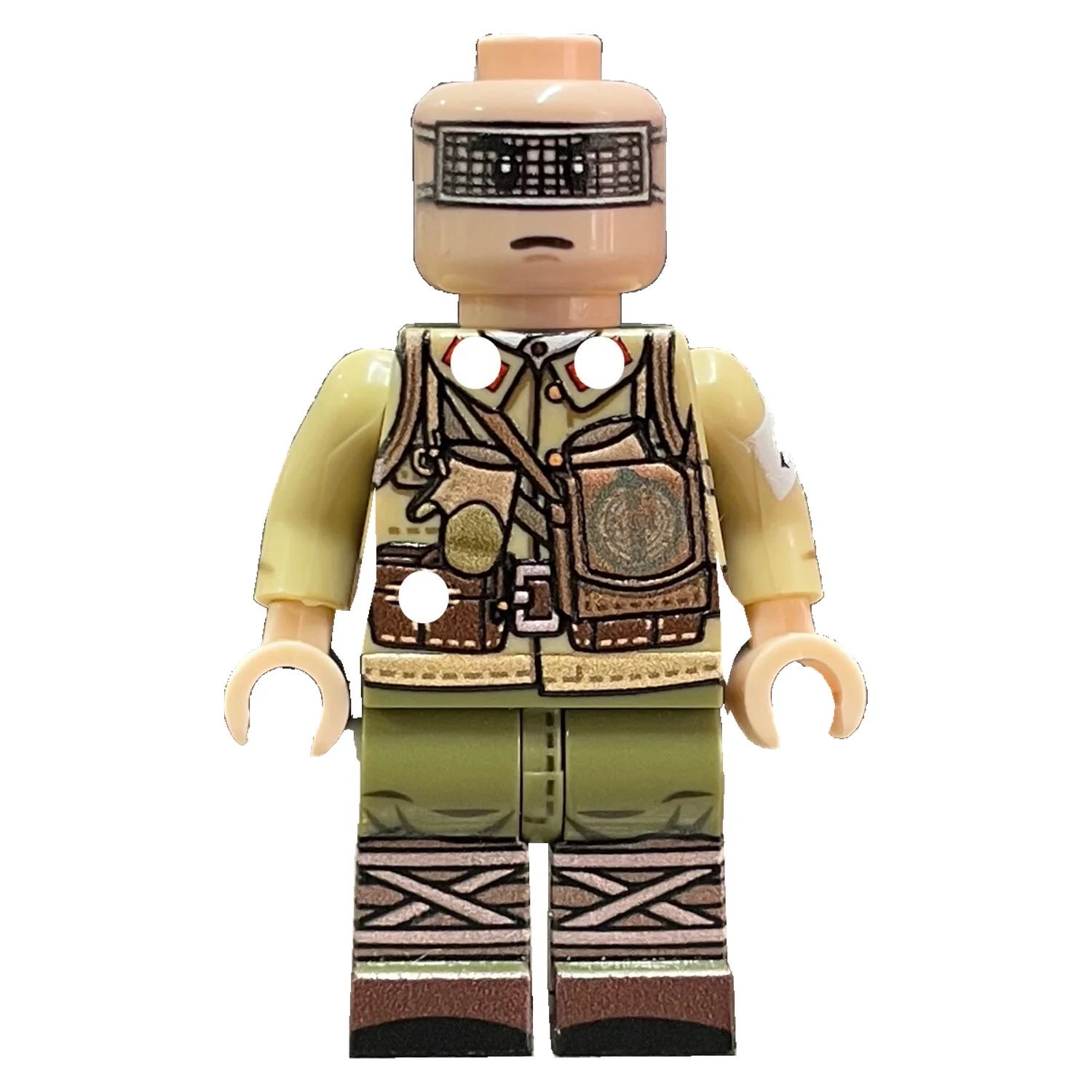
A Chinese Nationalist infantry-style field figure distinguished by a two-tone khaki and olive uniform and printed mesh-pattern goggles. Its design reflects a Republican-era Chinese army uniform theme. This listing is for one figure. Both photographs show the same front view of this single figure.
Detailed Character Description
The figure has a flesh-tone head with a black rectangular mesh-pattern eye covering and a small dark mouth. Its khaki torso has a turned-down collar, visible red-edged tab remnants, button and pocket details, a diagonal strap, a belt and several printed pouches. The arms are khaki, while the trousers are olive with printed creases. Brown-and-black boot artwork and crossed wrap details cover the lower legs. A partial sleeve patch is visible, but its text cannot be read reliably. Goggles, straps, pouches, wraps and boots are described as printed design details rather than detachable accessories. No separate headgear, weapon or loose equipment is included in the supplied presentation.
Historical / Thematic Background
The figure takes its theme from Chinese Nationalist infantry dress during the Republican era, focusing on the practical appearance of a field soldier. Its khaki tunic, olive trousers, printed carrying straps and wrapped lower legs create a recognizable uniform-inspired silhouette. The mesh-pattern goggles are a distinctive part of this individual design; they do not establish a specialist role or equipment type.
Whampoa Military Academy’s early uniforms provide useful background to this clothing tradition. Accounts of the 1924 pattern describe turned-down collars, four external pockets, belts and puttees, with khaki and gray among the colors used. Such details suited economical, practical clothing for training and field activity. On this figure, pocket, pouch and leg-wrap printing translates that functional appearance into compact brick-figure artwork, suggesting an infantry display or marching scene without adding separate equipment.
Republican-era army dress also changed through successive regulations. The January 1929 interim system distinguished branch and rank through collar symbols and colors, including red for infantry, while later regulations specified dress for different occasions and olive-drab service clothing. This history explains why details such as collars, fabric colors and belts matter when interpreting a uniform. Here the Nationalist infantry attribution describes the intended style; obscured collar areas and an unreadable sleeve patch prevent a reliable identification of a particular formation, rank or year.

Reviews
There are no reviews yet