

Variations
Introduction
Group Identification: WW1 French Army (1914)
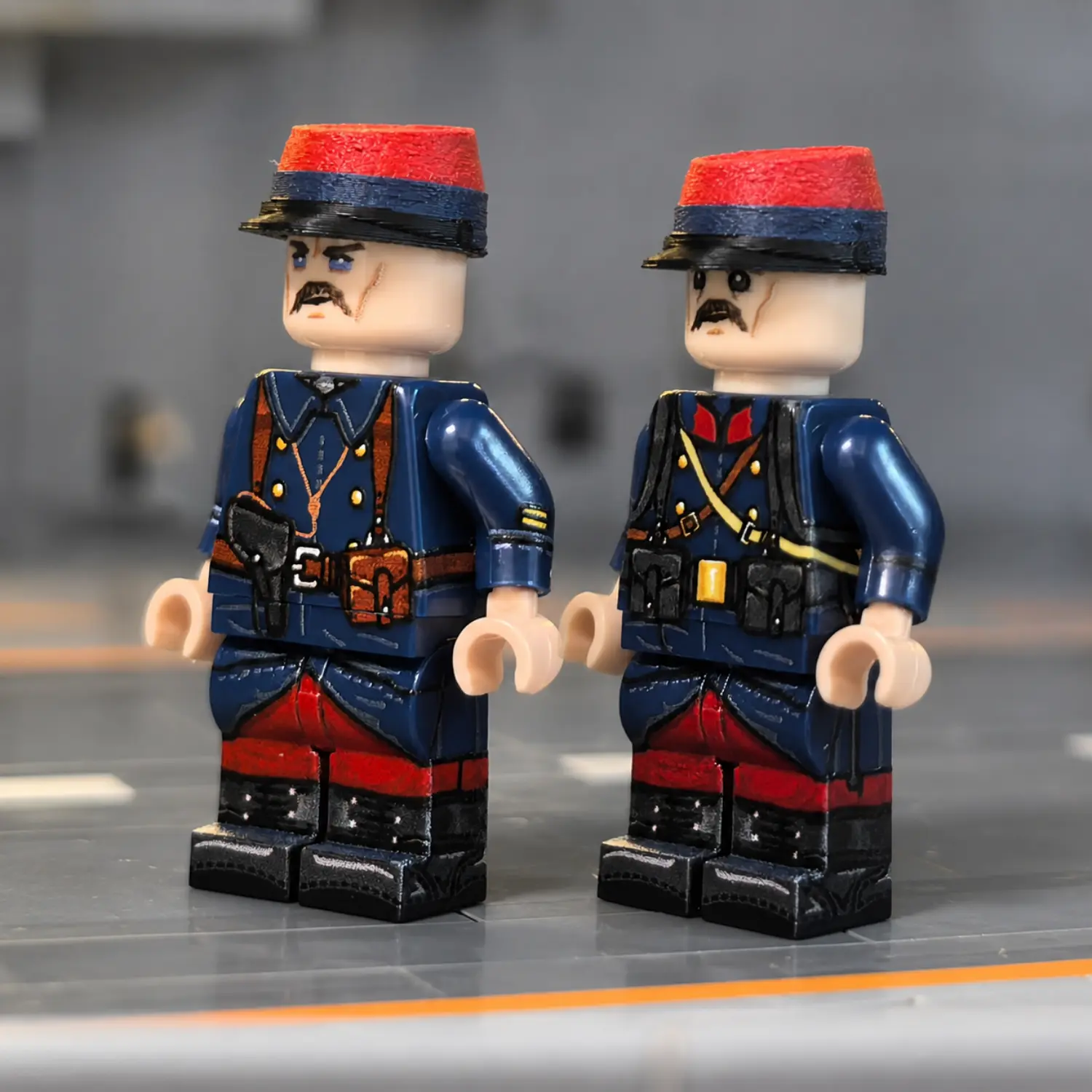
This image displays two Custom Printed Brick Block Figures representing soldiers of the French Army during the opening months of World War I, specifically around the time of the First Battle of the Marne in 1914. The image provides a brilliant side-by-side comparison of the command structure and equipment differences between a commissioned officer (left) and an enlisted frontline infantryman (right).
Here is a detailed, one-by-one breakdown of each figure:
1. The Left Figure: WW1 French Officer
-
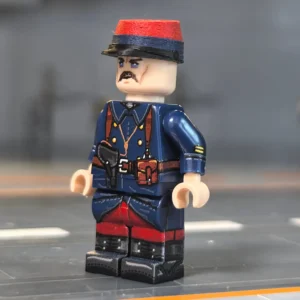
Specific Name: WW1 French Army Officer (1914 Marne Variant)
-
Visual Details:
-
Headgear: He wears the traditional French officer’s Kepi with a bright red top, a dark blue band, and a black visor.
-
Facial Features: He features a stern, authoritative expression with a thick mustache and a battle scar over his left eye.
-
The Tunic: He is dressed in the officer’s dark blue tunic (veston). It is double-breasted with bright gold brass buttons and a gold chain/lanyard detail printed on the chest. The sleeves feature gold rank chevrons.
-
Tactical Webbing: As an officer, his gear is made of high-quality brown leather. He wears a classic Sam Browne-style belt with cross-straps. Mounted on the belt is a black pistol holster (typical for close-quarters command) and a brown leather map or compass pouch.
-
Lower Body: He wears the infamous bright Red Trousers (Pantalons Rouges), tucked into black leather gaiters and boots.
-
2. The Right Figure: WW1 French Rifleman (Infantryman)
-
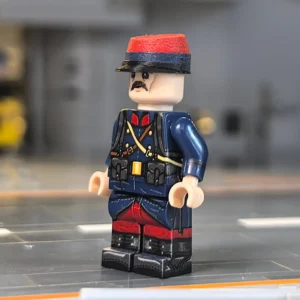
Specific Name: WW1 French Infantryman / Poilu (1914 Marne Variant)
-
Visual Details:
-
Headgear: He wears the enlisted man’s version of the red and blue Kepi.
-
Facial Features: He shares the mustache and scar details but has a more somber, exhausted expression typical of a frontline trench soldier.
-
The Overcoat: Unlike the officer’s short tunic, the enlisted rifleman wears the heavy, iron-blue Infantry Greatcoat (Capote). A brilliant historical detail captured here is how the bottom corners of the coat are buttoned back to allow his legs to move freely while marching or charging. He features red collar patches denoting his unit.
-
Tactical Webbing: His gear reflects standard infantry issue. He wears a black leather belt with a brass square buckle, supported by black Y-straps. He carries standard black ammunition pouches designed for Lebel or Berthier rifle clips, and a yellow-canvas strap crosses his chest to secure his field gear.
-
Lower Body: He also wears the highly visible Red Trousers, strapped with black leggings over his marching boots.
-
Historical Background
These two figures capture the tragic and outdated military doctrine of the French Republic at the outbreak of World War I in August 1914.
-
The Napoleonic Echo: When war was declared, the French army marched out wearing uniforms that had barely changed since the mid-19th century. The doctrine of the time heavily emphasized élan (fighting spirit and offensive charges). Military leaders believed that the bright, proud colors—especially the Red Trousers—would boost morale and terrify the enemy.
-
The Tragedy of the Marne: During the Battle of the Frontiers and the First Battle of the Marne (September 1914), this vibrant attire proved to be a fatal flaw. Against modern German Maxim machine guns and heavy artillery, the brightly colored French troops (both officers leading the charge and riflemen following them) stood out vividly against the green and brown landscapes, suffering catastrophic casualties.
-
The Evolution: The massive loss of life in these 1914 uniforms forced the French high command to rapidly modernize. By 1915, these colorful Kepis and red trousers were completely abandoned, replaced by the famous, camouflage-minded Horizon Blue uniforms and protective steel Adrian helmets.
Reviews
There are no reviews yet