



this brick figure is fully compatible with major standard building blocks.
Character Identification
-
Original/German Designation: WWI German Tankabwehr Soldier
-
English Name: WWI German Anti-Tank Assault Soldier
-
Specific Identity: An Imperial German Army infantryman (Landser) serving during the late stages of World War I (1917–1918), heavily equipped with specialized gear to hunt and destroy early Allied tanks.
Detailed Character Description
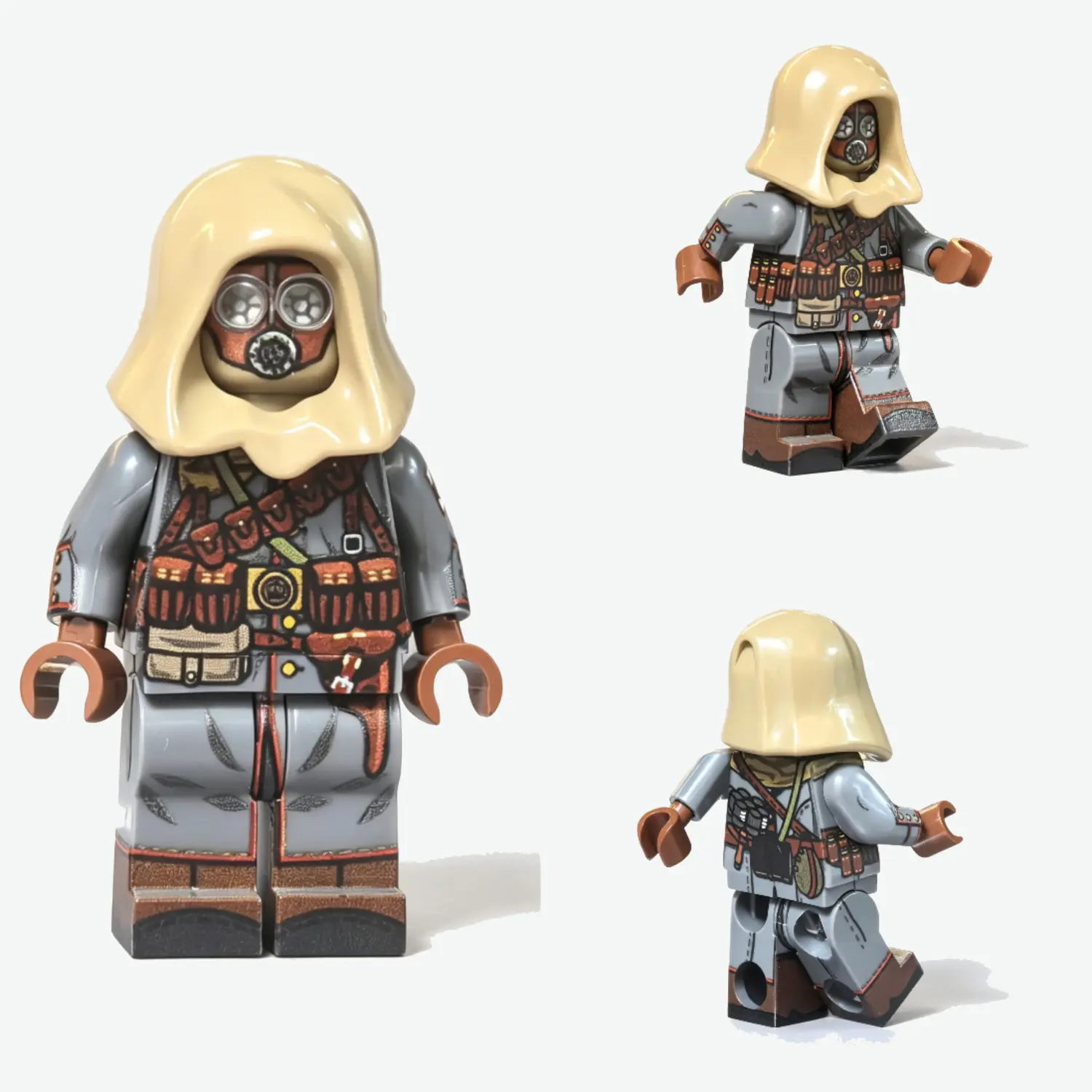
This figure features exceptional 360-degree custom printing designed to capture the terrifying reality of late-war chemical and mechanized combat.
-
Head and Face Protection: The most striking feature of this figure is the headpiece. The soldier’s face is completely obscured by a printed early WWI German gas mask (resembling a Gummimaske or Ledermaske), characterized by its two round, metallic-looking eyepieces and a prominent cylindrical filter over the mouth. Over the helmet and mask, the figure wears a custom-molded tan/khaki protective hood, which drapes down over the shoulders to protect the skin from chemical blister agents and trench debris.
-
Front Torso and Ammunition: The figure is outfitted in the classic Feldgrau (field grey) uniform, detailed with red piping down the center and on the cuffs. Across his chest is a complex printed web of brown leather bandoliers. These pouches are distinctly oversized, holding large-caliber ammunition rather than standard rifle clips—likely representing the massive 13.2mm rounds used for the Mauser T-Gewehr anti-tank rifle.
-
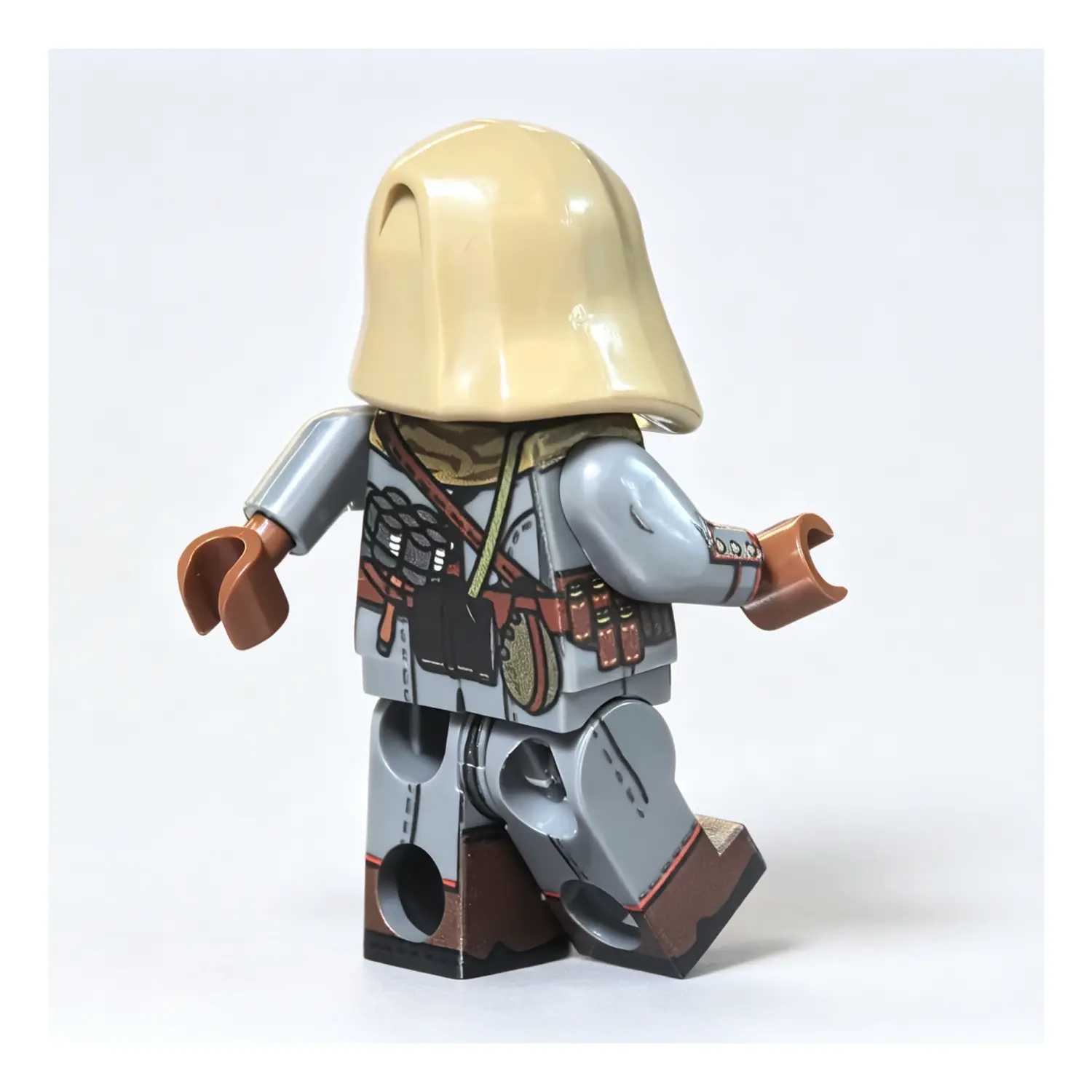
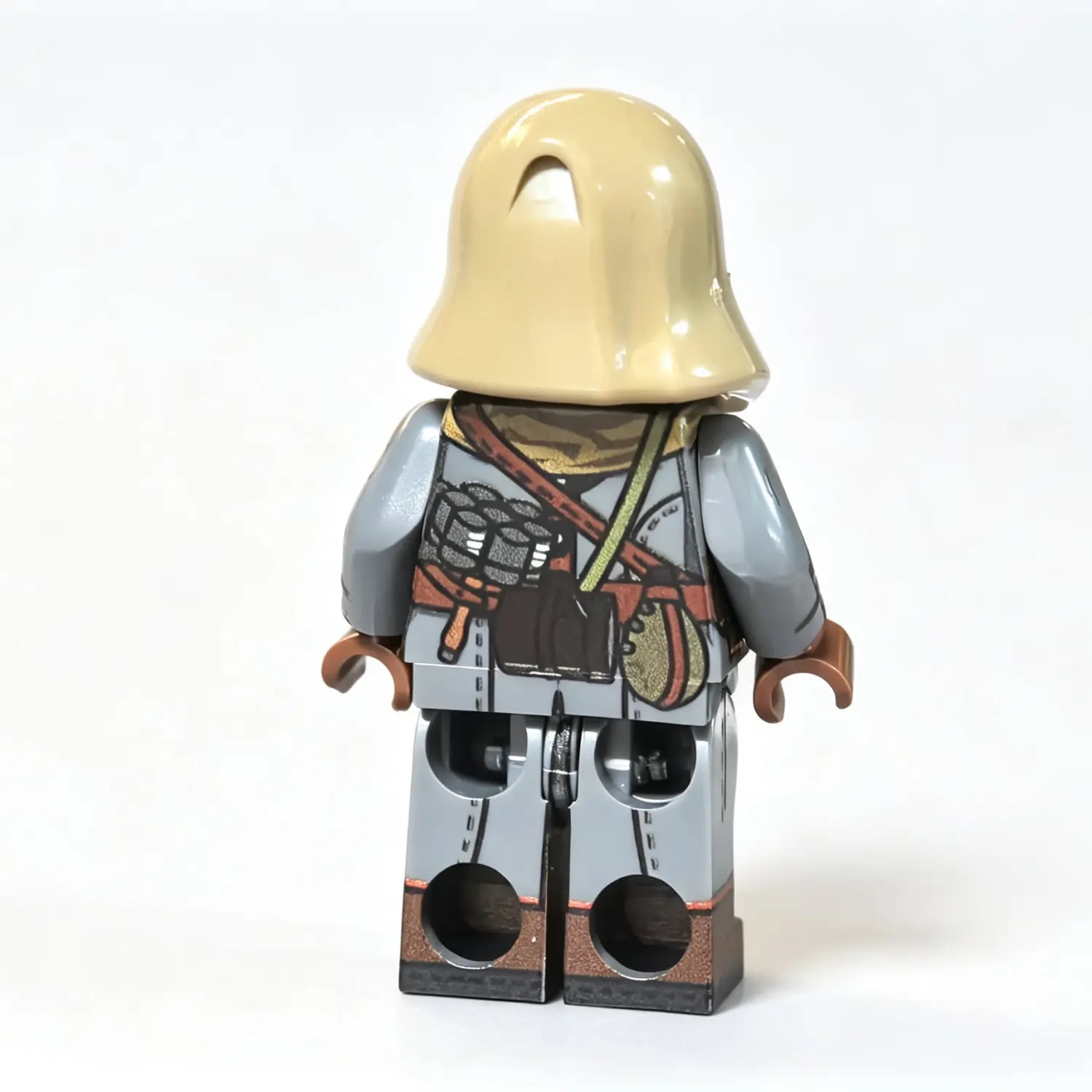
Back Torso and Anti-Tank Gear: The back printing (
detail-08.webpanddetail-09.webp) reveals his close-quarters anti-tank arsenal. Tucked securely into his belt is a printed Geballte Ladung (Bundled Charge). This is a cluster of several German stick grenades (Stielhandgranaten) wired around a central explosive, used to blow off tank treads. Below this, the figure carries standard German infantry survival gear: a brown canvas bread bag and a metal water canteen. -
Legs and Footwear: The field grey trousers continue the red piping down the outer seams. The legs feature wrap-around printing that transitions into traditional brown leather marching boots (often called Jackboots or Knobelbecher). The boots feature subtle weathering along the bottom edge, grounding the figure in the muddy environment of the trenches.
Historical Background
-
The Birth of Tankabwehr (Anti-Tank Defense): When the British first deployed tanks on the Somme in 1916, it caused a massive shock to the German lines. By 1917 and 1918, the Imperial German Army had developed dedicated Tankabwehr (anti-tank) tactics and specialized squads to counter these steel behemoths.
-
Desperate Weapons: Because dedicated anti-tank artillery was often too slow to move in the muddy trenches, regular infantry had to improvise. The Geballte Ladung (Bundled Charge) printed on this figure’s back was a highly dangerous but effective tactic where a brave soldier would rush a tank and throw the clustered explosives directly into the tracks to disable it.
-
The Anti-Tank Rifle: The oversized ammunition pouches on the front of the figure hint at the use of the Mauser 13.2 mm Tankgewehr M1918. This was the world’s first anti-tank rifle. It was a massive, heavy weapon that fired armor-piercing bullets capable of penetrating the relatively thin armor of early British and French tanks.
-
Chemical Warfare & Gas Masks: By the end of the war, artillery barrages routinely included poison gas (such as chlorine, phosgene, and mustard gas). The unsettling gas mask and protective hood depicted on this figure were absolute necessities for survival. Mustard gas, in particular, attacked any exposed skin, which is why soldiers required heavy hoods and covering beyond just protecting their lungs.

Reviews
There are no reviews yet