

Variations
Introduction
English Name & Translation
-
Chinese Name: 二战德军步兵/士官 (带铁丝网钢盔版)
-
English Translation: WWII German Army Infantryman / NCO with Wire Mesh Stahlhelm
Character Identification
-
Character Name: Wehrmacht Heer Infantry Soldier / Non-Commissioned Officer (NCO)
-
Faction / Origin: German Army (Wehrmacht Heer) / Nazi Germany
-
Historical Era: World War II (1939–1945)
-
Block Compatibility: This brick figure is 100% compatible with major standard building blocks.
Detailed Character Description
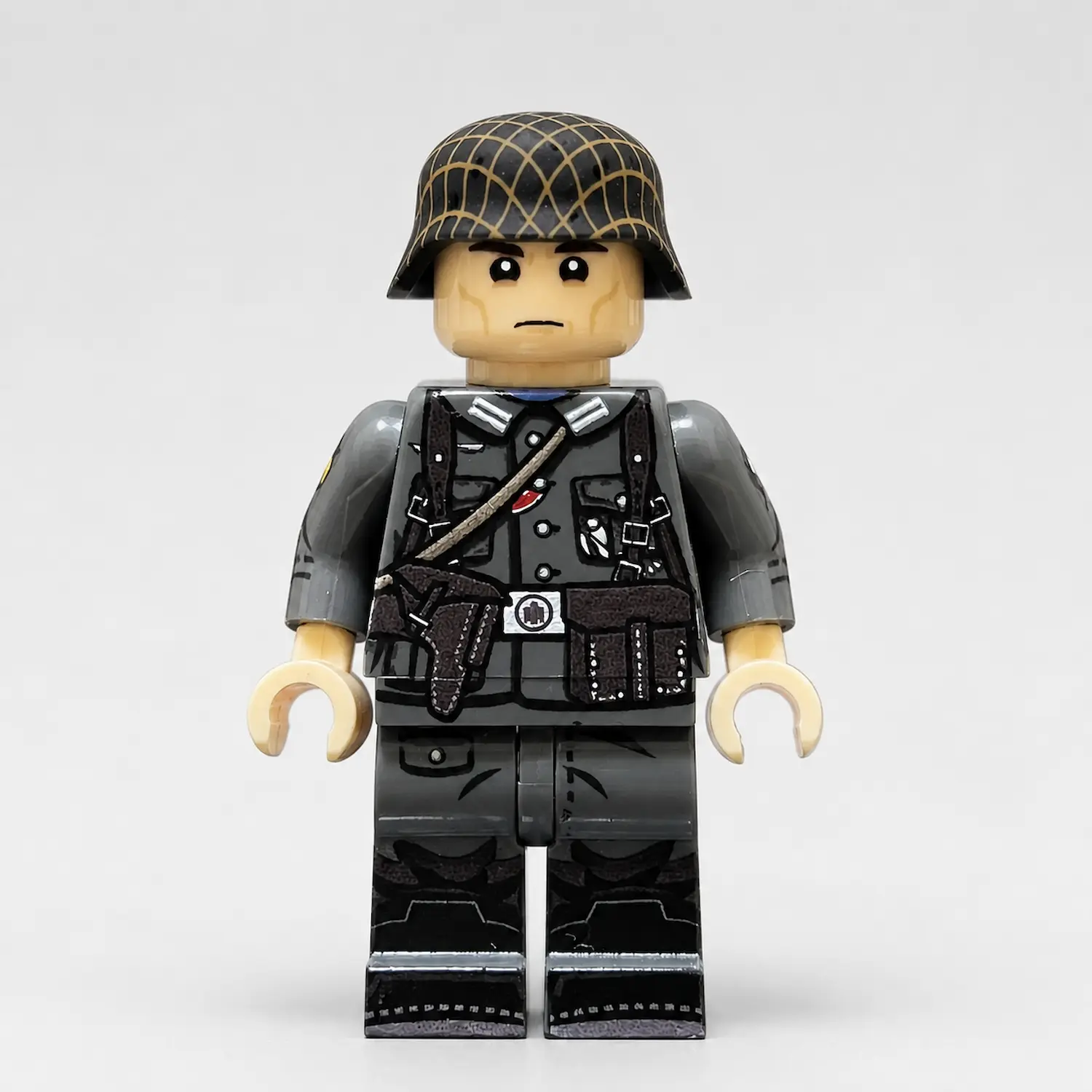
(This premium building block figure features intricate 360-degree UV printing to recreate the battle-hardened appearance of a World War II German frontline infantryman or squad leader.)
-
Headgear & Facial Printing:
-
The figure is equipped with an iconic German M40 steel helmet (Stahlhelm). Crucially, the helmet features a highly detailed, printed wire mesh net pattern covering the entire dome.
-
The face print captures a stern, stoic combat expression with distinct cheekbone definitions and a set jawline, reflecting the exhaustion and focus of a veteran frontline soldier.
-
-
Torso & Combat Uniform:
-
The torso block depicts the standard-issue field-grey (Feldgrau) combat tunic.
-
The collar features crisp printing of the traditional white double-braid collar tabs (Litzen), which denoted infantry personnel.
-
Subtle printed fabric folds and seams give the uniform a realistic, worn appearance.
-
-
Tactical Webbing & Equipment:
-
The figure is equipped with standard black leather combat webbing, featuring printed Y-strap suspenders pulling down over the shoulders.
-
Around the waist, a black leather combat belt is fastened with a highly detailed Wehrmacht belt buckle featuring the army eagle emblem.
-
On his right hip (viewer’s left), the figure carries a black leather pistol holster, typically housing a Walther P38 or Luger P08, a strong indicator of NCO or squad leader status.
-
On his left hip (viewer’s right), standard three-cell Kar98k ammunition pouches are printed, holding stripper clips for the standard infantry rifle.
-
A diagonal canvas strap crosses his chest, historically used to carry a bread bag, canteen, or gas mask canister.
-
-
Medals & Decorations:
-
Tucked into the second buttonhole of his tunic is the distinctive black, white, and red ribbon of the Iron Cross 2nd Class (Eisernes Kreuz 2. Klasse).
-
Pinned to his left breast pocket is a silver-colored Infantry Assault Badge (Infanterie-Sturmabzeichen), awarded for participating in multiple frontline infantry combat assaults.
-
-
Legs & Footwear:
-
The leg blocks seamlessly continue the field-grey trousers.
-
The lower legs feature detailed printing of standard-issue black leather marching boots (Marschstiefel) (often called “jackboots”), complete with subtle mud, dust, and crease textures to emphasize his deployment in harsh field conditions.
-
Historical Background
The German Army (Wehrmacht Heer) relied heavily on the tactical proficiency of its infantry squads, which were often led by highly experienced Non-Commissioned Officers (NCOs). These squad leaders were the tactical backbone of the German frontline, directing machine-gun fire and leading assaults.
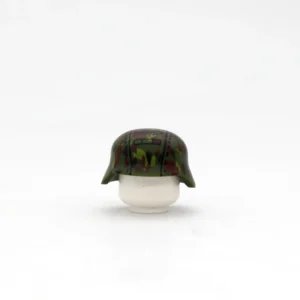
The most striking historical feature of this figure is the wire mesh on the Stahlhelm. As the war progressed and Allied air superiority grew, camouflage became essential for survival. German soldiers heavily modified their helmets in the field using chicken wire or custom-made wire baskets (Drahtgeflecht). This wire netting allowed troops to easily attach local foliage, branches, or scraps of burlap to break up the distinct, recognizable silhouette of the steel helmet.
Furthermore, the presence of the Iron Cross ribbon and the Infantry Assault Badge signifies that this specific soldier is a highly decorated combat veteran who has survived multiple close-quarters engagements on the front lines.
Reviews
There are no reviews yet