

Variations
Introduction
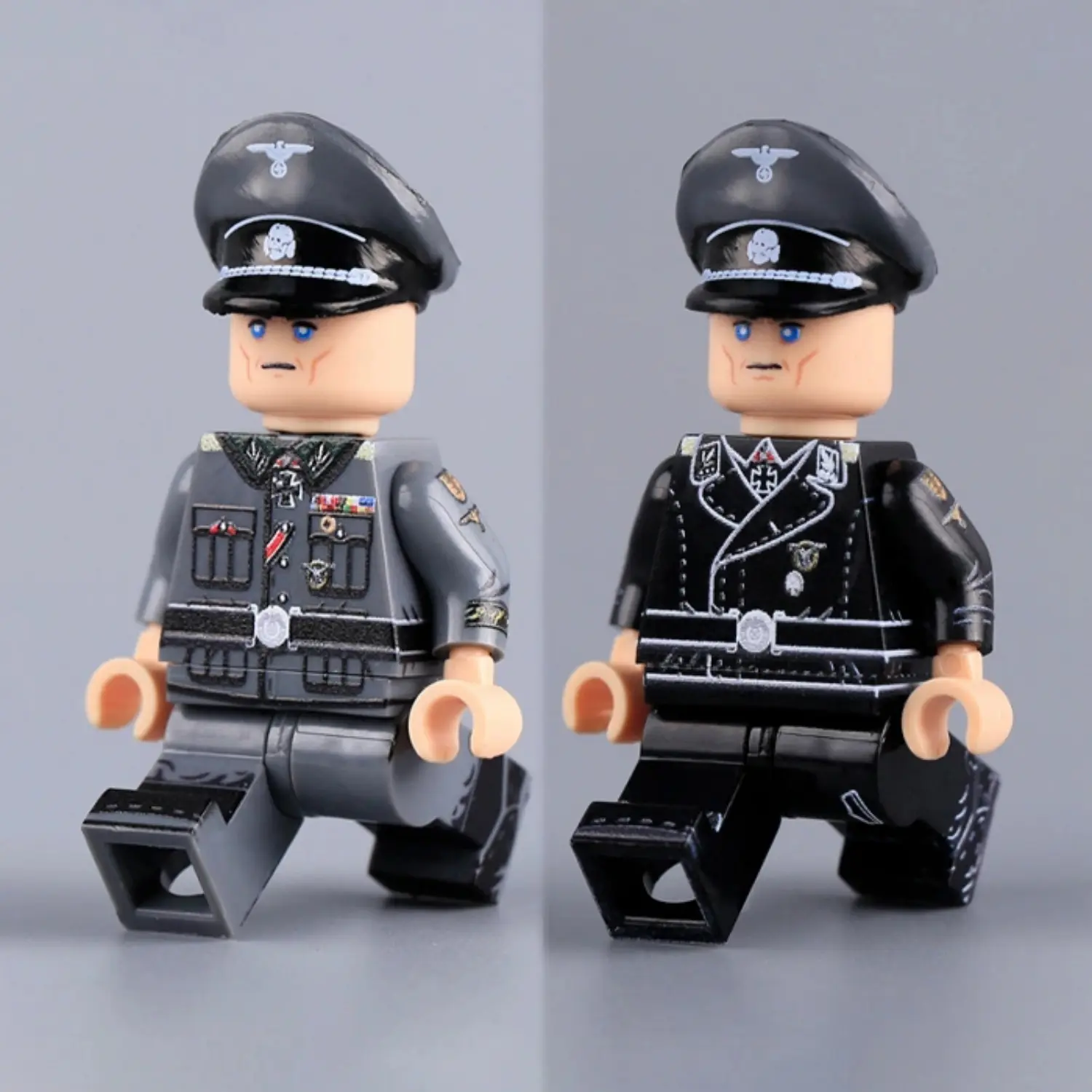
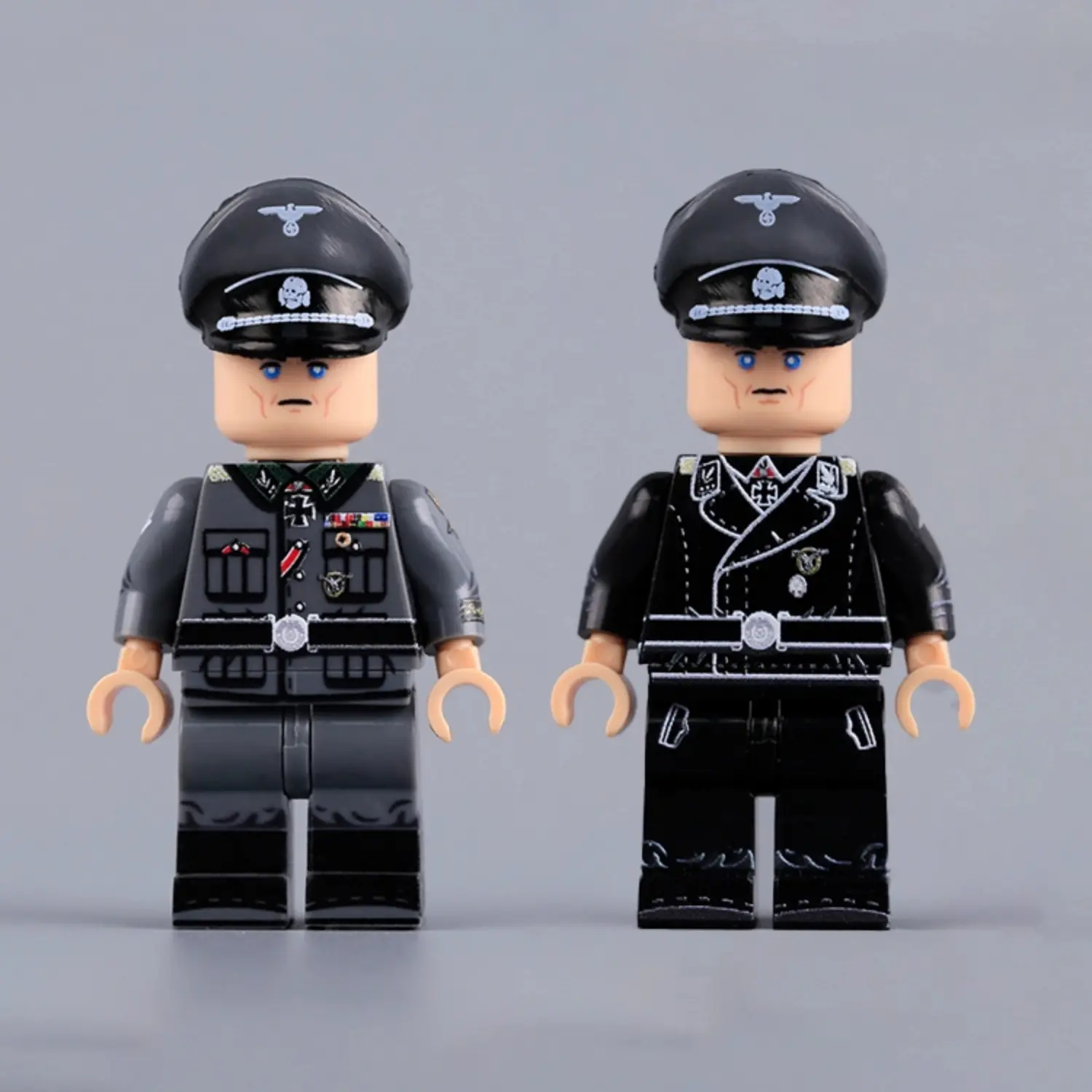
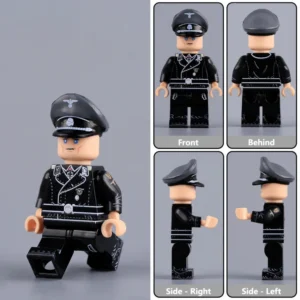
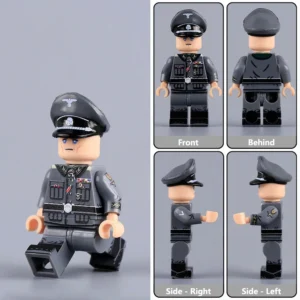
this showcases two highly detailed custom UV-printed building block figures.
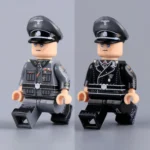
Rather than two different people, these figures represent the same historical commander depicted in two different distinct uniforms from his military career during World War II.
Here is the detailed English description, specific character identification, and historical background for both variants, introduced one by one from left to right.
Character Identification: The Bodyguard Turned Army Commander
-
Specific Name: Josef “Sepp” Dietrich
-
Role: One of the most prominent commanders of German armored forces, famous for commanding the elite 1st SS Panzer Division Leibstandarte SS Adolf Hitler (LSSAH) and eventually the 6th Panzer Army.
1. Left Figure: Josef Dietrich (Field Grey Service Uniform)
-
Rank Represented: SS-Obergruppenführer (Equivalent to General).
-
Detailed Visual Breakdown:
-
Headgear: He wears a black General’s Visor Cap (Schirmmütze). It features a printed silver chin cord (denoting general officer rank), the national eagle, and the Totenkopf (Death’s Head) emblem.
-
Facial Features: He features striking blue eyes and a stern, lined face, capturing Dietrich’s rugged appearance as an older veteran.
-
Uniform: He is dressed in the standard Field Grey (Feldgrau) four-pocket open-collar tunic.
-
Decorations: He wears the prestigious Knight’s Cross of the Iron Cross (Ritterkreuz) at his neck. His chest is heavily decorated with a ribbon bar, the pin-back Iron Cross 1st Class, the Golden Party Badge, and an Iron Cross 2nd Class ribbon through his buttonhole.
-
Sleeve Insignia: His left sleeve features an officer’s cuff title (signifying command of the Leibstandarte) and an eagle emblem. Notably, his right sleeve features the silver “V” chevron, known as the Honor Chevron for the Old Guard (Ehrenwinkel der Alten Kämpfer), marking him as an early member of the Nazi Party.
-
2. Right Figure: Josef Dietrich (Black Panzer Wrap Uniform)
-
Rank Represented: SS-Oberst-Gruppenführer (Equivalent to Colonel General – his highest achieved rank).
-
Detailed Visual Breakdown:
-
Headgear & Face: He wears the exact same highly detailed General’s Visor Cap and features the same facial print as the left figure.
-
Uniform (The Panzerjacke): This variant depicts him in the iconic black, double-breasted Panzer wrap jacket (Panzerjacke). This uniform was specifically designed for tank crews and armored commanders; its short waist and lack of exterior pockets prevented snagging inside cramped tanks.
-
Rank Insignia: His collar tabs are different from the left figure. They display three oak leaves and three pips, representing his ultimate promotion to SS-Oberst-Gruppenführer.
-
Decorations: He still wears his Knight’s Cross, the Golden Party Badge, and the Iron Cross 1st Class, but this variant also clearly displays a Panzer Assault Badge on his left breast.
-
Historical Background: The Alte Kämpfer (Old Fighter)
These two figures perfectly capture the aesthetic evolution of one of WWII’s most polarizing military figures.
-
Hitler’s Inner Circle: Unlike traditional Prussian generals who attended prestigious military academies, Josef Dietrich was a working-class veteran of World War I who joined the Nazi Party very early. He became Adolf Hitler’s personal chauffeur and trusted bodyguard. His fierce loyalty, rather than strategic genius, fueled his rapid rise to power.
-
The Leibstandarte: Dietrich was the founding commander of the Leibstandarte SS Adolf Hitler (LSSAH). What began as a small, ceremonial bodyguard detachment grew under his leadership into a heavily armed motorized regiment, and ultimately into a premier Panzer division. Because of his close ties to Hitler, his troops always received the newest tanks and finest equipment.
-
Command Style: Dietrich relied heavily on his highly trained staff officers to handle the complex logistics and strategic planning of his battles. However, he was deeply respected by his frontline soldiers because he led from the front, often exposing himself to enemy fire. He commanded armored forces throughout the war, culminating in his command of the 6th Panzer Army during the Battle of the Bulge (the Ardennes Offensive) in late 1944.
Reviews
There are no reviews yet