

English Title & Specific Name
-
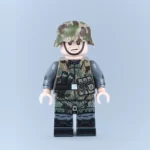
Figure Title: WWII German Luftwaffe Field Division Submachine Gunner (Zeltbahn Poncho)
-
Historical Era: World War II (1939–1945)
-
Faction / Military Branch: German Luftwaffe (Air Force) / Luftwaffe Field Divisions
Detailed Character Identification, Description, and Historical Background
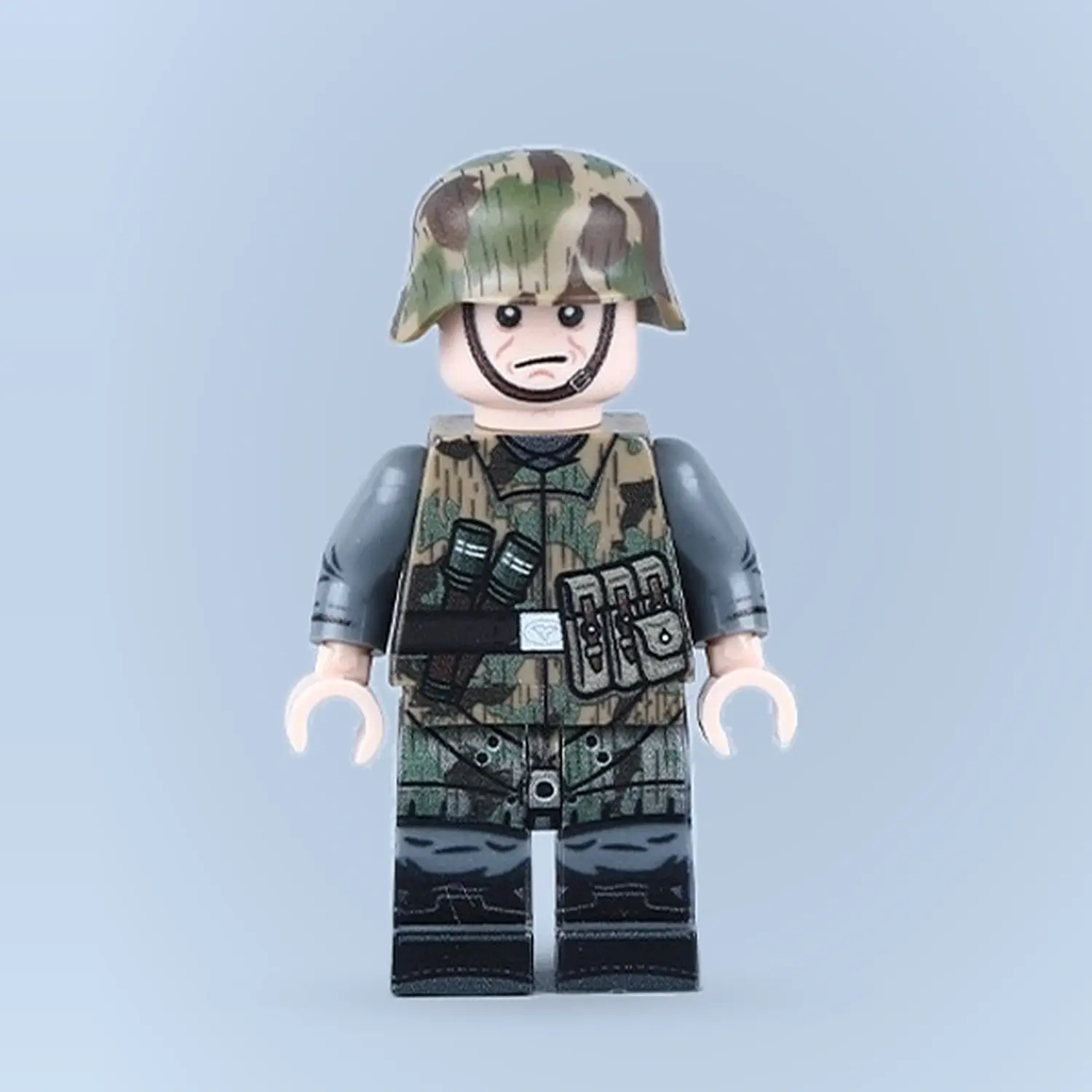
Character Identification This custom building block figure represents a ground combat soldier—specifically a submachine gunner or squad leader—of the German Luftwaffe Field Divisions (Luftwaffe-Feld-Divisionen). The original text “Air Force Tent Soldier” translates to his defining garment: the Zeltbahn 31, a versatile shelter quarter worn as a camouflage rain poncho. This figure is specifically identified as an assault trooper or NCO by the distinct angled three-cell canvas ammunition pouch on his belt, which was designed exclusively to hold magazines for the MP40 submachine gun.
Detailed Character Description (Utilizing intricate 360-degree UV printing, this figure flawlessly captures the layered, weather-beaten appearance of an automatically armed German infantryman fighting in the damp European theater.)
-
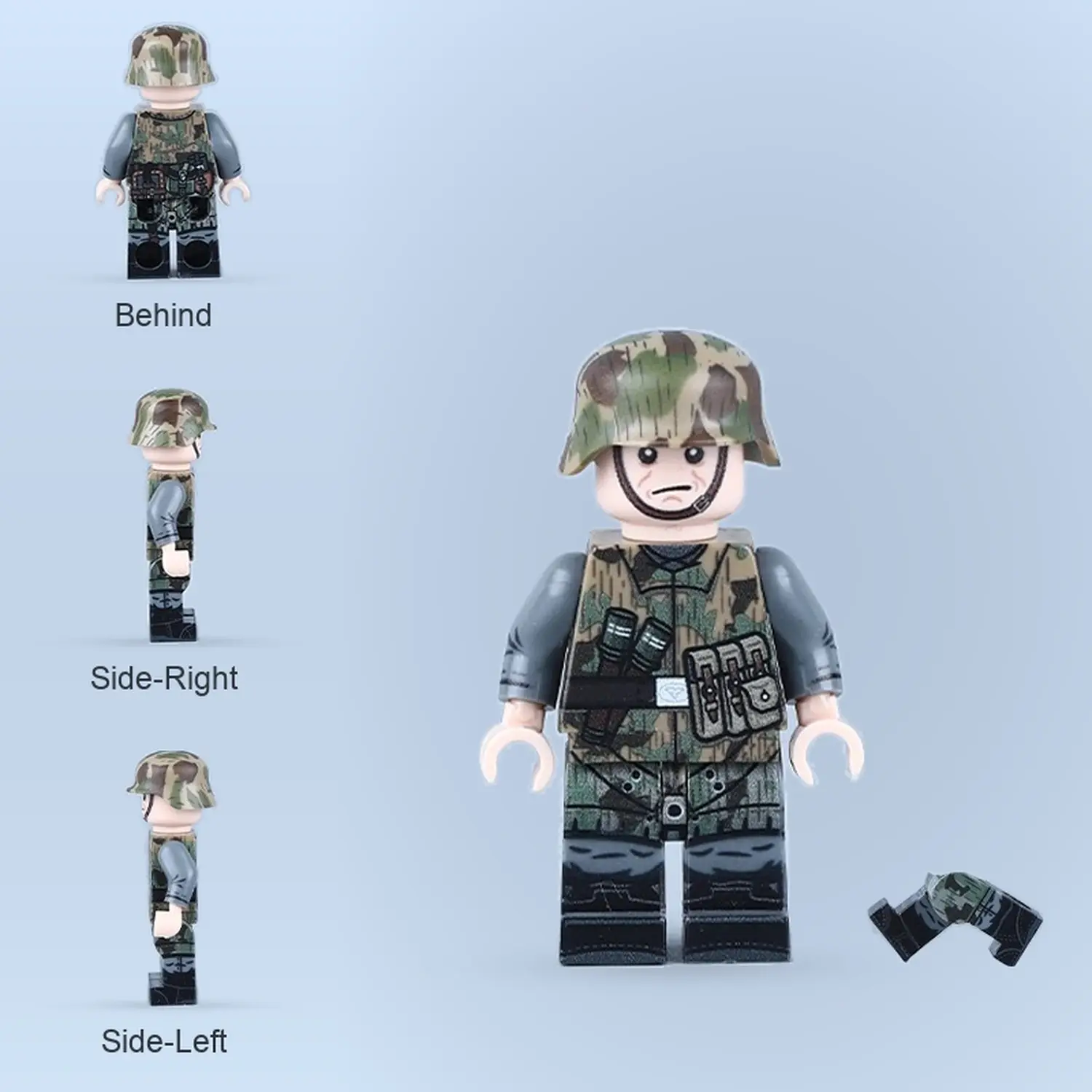
Headgear & Face: The figure wears a standard-issue M35/M40 Stahlhelm (steel combat helmet) featuring the classic flared rim. The helmet is covered by a tailored cloth cover printed in the Luftwaffe splinter camouflage pattern (Splittertarnmuster) to break up the soldier’s silhouette. His face print displays a stoic, battle-weary expression, securely fastened by a printed leather chin strap.
-
Torso (The Zeltbahn Poncho & MP40 Loadout): The standout feature of this figure is the Zeltbahn camouflage poncho draped over his standard field-grey (Feldgrau) Luftwaffe tunic. The printing accurately replicates the geometric shards and “raindrop” streaks of the splinter camouflage pattern. Worn directly over the poncho is his combat webbing: printed black leather Y-straps and a standard equipment belt. On the left side of his belt rests the definitive MP40 submachine gun magazine pouch, while a Model 24 stick grenade (Stielhandgranate) is aggressively tucked into the right side for quick access in close-quarters combat.
-
Back & Side Gear: The 360-degree back printing vividly details the continuation of the Zeltbahn poncho and the soldier’s essential field survival gear. This includes the rear connection points of the Y-straps, a metal water canteen (Feldflasche), a canvas bread bag, a ribbed metal mess tin (Essgeschirr), and an entrenching tool (folding shovel) hanging at his hip.
-
Legs & Footwear: His lower half shows the bottom draped edges of the Zeltbahn poncho hanging over standard field-grey uniform trousers. These transition seamlessly into heavy black leather marching boots (Marschstiefel), commonly referred to as jackboots, which were standard issue for German ground forces.
Historical Background By 1942, the German military (Wehrmacht) was suffering catastrophic infantry casualties on the Eastern Front. Simultaneously, the Luftwaffe (Air Force) had hundreds of thousands of surplus personnel—including ground crews, anti-aircraft (Flak) gunners, and administrative staff. Rather than transfer these men to the Army (Heer), Luftwaffe commander Hermann Göring insisted on forming his own private ground army: the Luftwaffe Field Divisions.
While these Air Force soldiers were generally well-equipped with standard infantry weapons and camouflage gear, they initially lacked the rigorous, specialized ground combat training of the regular Army. The Zeltbahn 31 worn by this figure was one of the most brilliant and versatile pieces of German equipment. It was a triangular piece of tightly woven, water-repellent canvas printed with camouflage on both sides. A soldier could wear it as a rain poncho, use it as a blanket, or button four of them together with his squadmates to form a pyramidal tent. Because this specific figure carries MP40 pouches, he represents a squad leader (Gruppenführer) or platoon commander, as submachine guns were primarily reserved for leadership roles to provide concentrated automatic fire during assaults.
Reviews
There are no reviews yet