

Variations
-
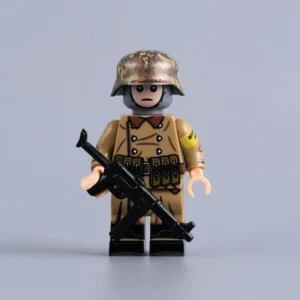
German Volkssturm (People’s Storm) Militiaman with MP40 (Brown Overcoat) WWII – Custom Printed Brick Block Figure
$14.99 -
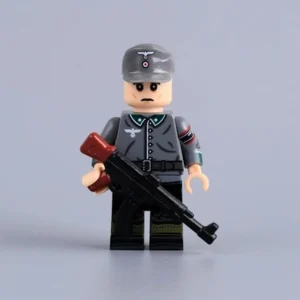
German Volkssturm (People’s Storm) Militia with StG 44 WWII – Custom Printed Brick Block Figure
$14.99 -
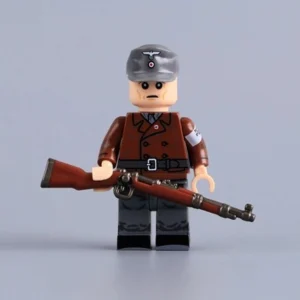
German Volkssturm (People’s Storm) Elder Conscript (Brown Jacket) WWII – Custom Printed Brick Block Figure
$14.99 -
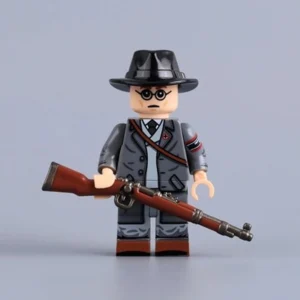
German Volkssturm (People’s Storm) Civilian Militia Conscript WWII – Custom Printed Brick Block Figure
$14.99
Introduction
English Translation & Set Overview
-
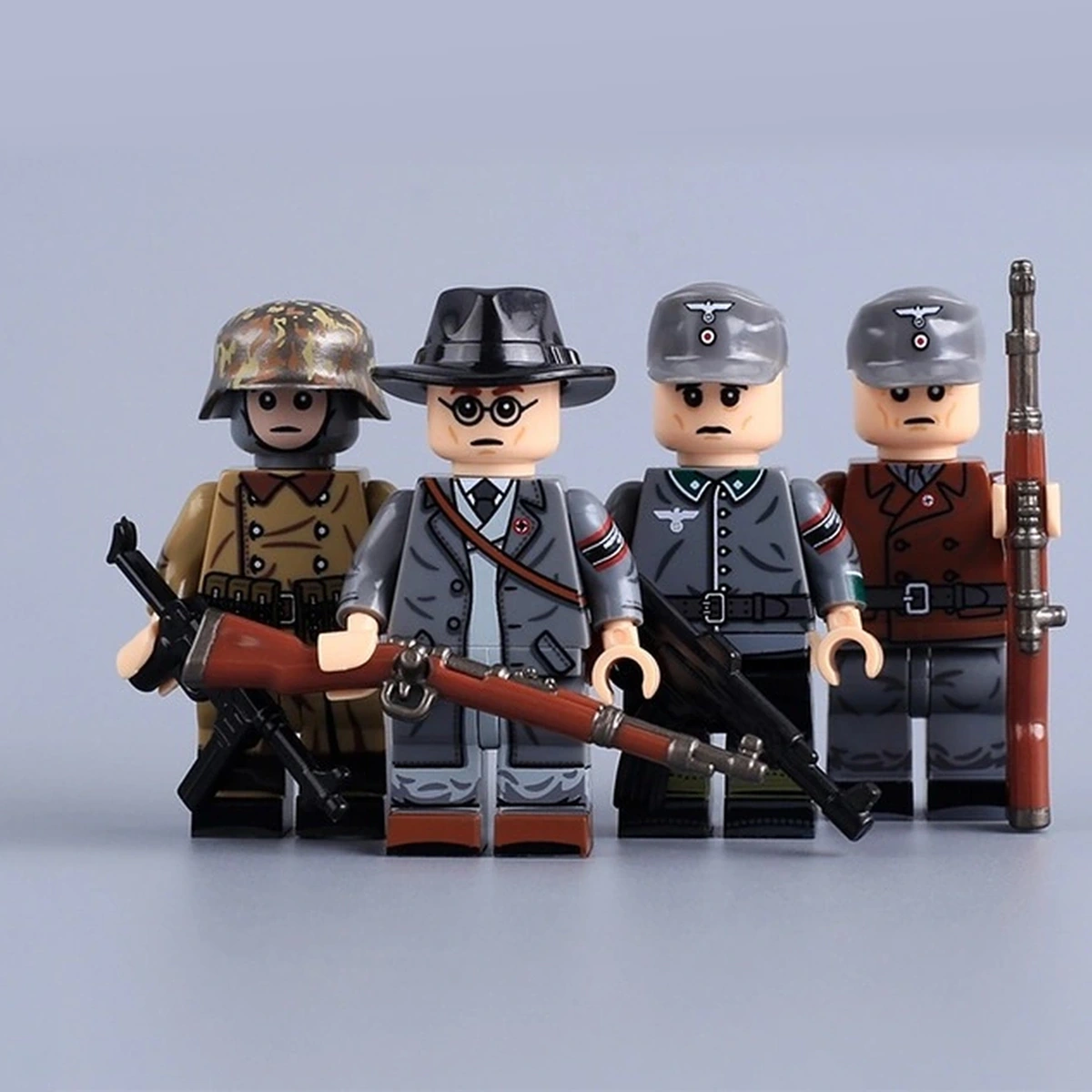
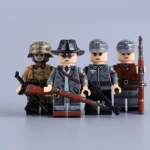
Set Title: WWII German Volkssturm (People’s Storm) Militia – 4-Figure Squad Set
-
Historical Era: World War II (1944–1945) / Fall of Germany & Battle of Berlin
-
Faction: German Volkssturm (National Militia)
This set brings together four distinct figures that perfectly capture the chaotic, mismatched, and desperate nature of Germany’s final defensive levies during the closing months of World War II.
1. Volkssturm Militiaman (MP40 & Brown Overcoat)
Character Identification & Detailed Description: Positioned on the far left, this figure represents a drafted militiaman, likely a squad leader. He wears a splinter camouflage Stahlhelm (steel helmet) over a grey winter toque. His torso features a repurposed brown double-breasted overcoat paired with a black leather belt holding detailed MP40 magazine pouches. A bright yellow and black Volkssturm armband is printed on his left sleeve. He is armed with an MP40 submachine gun. Historical Background: Due to severe uniform shortages, the government emptied warehouses of surplus Nazi Party and SA (Sturmabteilung) brown political uniforms to clothe the militia. Submachine guns were rare in these units and were typically reserved for veterans or unit leaders commanding the untrained conscripts.
2. Volkssturm Civilian Conscript (Fedora & Kar98k)
Character Identification & Detailed Description: Standing second from the left, this figure represents an older citizen drafted straight from civilian life. He wears a black fedora hat and his face print features wire-rimmed glasses. He is dressed entirely in civilian clothes: a grey trench coat, a white shirt, a black tie, and brown dress shoes. His status as a combatant is denoted solely by the black, white, and red striped armband on his left arm. He carries a brown wood-style Kar98k bolt-action rifle. Historical Background: As the military supply chain collapsed, tens of thousands of civilians fought in their everyday work clothes. The officially issued armband was legally required to classify them as lawful combatants under the Hague Conventions, attempting to protect them from being treated as partisans if captured.
3. Volkssturm Militiaman (StG 44 & Field Grey Tunic)
Character Identification & Detailed Description: Second from the right, this figure represents an older conscript in a simplified military uniform. He wears a field grey M43 field cap and a matching, simplified late-war field grey tunic with a standard breast eagle. His left sleeve bears the striped Volkssturm armband. His lower legs feature canvas gaiters over black low boots, and his face print shows deep aging lines. Despite his militia status, he is armed with a highly advanced, two-tone StG 44 (Sturmgewehr 44) assault rifle. Historical Background: During the final Battle of Berlin in 1945, the German high command occasionally distributed highly advanced late-war weapons right off the assembly lines to these desperate defenders, granting grandfathers and teenagers terrifying but short-lived firepower in the urban ruins.
4. Volkssturm Elder Conscript (Brown Jacket & Kar98k)
Character Identification & Detailed Description: On the far right, this figure represents a senior citizen or WWI veteran pressed into service. He wears an M43 field cap and has a heavily lined, exhausted elder face print. He is outfitted in a repurposed brown double-breasted jacket, featuring a white Volkssturm armband with black text on his left sleeve. He holds his Kar98k rifle vertically, resting the stock on the ground. Historical Background: Created in October 1944, the Volkssturm conscripted all males between 16 and 60. By 1945, the manpower crisis was so severe that elderly veterans were forced back into the meat grinder, suffering catastrophic casualties against elite Soviet shock troops in the ruined streets of their own cities.
Reviews
There are no reviews yet