

Variations
-
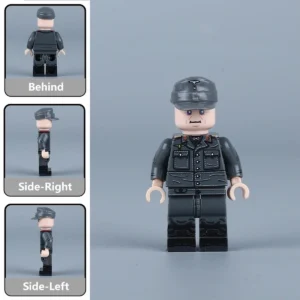
German Wehrmacht General Gerhard von Schwerin (Formal Field Tunic) WWII – Custom Printed Brick Block Figure
$14.99 -
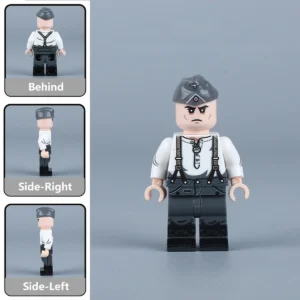
German Wehrmacht General (Gerhard von Schwerin) Summer Shirt & Suspenders WWII – Custom Printed Brick Block Figure
$14.99 -
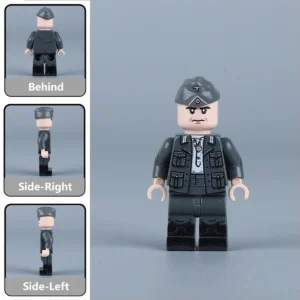
German Wehrmacht General (Gerhard von Schwerin) Relaxed Open Tunic WWII – Custom Printed Brick Block Figure
$14.99
Introduction
English Translation & Set Overview
-
English Translation / Set Title: WWII German Wehrmacht General Gerhard von Schwerin (3-Figure Command Set)
-
Historical Era: World War II (1939–1945)
-
Faction / Military Branch: German Wehrmacht (Heer / Panzer Forces)
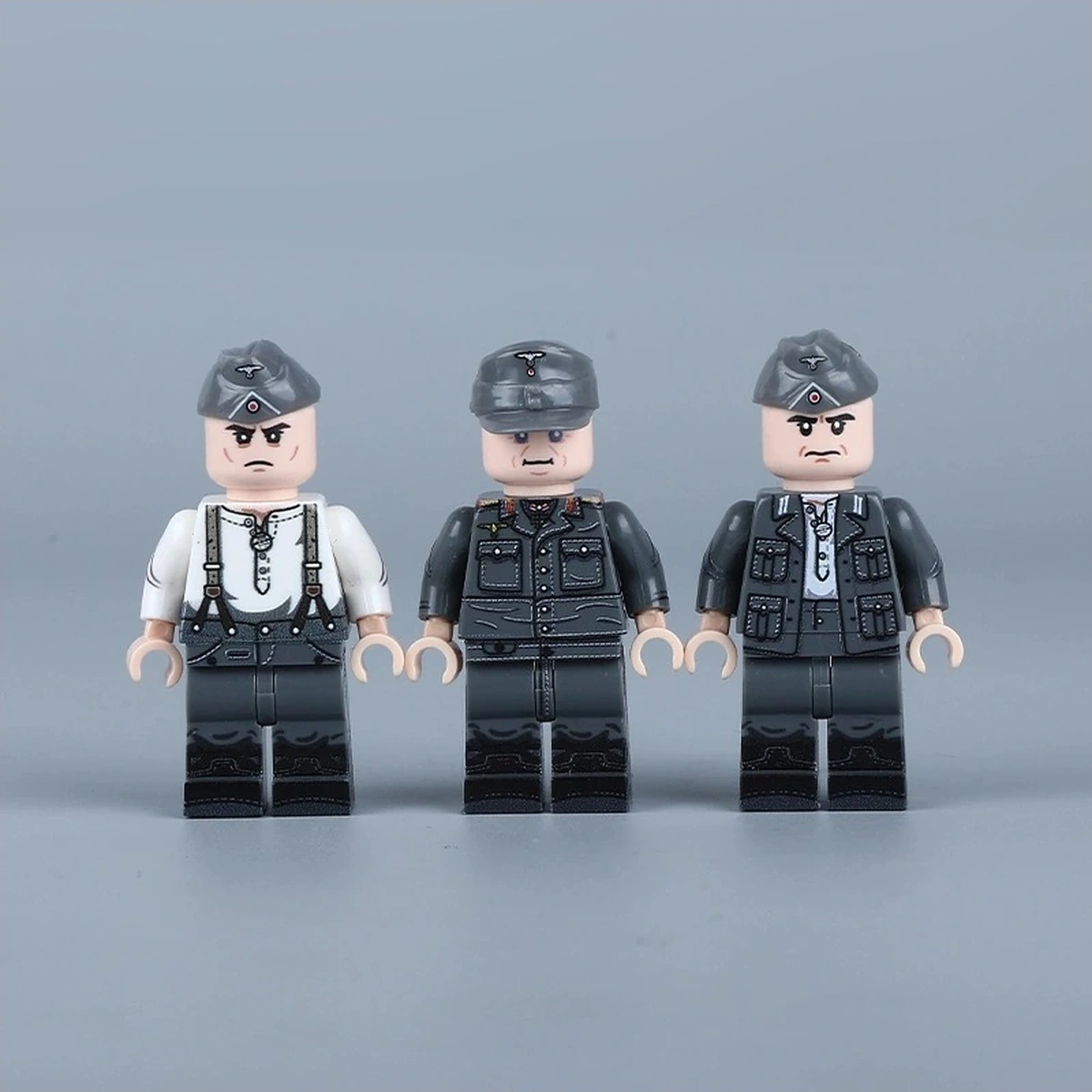
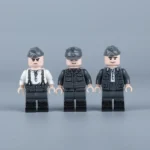
This image showcases three distinct uniform variations of a single historic commander, representing the different ways a frontline general would dress depending on combat conditions, weather, and formality.
Detailed Character Identification, Description, and Historical Background
1. General Gerhard von Schwerin – Summer Shirt & Suspenders Variant (Left Figure)
-
Character Identification: This figure represents the General in his most relaxed, hot-weather field dress, having stripped off his heavy wool tunic while commanding in the sweltering heat.
-
Detailed Description: This figure is outfitted in a crisp, slightly unbuttoned white collared undershirt. Printed over the shirt are dark grey suspenders (braces) with metallic adjustment clasps, holding up his standard field grey officer’s trousers. He wears a Feldgrau (field grey) side cap (Schiffchen) with printed national eagle and cockade details. His face displays a stern, heavy-browed expression. Crucially, despite the relaxed dress, the highly prestigious Knight’s Cross of the Iron Cross (Ritterkreuz) remains prominently worn around his neck. He finishes the look with tall, black leather officer’s riding boots.
-
Historical Background: During the grueling summer campaigns of WWII, such as the retreat across France in 1944, the standard heavy wool tunic became unbearably hot. Pragmatic commanders like von Schwerin prioritized comfort and combat effectiveness over strict parade regulations, often fighting in just their undershirts. However, keeping the Knight’s Cross visible was a vital psychological tool to maintain authority and inspire troops in the trenches.
2. General Gerhard von Schwerin – Formal Field Tunic Variant (Center Figure)
-
Character Identification: This figure depicts the General in his fully buttoned, regulation field uniform, projecting the absolute authority of a high-ranking Wehrmacht commander.
-
Detailed Description: He wears a fully buttoned, tailored field grey officer’s tunic (Feldbluse). His rank is instantly recognizable by the brilliant red and gold General’s collar tabs (Arabesken) printed on the collar. He wears a field grey M43 field cap with a visor (Einheitsfeldmütze), giving him a more weathered, veteran silhouette. The face print captures a tired but resolute expression. The Knight’s Cross is worn neatly at the collar. His legs are clad in field grey breeches transitioning into tall black riding boots.
-
Historical Background: General der Panzertruppe Gerhard von Schwerin was a brilliant armored tactician who commanded the elite 116th Panzer Division (the “Windhund”). He is famous not only for his military skill but for his defiance of Hitler’s “stand and die” orders during the Battle of Aachen in 1944. He attempted to spare the historic city and its civilians by organizing a withdrawal, which led to his temporary dismissal. This formal uniform variant perfectly represents his role as a commander who held immense power and responsibility on the Western Front.
3. General Gerhard von Schwerin – Relaxed Open Tunic Variant (Right Figure)
-
Character Identification: This figure bridges the gap between formal and casual, showing the General in an unbuttoned field tunic, a common sight for veteran officers managing the chaotic day-to-day realities of frontline command.
-
Detailed Description: The most striking feature of this figure is the unbuttoned, open field tunic, which splits to reveal the crisp white undershirt beneath. The tunic features printed pockets and standard officer collar tabs (Litzen), capturing the natural drape of an unfastened jacket. Like the first figure, he wears the Feldgrau side cap (Schiffchen) and bears a strict, focused facial expression. The Knight’s Cross rests prominently against the white shirt at his collar, and he wears the standard field grey trousers and tall black riding boots.
-
Historical Background: As the war dragged on, frontline commanders often adopted a pragmatic approach to their uniforms. Wearing the tunic unbuttoned offered relief from the heat and physical exertion of navigating command posts and trenches, while still allowing the officer to quickly button up if formal protocol was required. It visually signifies a veteran leader who is heavily engaged in the gritty reality of the battlefield rather than sitting in a comfortable rear-echelon headquarters.
Reviews
There are no reviews yet