

English Name & Translation
-
Chinese Name: 一战德军火枪手
-
English Translation: WW1 German Musketeer / Infantryman
Character Identification, Description, and Historical Background
Character Identification
-
Character Name: Imperial German Musketeer (Infantry Regiment 15)
-
Faction / Origin: Imperial German Army (Deutsches Heer)
-
Historical Era: World War I (1914–1918)
-
Block Compatibility: These brick figures are all compatible with major standard building blocks.
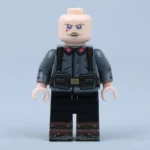
Detailed Character Description (This premium building block figure uses high-quality 360-degree UV printing to faithfully recreate the traditional, heavily burdened line infantryman of the Imperial German Army during the First World War.)
-
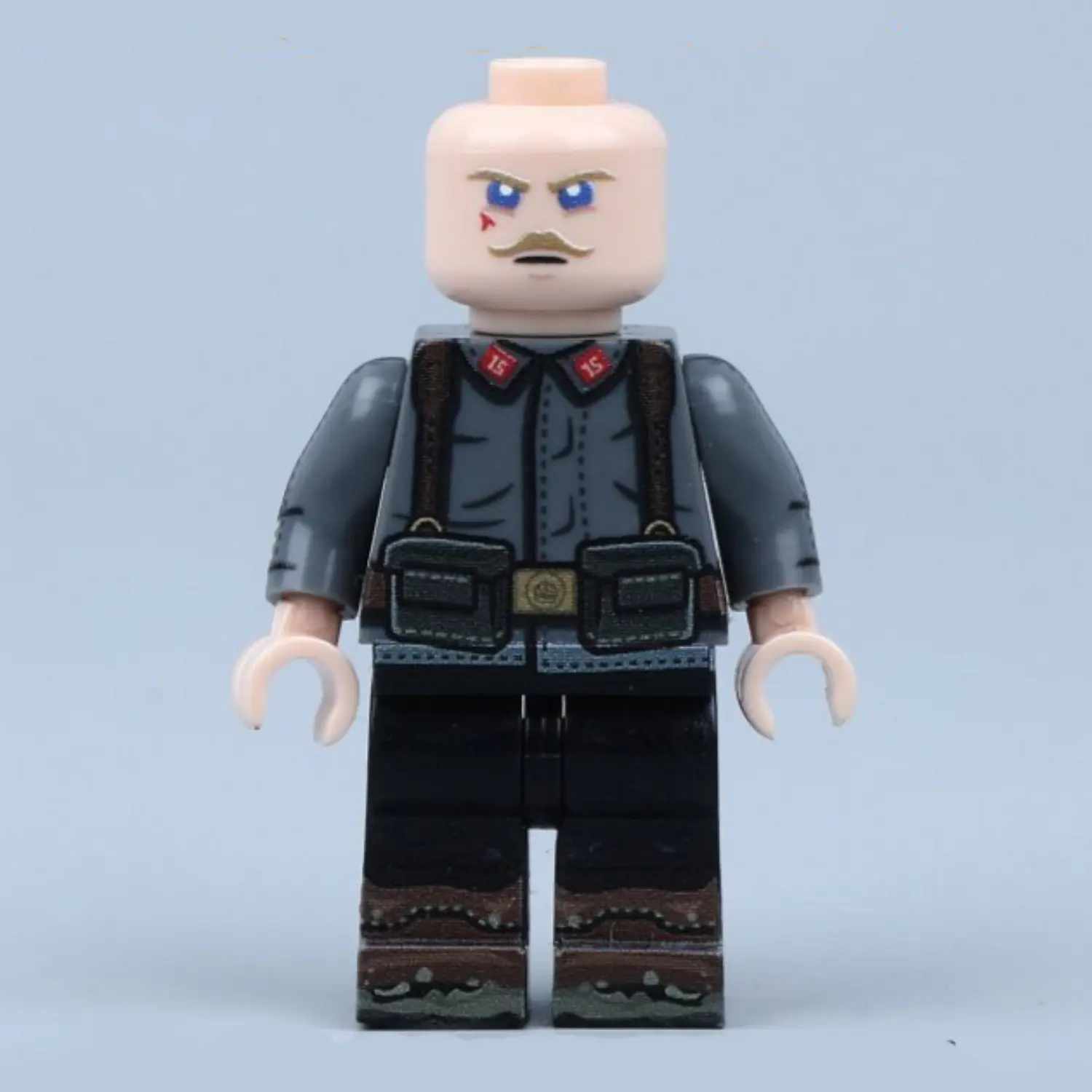
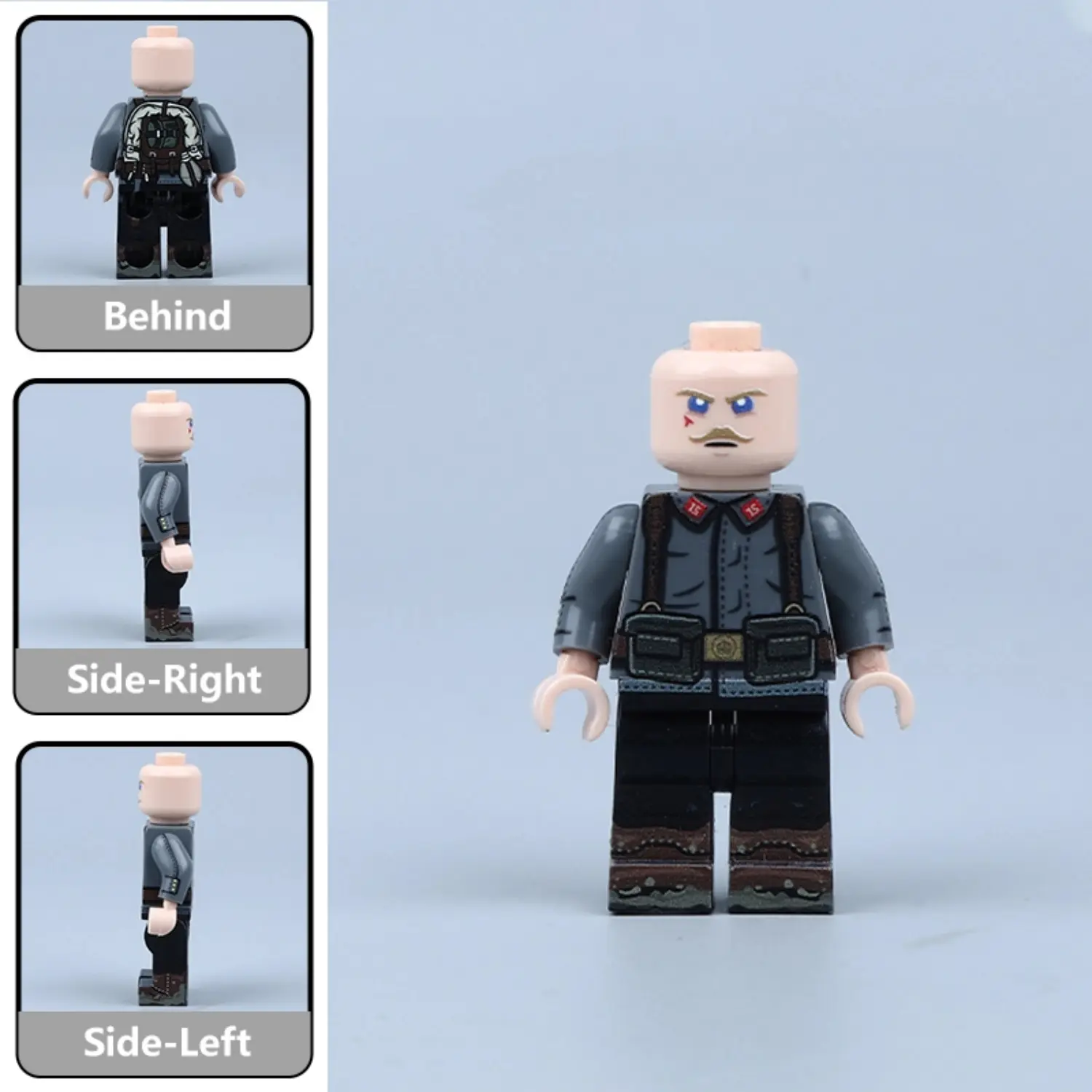
Facial Details: The figure is displayed bare-headed to showcase a highly detailed veteran face print. It features striking blue eyes, a distinct light brown/blonde mustache, and a red combat scar on the right cheek, portraying a battle-hardened soldier of the trenches.
-
Torso & Insignia: The torso depicts the standard field grey (Feldgrau) uniform tunic. A critical and highly specific historical detail is the presence of red collar tabs printed with the number “15”. This accurately designates the soldier’s specific unit, likely the 15th Infantry Regiment.
-
Tactical Webbing: Over the tunic, the chest features printed brown leather Y-strap suspenders connecting to a sturdy combat belt. The belt holds two large, dark ammunition pouches designed to carry stripper clips for the standard-issue Gewehr 98 bolt-action rifle.
-
Back Equipment: As seen in the “Behind” view, the rear of the figure is packed with a fully loaded marching kit. The intricate printing displays a cowhide-covered backpack (Tornister), a rolled canvas shelter half (Zeltbahn), a standard mess tin, and an entrenching tool strapped securely to the gear.
-
Legs & Footwear: The leg blocks feature contrasting dark grey/black trousers. The lower legs transition into sturdy brown marching boots, which are wrapped tightly with grey puttees (cloth leg wraps) to protect the soldier’s lower legs from the pervasive mud and barbed wire of No Man’s Land.
Historical Background In the Imperial German Army during World War I, “Musketier” (Musketeer) was not a soldier wielding a musket, but rather the traditional rank and designation for a Private in most Prussian line infantry regiments.
When the war began in 1914, these Musketeers marched to the front lines carrying incredibly heavy loads, including the iconic cowhide Tornister backpacks seen on this figure. The red collar patches with regimental numbers were a common identification method early in the war before uniform standards were simplified to reduce visibility and save materials. These infantrymen formed the absolute backbone of the German military, enduring the horrific, muddy, and static realities of trench warfare across both the Western and Eastern Fronts.
Reviews
There are no reviews yet