

English Translation & Specific Name
-
English Translation: WWII Pacific Series Iwo Jima – Imperial Japanese Army (IJA) Soldier with Camouflage Netting
-
Faction: Imperial Japanese Army (IJA)
-
Historical Era: World War II (Pacific Theater / Battle of Iwo Jima, 1945)
Character Identification, Detailed Description, and Historical Background
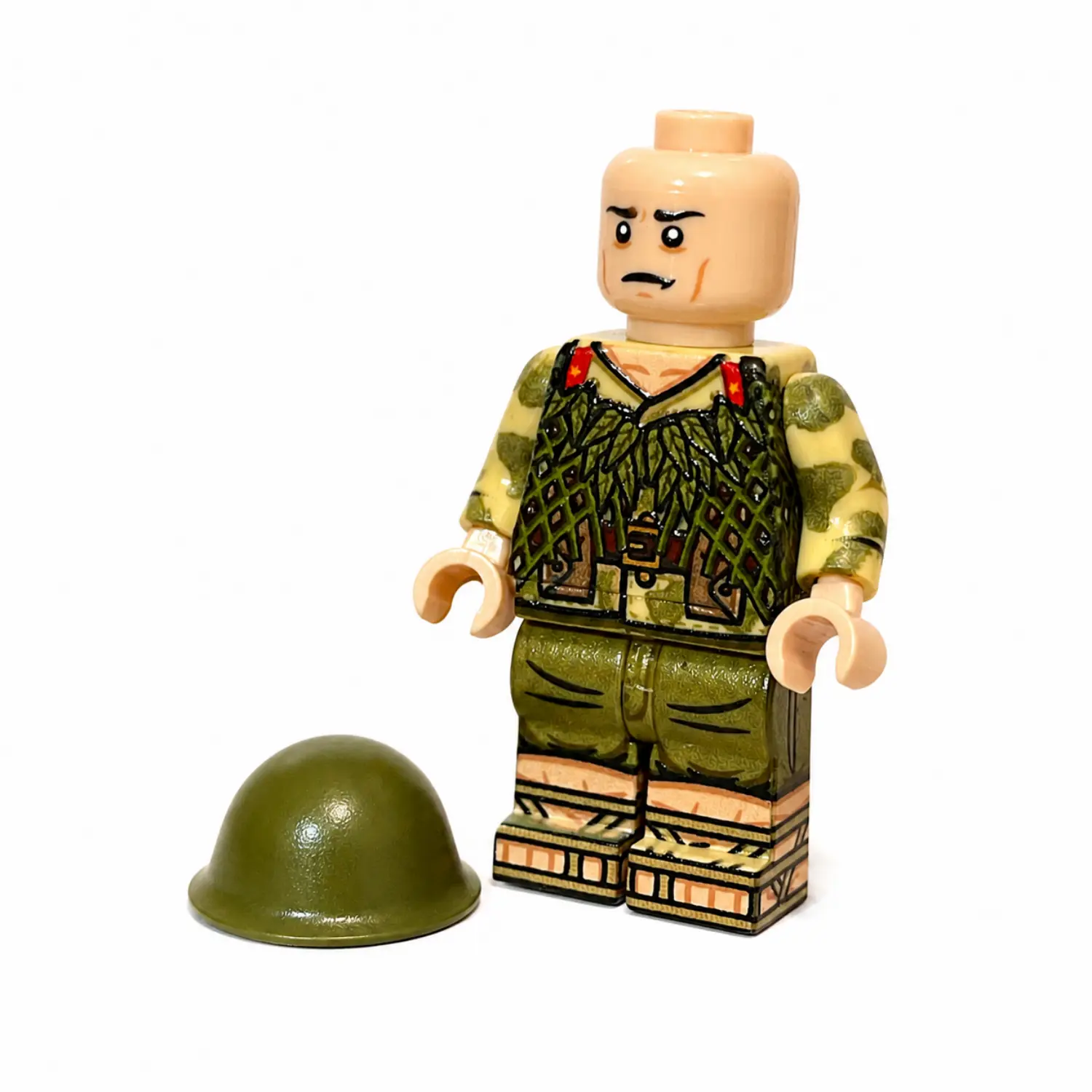
Character Identification This custom building block figure represents a highly resourceful Imperial Japanese Army (IJA) ambush specialist or sniper operating during the desperate final stages of the Pacific War. He is distinguished by the intricate camouflage netting and foliage worn over a scavenged American uniform, a tactic used to completely blend into the harsh island environments for deadly surprise attacks.
Detailed Character Description (Utilizing advanced 360-degree UV printing, this figure captures the extreme lengths island defenders went to for concealment and survival when cut off from standard supply lines.)
-
Headgear & Face: The figure is depicted without his helmet, showcasing a bald head and a fierce, determined facial expression. A printed battle scar or dirt smudge marks his left cheek, illustrating the physical toll of grueling, continuous combat. An unequipped olive drab steel helmet, matching the standard Japanese Type 92 profile, rests at his feet.
-
Torso (Camouflage Netting & Scavenged Gear): The base of his uniform is a captured US Marine Corps “Frog Skin” camouflage jacket, which has been modified with standard red and gold IJA collar tabs, indicating his rank and loyalty. The defining feature of this specific figure is the highly detailed green camouflage netting and foliage printed across his entire torso. This netting mimics woven ropes and local island leaves layered directly over his combat webbing and belt, designed to break up his human silhouette.
-
Legs & Footwear (Traditional Survival Gear): His lower half features solid olive green trousers. Because standard leather boots quickly rotted in the humid, abrasive volcanic environment of Iwo Jima, this figure’s lower legs and feet are printed with traditional Japanese split-toe socks (Tabi) and woven straw sandals (Waraji), securely lashed around his ankles and shins.
Historical Background The Battle of Iwo Jima (February – March 1945) was characterized by fierce, hidden resistance. General Tadamichi Kuribayashi instructed his garrison to avoid banzai charges and instead fight a war of attrition from a massive network of hidden caves, spider holes, and pillboxes.
Because the Japanese were masters of concealment, frontline infantry and snipers heavily utilized body camouflage netting (Gisōmō) intertwined with local vegetation to render themselves virtually invisible in the rocky, scrub-covered terrain. As the naval blockade starved the island of supplies, these hidden defenders frequently scavenged American “Frog Skin” uniforms from fallen Marines to supplement their rotting gear. The combination of scavenged enemy camouflage, applied foliage netting, and traditional straw sandals perfectly encapsulates the deadly ingenuity of the Japanese holdouts.
Reviews
There are no reviews yet