

English Translation & Specific Name
-
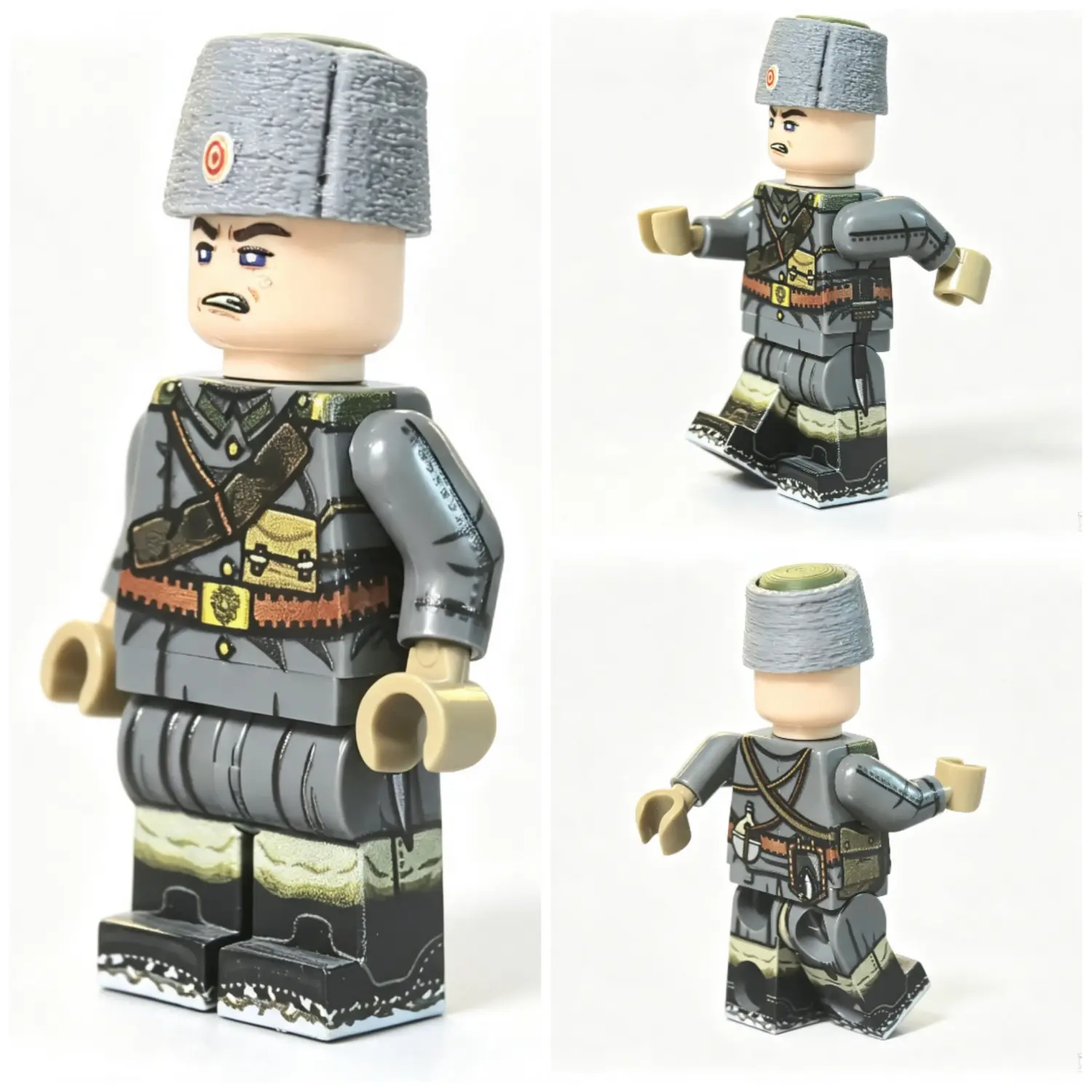
English Translation / Figure Title: WWI Imperial Russian Army Winter Heavy Machine Gunner (with Papakha Hat)
-
Historical Era: World War I (1914–1917) / Eastern Front
-
Faction: Russian Empire (Imperial Russian Army)
Character Identification, Detailed Description, and Historical Background
Character Identification This custom building block figure represents a fierce, specialized Heavy Machine Gunner (Pulemyotchik) of the Imperial Russian Army during the freezing campaigns of World War I. He is distinguished from standard riflemen by his intense, battle-hardened facial expression and his unique tactical webbing, which includes specialized pouches and a sidearm/dagger arrangement historically issued to heavy weapons crews.
Detailed Character Description (Utilizing incredibly sharp 360-degree UV printing, this figure meticulously captures the specialized loadout and rugged reality of a Russian machine gun operator fighting in sub-zero conditions.)
-
Headgear & Face: The figure is equipped with the quintessential winter headgear of the Russian military: a textured grey Papakha (wool/fur hat), featuring the printed Imperial Russian cockade (the orange, black, and white circular badge) on the front. His face print is particularly striking, depicting a fierce, shouting expression with a subtle scar or dirt mark on his cheek, capturing the chaotic and stressful reality of operating a primary support weapon under fire.
-
Torso (The Shinel Greatcoat & Gunner Webbing): He is bundled against the cold in a heavy grey Russian Shinel (wool greatcoat), adorned with green and gold-piped shoulder boards.
-
Front Tactical Gear: Unlike standard infantry carrying rifle clips, this gunner’s webbing is highly specialized. A thick brown leather belt with a brass Imperial double-headed eagle buckle wraps his waist. A diagonal leather strap crosses his chest, securing a unique dark brown holster or tool pouch. On his left hip rests a yellow-canvas pouch, likely for carrying vital machine gun maintenance tools or spare parts.
-
Back Gear: Turning the figure reveals beautifully printed crossed suspender straps. Tucked into his belt on the back is a small white canteen/flask and the hilt of a dagger or short sword, providing him with crucial close-quarters defense.
-
-
Legs & Footwear (Snow Details): The lower half continues the heavy grey greatcoat, transitioning into dark trousers tucked into tall, black leather marching boots (Sapogi). To anchor the figure in a brutal winter diorama, thick layers of printed white snow cling to the soles, toes, and heels of his boots.
Historical Background On the Eastern Front of World War I (1914–1917), the heavy machine gun was a devastating battlefield equalizer. The Imperial Russian Army primarily relied on the PM M1910 (Maxim gun), a massive, water-cooled weapon typically mounted on a heavy wheeled carriage (the Sokolov mount) equipped with a steel gun shield.
Because these weapons were incredibly heavy and complex, machine gun crews were highly specialized troops. They did not usually carry the long Mosin-Nagant infantry rifles, as they needed their hands free to haul the gun, water cans, and heavy ammunition boxes through the mud and snow. Instead, they were issued sidearms (like the Nagant M1895 revolver) and the Bebut (Model 1907) curved dagger, which is accurately represented by the hilt tucked into this figure’s back webbing. This figure perfectly encapsulates the fierce, heavily burdened crewman tasked with keeping the Tsar’s most lethal infantry weapon firing through the dead of winter.
Reviews
There are no reviews yet