

English Translation & Specific Name
-
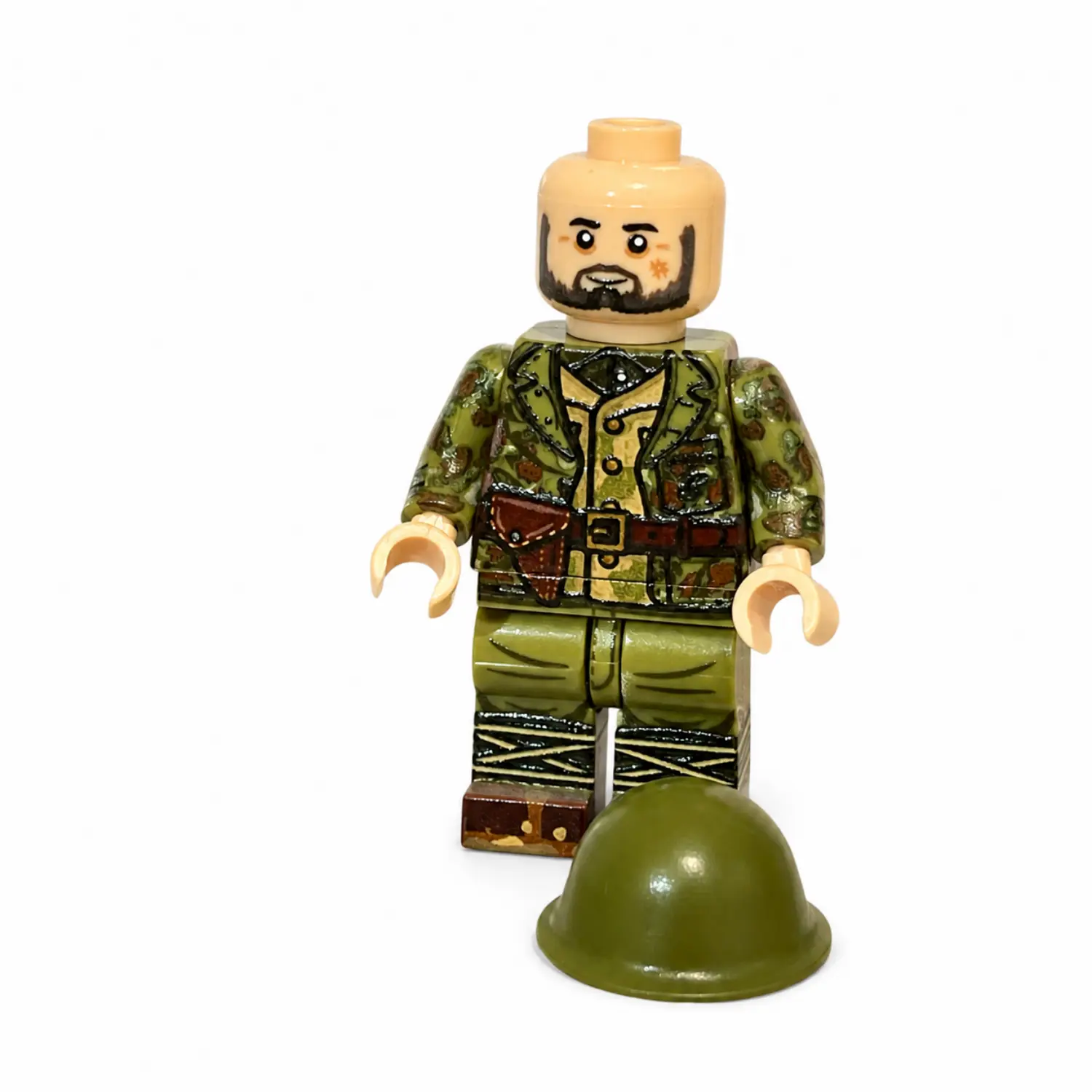
English Translation: WWII Pacific Series Iwo Jima – Japanese Soldier with Captured Camouflage
-
Faction: Imperial Japanese Army (IJA) (wearing scavenged US equipment)
-
Historical Era: World War II (Pacific Theater / Battle of Iwo Jima, 1945)
Character Identification, Detailed Description, and Historical Background
Character Identification This custom building block figure represents a desperate, battle-hardened Imperial Japanese Army (IJA) veteran during the grueling final stages of the Pacific War. He is specifically characterized by his “captured camouflage”—wearing a scavenged American uniform jacket paired with traditional Japanese leg wear, representing a holdout soldier surviving by any means necessary.
Detailed Character Description (This figure utilizes highly detailed 360-degree UV printing to capture the rugged, mismatched reality of prolonged island warfare where standard supply lines had completely collapsed.)
-
Headgear & Face: The figure is depicted without his helmet on, displaying a bald head with a thick, unkempt black beard and mustache. His face features an intense, exhausted expression with a printed orange battle scar or dirt smudge on his left cheek, showcasing weeks of non-stop combat without basic hygiene. Resting at his feet is an unequipped olive drab steel helmet, styled after the Japanese Type 92 helmet.
-
Torso (Scavenged Uniform): He wears a captured US Marine Corps “Frog Skin” camouflage utility jacket. It is worn open at the collar, revealing a tan and olive undershirt beneath. Around his waist is a standard brown leather combat belt secured with a brass-colored buckle. On his right hip, the belt features a printed brown leather flap holster, typically used to carry a sidearm like a Nambu pistol for close-quarters cave fighting.
-
Legs & Footwear (Traditional Gear): Revealing his true faction, the lower half of the figure features solid olive green trousers equipped with traditional Japanese cross-tied cloth puttees (Kyahan) printed around the calves. These leg wraps transition into well-worn brown leather combat boots. This stark contrast between the American upper half and the Japanese lower half visually tells the story of scavenged, captured gear.
Historical Background The Battle of Iwo Jima (February – March 1945) was one of the most brutal engagements of the Pacific Theater. The defending Japanese forces, commanded by General Tadamichi Kuribayashi, were deeply entrenched in a massive network of subterranean caves and volcanic tunnels. Because the US Navy completely blockaded the island, the Japanese garrison was cut off from all resupply, leading to severe shortages of food, water, ammunition, and fresh uniforms.
As Japanese uniforms rotted away in the harsh volcanic ash and humidity, soldiers were often forced to scavenge gear from fallen enemies to survive. Japanese infiltrators and holdouts would occasionally strip fallen US Marines of their distinct “Frog Skin” camouflage and weapons. This served a dual purpose: replacing their disintegrating clothing and confusing American troops during terrifying nighttime infiltration raids (Banzai charges). This figure perfectly encapsulates that chaotic, desperate blending of equipment in the final months of the war.
Reviews
There are no reviews yet