

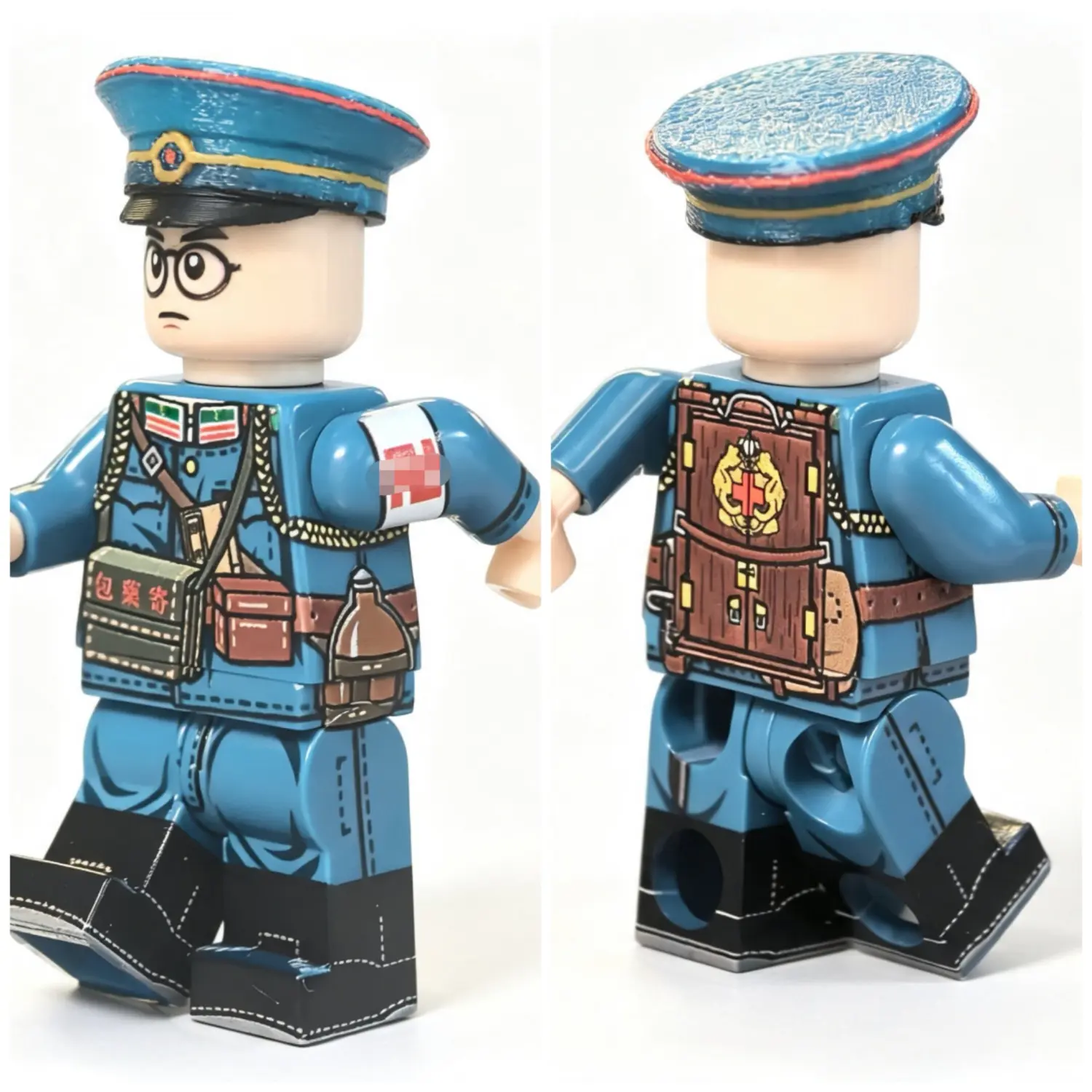
Character Identification
-
Character Name: Late Qing Dynasty New Army Field Medic (Beiyang Army Medical Corps)
-
Faction / Origin: The Qing Empire (Modernized Xinjun / New Army divisions)
-
Historical Era: Late Qing Dynasty to the Xinhai Revolution (c. 1901–1911)
-
Block Compatibility: This brick figure is 100% compatible with major standard building blocks.
Detailed Character Description
(This premium building block figure utilizes incredibly precise 360-degree UV printing to depict the highly specialized gear and unique uniform modifications of a military medical soldier during the final years of the Chinese empire.)
-
Headgear & Accessories:
-
The figure is equipped with the standard light blue military peaked cap (visor cap).
-
It features a black visor, red piping around the top edge, a yellow/gold cap band, and the distinctive multi-colored Qing imperial cap badge (cockade) pinned centrally on the front.
-
-
Facial Printing & Expression:
-
The face print conveys a calm, educated, and focused demeanor.
-
Unlike the combat troops, this medic is clean-shaven and wears round black spectacles (glasses), representing the high level of modern education and technical training required for the medical corps of the era.
-
-
Torso & Upper Body Clothing (Front & Back):
-
The torso block depicts a Western-style light blue tunic with a high stand collar.
-
Crucially, the collar features green and white rectangular rank tabs, differentiating him from standard infantry (who wore red) and distinctly marking his branch as the medical or non-combatant corps.
-
The left arm features a highly visible white armband bearing a Red Cross, the international symbol for medical personnel. Draped around the right shoulder and chest is an ornate gold braided lanyard.
-
Strapped across the chest is a detailed green canvas medical satchel, which has traditional Chinese characters printed on the front flap (indicating “medical supplies” or “first aid”).
-
A sturdy brown leather waist belt holds small supply pouches, and a standard-issue brown field canteen hangs on his left hip.
-
The back of the torso features the most striking detail: a large, rigid wooden field medical backpack or apothecary chest. The UV printing brilliantly captures the wood grain texture, leather securing straps, brass corner hinges, and a central golden wreath enclosing a Red Cross emblem.
-
-
Legs & Footwear:
-
The upper leg blocks continue the uniform with matching light blue trousers.
-
Unlike the regular infantry who wore wrapped puttees, this medic is equipped with tall, polished black leather riding boots. The boots feature grey printed detailing to define the soles and leather folds, offering better protection against mud and disease in field hospitals.
-
Historical Background
The creation of the New Army (新军, Xinjun) in the late 19th and early 20th centuries was not just about buying modern rifles; it required a total systemic overhaul of military logistics, including the establishment of China’s first modern military medical corps.
Prior to these reforms, the Qing military relied almost entirely on traditional Chinese medicine and disorganized local remedies, resulting in horrific death tolls from disease and untreated battlefield wounds during the First Sino-Japanese War. With the rise of the Beiyang Army, foreign military advisors introduced Western medical doctrines. The Qing government began training specialized field medics, establishing mobile field hospitals, and officially adopting the international Red Cross emblem to protect its medical personnel on the battlefield.
This building block figure perfectly captures this historic transition. The round spectacles highlight the recruitment of literate, scientifically educated young men into the medical branch. The green collar tabs accurately reflect Western military branch color-coding, while the heavy wooden medical chest and Red Cross armband show a military attempting to rapidly catch up to global standards of battlefield triage and hygiene. These very medics would soon find themselves treating casualties on both sides of the Xinhai Revolution in 1911.

Reviews
There are no reviews yet