


Variations
-

Medieval European Weaver with Shears – Custom Printed Brick Block Figure
$9.99 -

Medieval European Village Fisherman with Fish and Fishing Rod – Custom Printed Brick Block Figure
$9.99 -

Medieval European Sexton with Lantern and Key – Custom Printed Brick Block Figure
$9.99 -

Medieval European Baker with Croissant and Baking Peel – Custom Printed Brick Block Figure
$9.99
Introduction
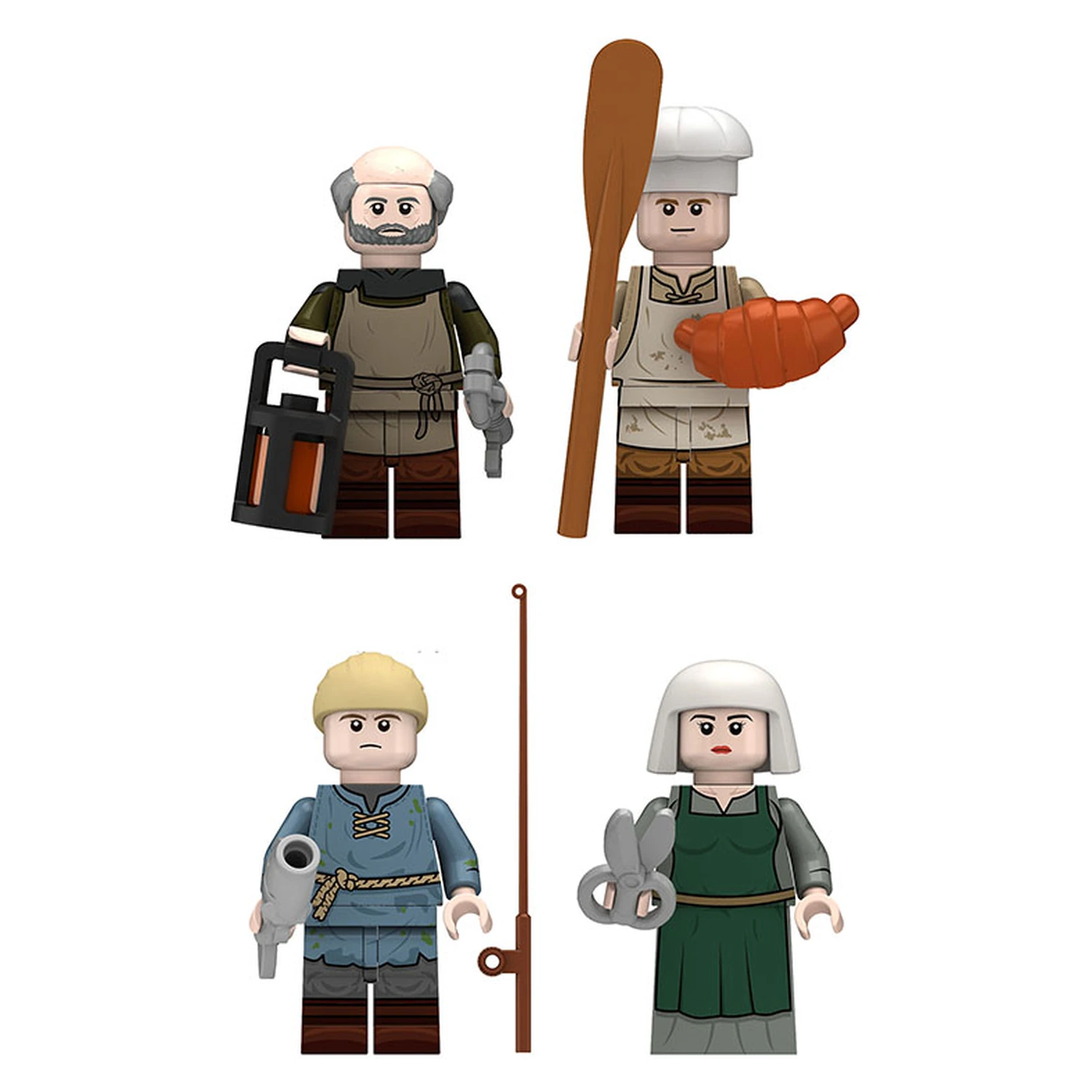
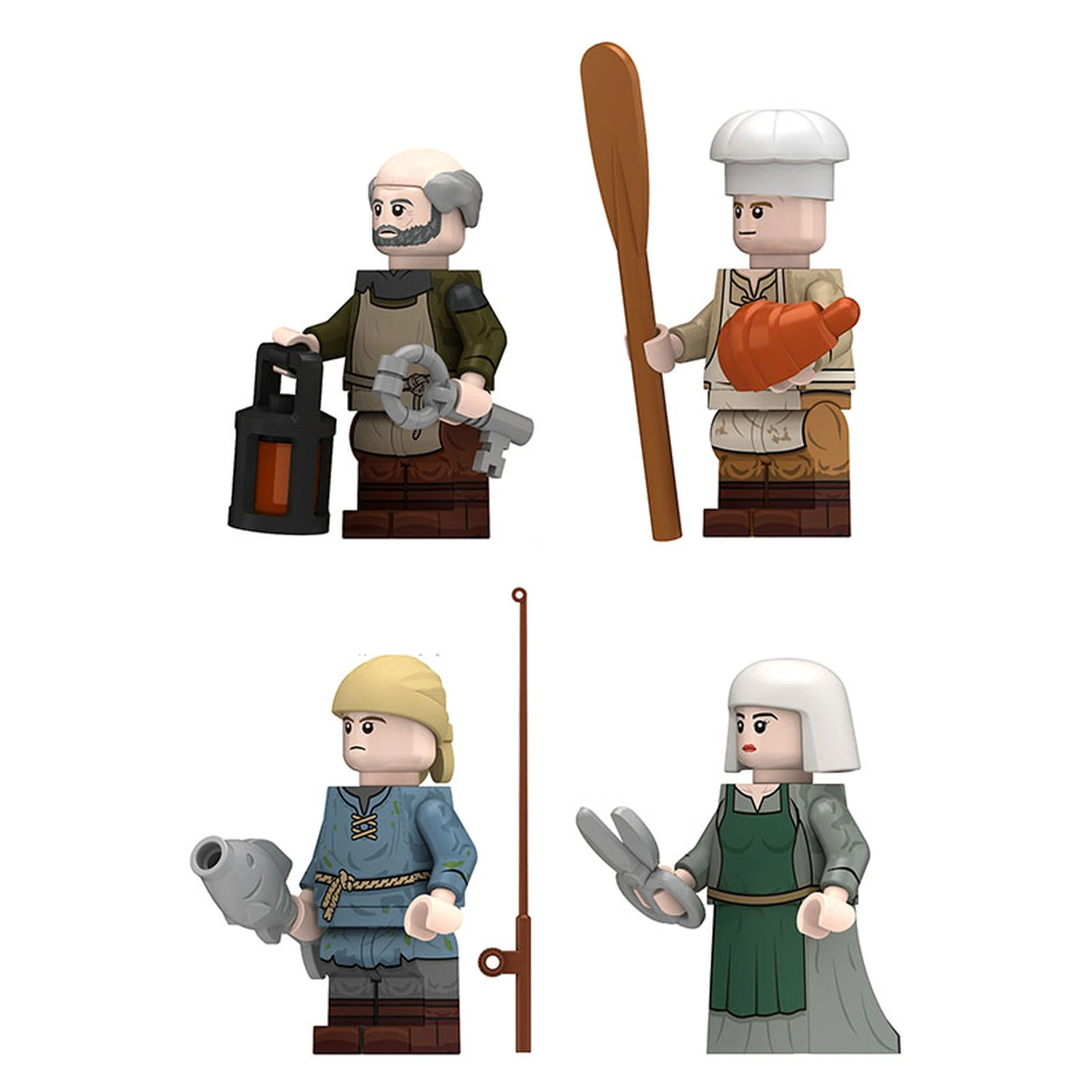
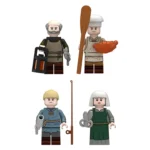
This four-figure collection depicts a medieval-inspired European village sexton, baker, fisherman and weaver. Each character comes with the headpiece and occupational props shown in the collection images, offering four distinct civilian roles for a historical village, market or workshop display.
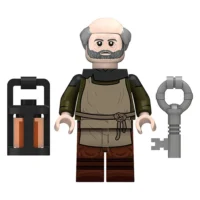
1. Medieval European Sexton
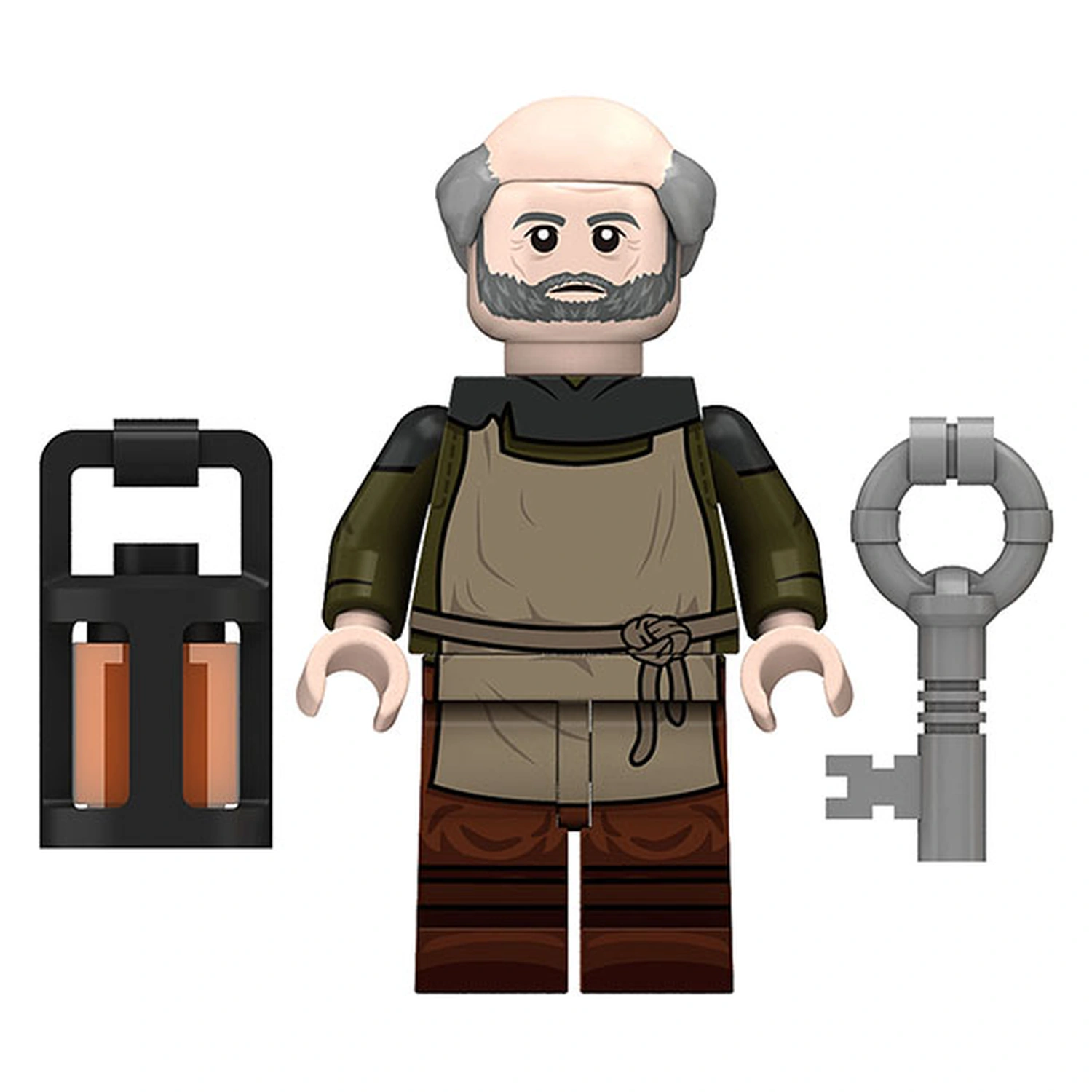
Character Identification: This custom printed brick block figure depicts a medieval-inspired European sexton, a village church caretaker. His lantern and oversized key give him a practical role in a church courtyard, village lane or historical settlement display.
Detailed Character Description:
- Head & Face: A balding headpiece has gray hair at the sides, complemented by a printed gray beard, dark eyebrows and facial lines.
- Clothing & Neckwear: An olive-toned tunic is printed beneath a tan work apron with creases, a tied rope belt and a dark shoulder covering.
- Legs & Footwear: Brown lower garments feature printed folds and dark boot details.
- Accessories: A black lantern with orange inner panels and a large gray key complete the church-caretaker theme.
Historical / Thematic Background: The sexton theme connects the scene to the care of a church and its surroundings. His lantern and key suggest a caretaker opening a doorway or checking the grounds, adding an everyday service role to a settlement centred on its parish church.
2. Medieval European Baker
Character Identification: This custom printed brick block figure depicts a medieval-inspired European baker. A white chef-style cap, marked cream apron, croissant-shaped food piece and long brown baking-peel prop make the character easy to recognize in a village bakery or market scene.
Detailed Character Description:
- Headgear & Face: A white chef-style cap sits above a calm face with brown eyebrows and a slight smile.
- Clothing & Apron: The tan shirt has a printed tied neckline. A cream work apron carries crease lines and brown marks that give it a busy bakery appearance.
- Legs & Footwear: Brown printed lower garments and dark boot details complete the practical working outfit.
- Accessories: An orange-brown croissant-shaped piece and a long brown paddle-shaped baking-peel prop supply the bakery theme.
Historical / Thematic Background: Bread production supported medieval households of different sizes and means. The apron and peel evoke work around a bakery oven, while the croissant-shaped piece gives the design a playful food-making cue for a shop or market stall.
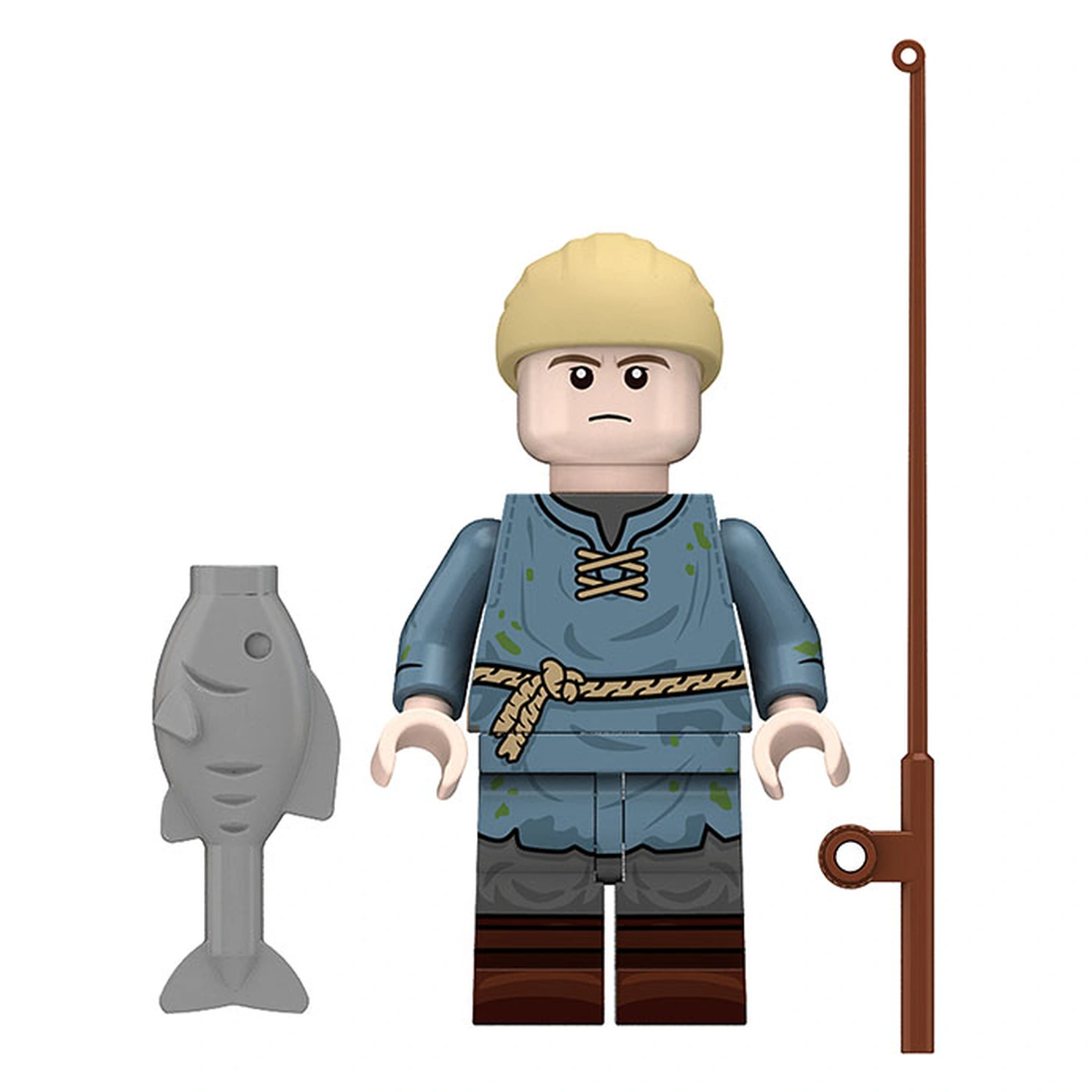
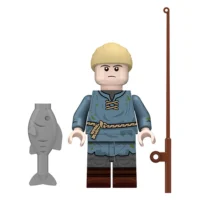
3. Medieval European Village Fisherman
Character Identification: This custom printed brick block figure depicts a medieval-inspired European village fisherman. A pale yellow headscarf, weathered-looking blue tunic, gray fish and long brown fishing rod establish a civilian waterside character for a riverbank, pond or market display.
Detailed Character Description:
- Headgear & Face: A pale yellow tied headscarf accompanies dark eyebrows and a serious printed expression.
- Tunic & Belt: The blue tunic has a laced neckline, printed creases, irregular green marks, an uneven printed hem and a knotted rope belt.
- Legs & Footwear: Gray lower garments end in brown boot details, giving the figure a practical outdoor appearance.
- Accessories: A gray fish piece and a long brown fishing rod provide the main occupational details.
Historical / Thematic Background: Fish supplied medieval tables through natural waters and managed fisheries. The fish and rod allow this character to bring a waterside task into the village scene, linking a bank, pond or stream to the food offered at market.
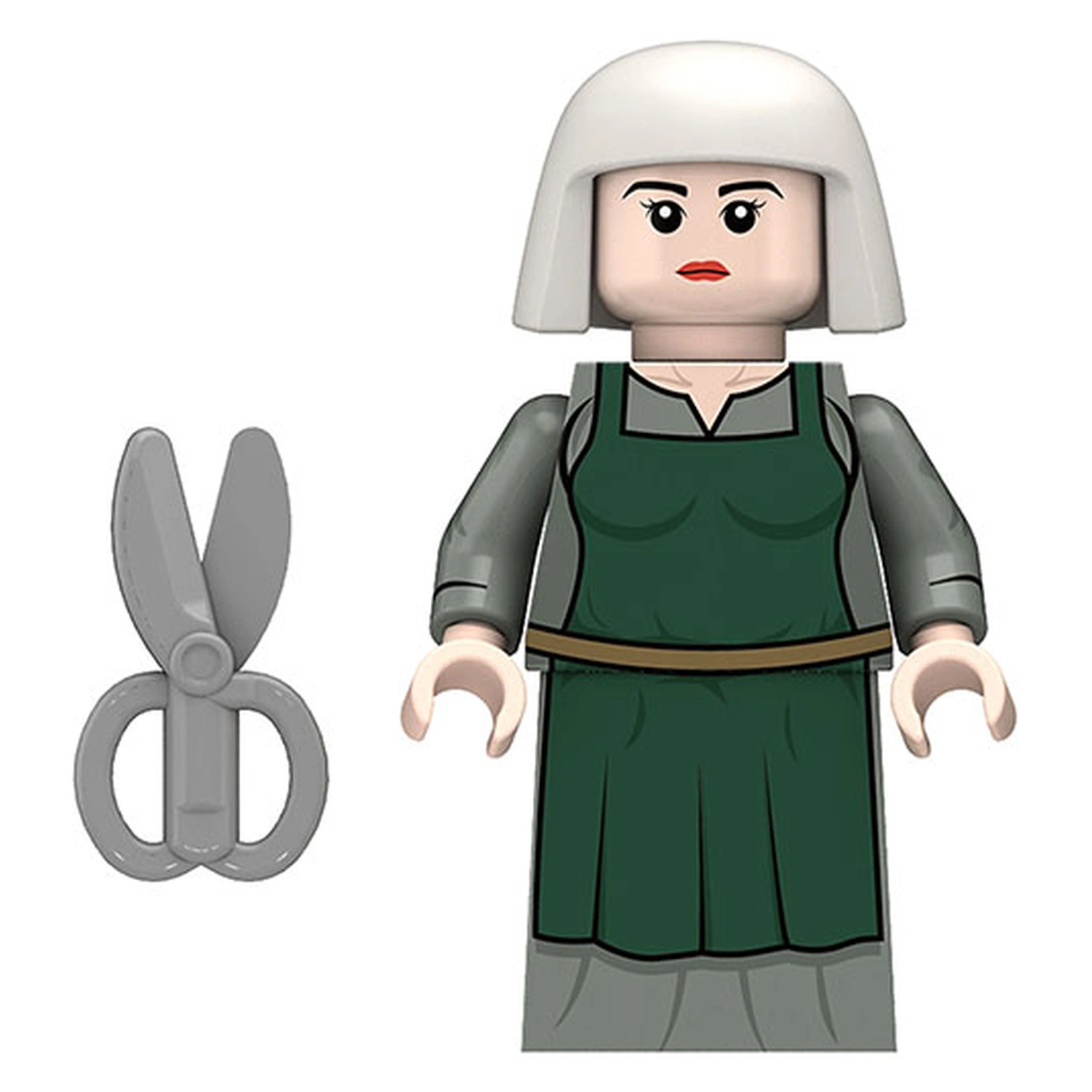
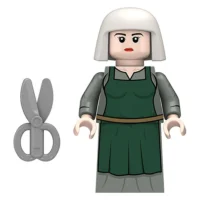
4. Medieval European Weaver
Character Identification: This custom printed brick block figure depicts a medieval-inspired European weaver. A white hood-like head covering, gray dress, green apron and large gray shears-style prop create a textile-work theme for a village workshop or historical street scene.
Detailed Character Description:
- Head Covering & Face: A smooth white hood-like piece frames a printed face with dark eyebrows, eyelashes and red lips.
- Dress & Apron: Gray sleeves and a long gray dress frame a dark green apron with printed folds and a narrow tan waist belt.
- Lower Garment: A sloped dress piece continues the long skirt silhouette, with gray fabric-fold printing below the apron.
- Accessory: A large gray scissors-shaped pair of shears supplies a visible cloth-working cue.
Historical / Thematic Background: The Weaver character introduces textile work to the group. Her apron and shears-style tool suggest a broader craft setting, while a builder-created cloth stall or workshop can develop the story around the figure.
Included: Four figures: one sexton with lantern and key; one baker with white cap, croissant-shaped piece and baking-peel prop; one fisherman with yellow headscarf, gray fish and brown fishing rod; and one weaver with white head covering and gray shears-style prop. The sexton also has the pictured gray side-hair headpiece and dark shoulder covering.
Historical / Thematic Background
This collection brings together four kinds of everyday activity in a medieval-inspired European settlement: church care, baking, fishing and textile work. Their varied tasks let a village display extend from its central buildings to an oven, a waterside path and a workshop. Clothing, head coverings and readily recognisable props give each figure a different place in the shared scene.
The underlying themes reflect important aspects of medieval life. Parish churches provided a focus for worship and community observance; food production brought bread and fish to the table; and skilled textile work supplied cloth for many uses. Historical examples varied greatly between regions, periods and households, leaving room for a model village to develop its own scale and arrangement.
The set’s strongest storytelling comes from the relationships between its members. The baker can meet the fisherman at a market, the sexton can pass through a village lane, and the weaver can work near a house or cloth stall. Together they offer four distinct civilian characters for a settled, lived-in environment. Their tools and expressive costume details help turn buildings into places where people carry out ordinary tasks and encounter one another throughout the day.
Reviews
There are no reviews yet