

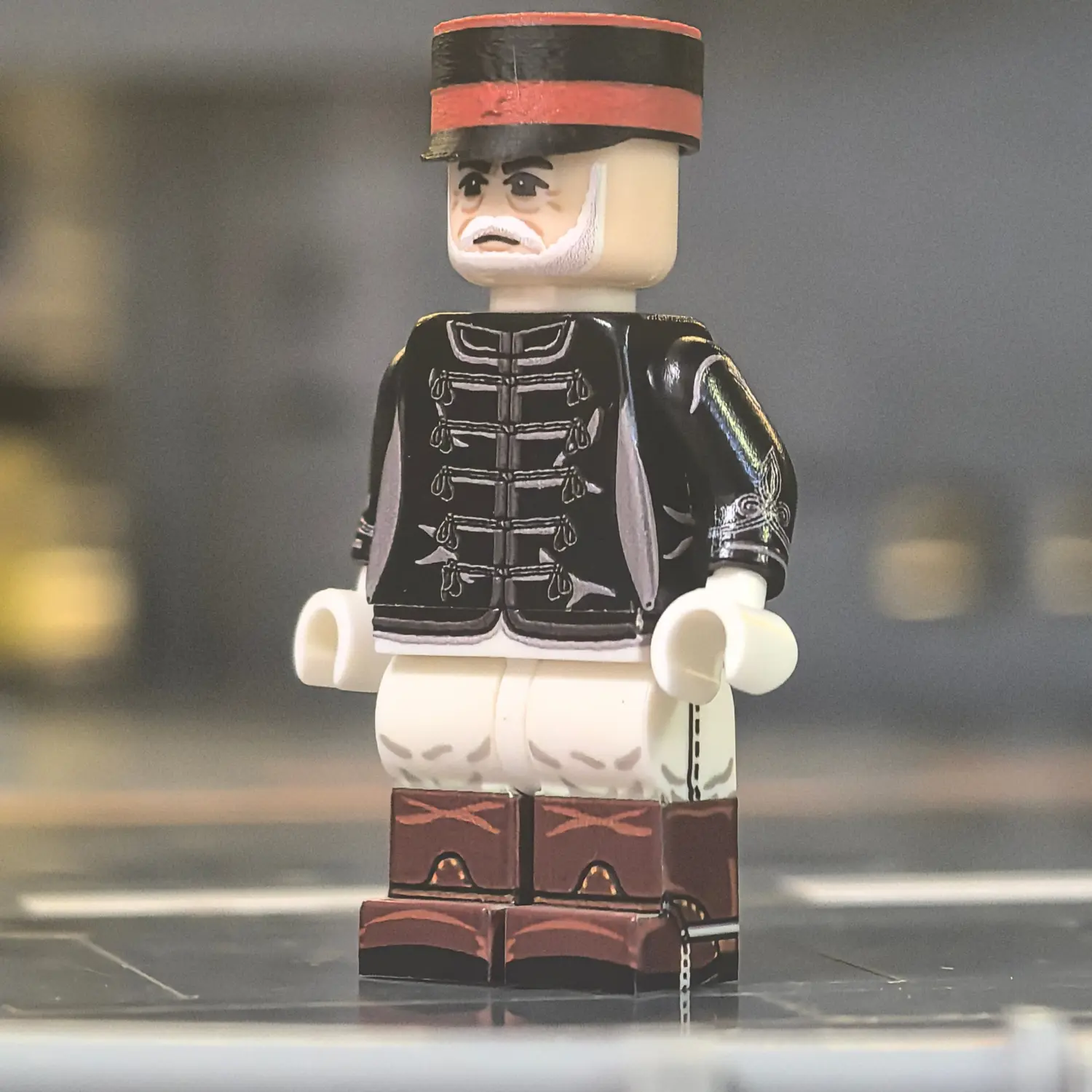
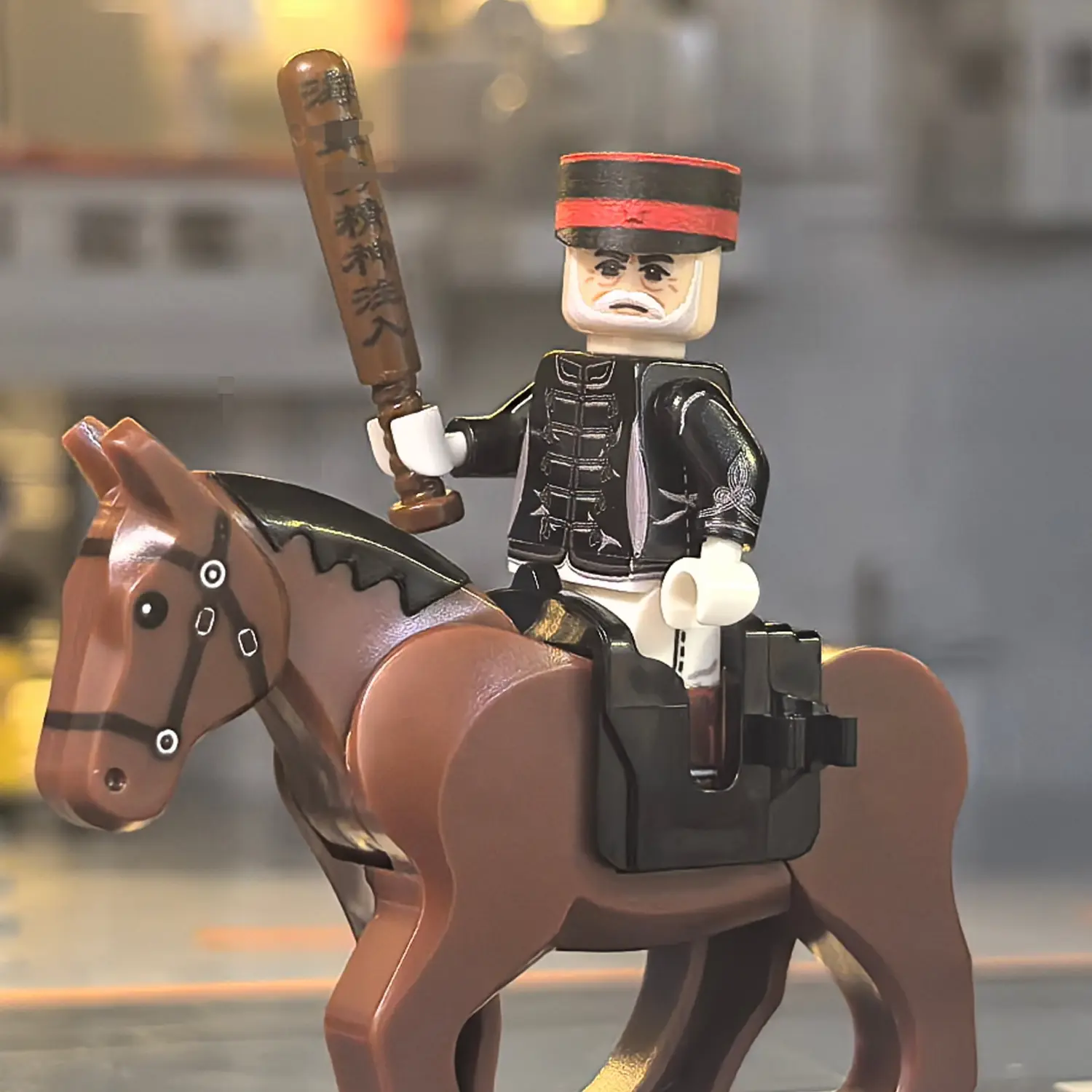
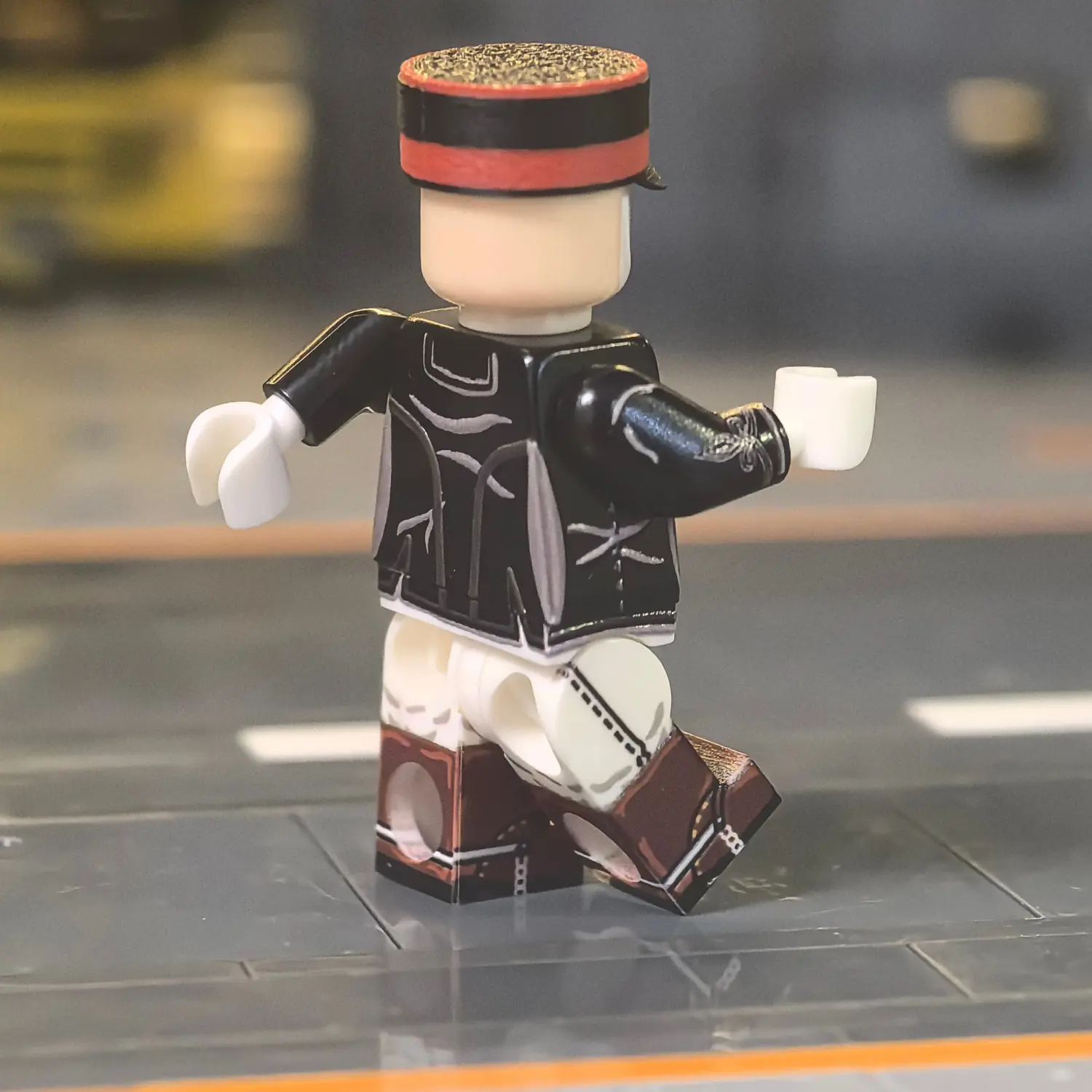
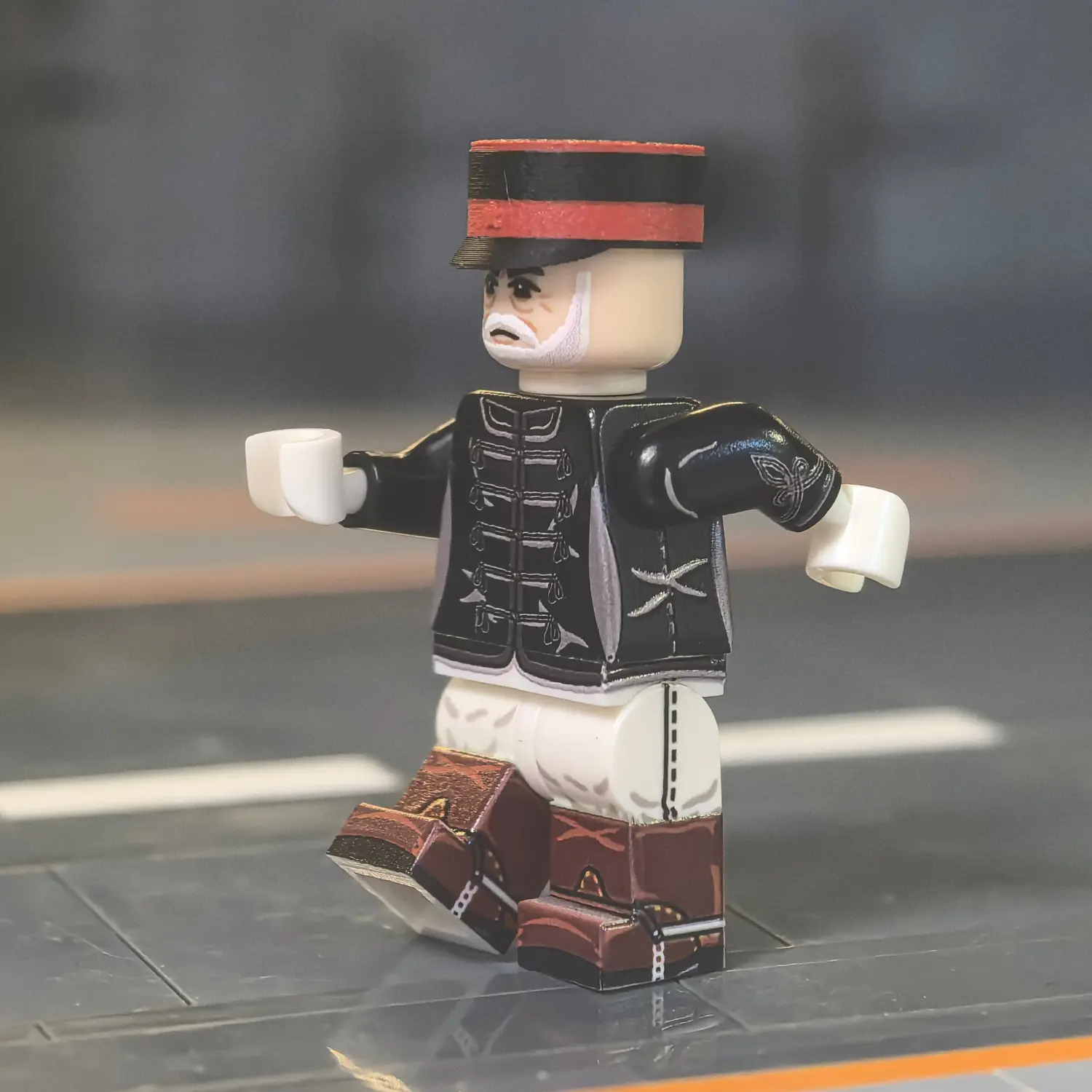
Character Identification: General Nogi Maresuke (Imperial Japanese Army)
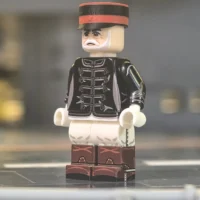
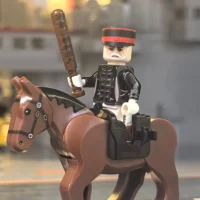
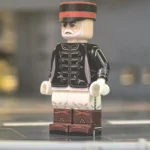
This Custom Printed Brick Block Figure depicts General Nogi Maresuke (乃木 希典), a prominent and highly revered senior commander of the Imperial Japanese Army during the Russo-Japanese War (1904–1905). The figure captures his distinct older appearance, iconic uniform, and traditional accessories.
Detailed Visual Description & Gear
This figure utilizes detailed 360-degree printing to represent the late 19th/early 20th-century Imperial Japanese military style:
-
Facial Features: The figure features a printed face showing an older man with a distinct, thick white beard and mustache, accurately reflecting Nogi Maresuke’s historical appearance during his most famous campaigns.
-
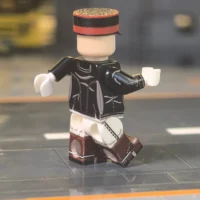
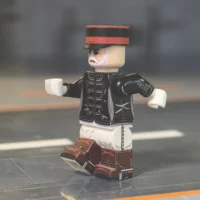
Headgear (The Kepi): He wears a dark Kepi-style cap featuring a prominent red band around the center and a flat top. This was standard headgear for Japanese officers of the era before the adoption of peaked caps.
-
The Tunic (The Atilla Jacket): He is dressed in a very distinct dark/black Attila jacket (also known as a dolman). This style of cavalry-inspired tunic features intricate horizontal braiding (frogging) across the chest and elaborate silver/white knot designs printed on the cuffs, signifying his high general officer rank.
-
Lower Body: Contrasting with the dark jacket, he wears bright white riding breeches featuring a dark stripe down the side seam.
-
Footwear & Riding Gear: He wears printed brown leather cavalry riding boots equipped with silver spurs on the heels.
-
Accessories (The Wooden Sword/Bokken): In the mounted image, he is shown holding a wooden sword with Japanese kanji printed on the blade. This likely represents a Bokken (wooden training sword) or a ceremonial baton, reflecting his deep dedication to the traditional Samurai code (Bushido). He is also pictured riding a brown horse piece with printed bridle details.
Historical Background
General Nogi Maresuke (1849–1912) is one of the most complex and famous figures in modern Japanese military history, embodying the spirit of the ancient Samurai in a modernizing world.
-
The Siege of Port Arthur: During the Russo-Japanese War, Nogi was given command of the Japanese Third Army and tasked with capturing the heavily fortified Russian naval base at Port Arthur in Manchuria.
-
The “Charging Veteran”: The siege was brutally difficult. Believing in traditional “human bullet” (nikudan) frontal assaults, Nogi ordered his men to repeatedly charge the Russian concrete trenches and machine guns. While the fortress eventually fell in early 1905, it came at a staggering and horrifying cost of Japanese lives, including both of Nogi’s own sons.
-
Legacy of Bushido: Deeply ashamed of the massive casualties and the loss of his sons, Nogi asked Emperor Meiji for permission to commit seppuku (ritual suicide) as an apology. The Emperor forbade him from doing so while he lived. However, on the day of Emperor Meiji’s funeral in 1912, Nogi and his wife finally committed seppuku, shocking the world and cementing his legacy as a tragic, unwavering symbol of loyalty and the Samurai code (Bushido).
Reviews
There are no reviews yet