

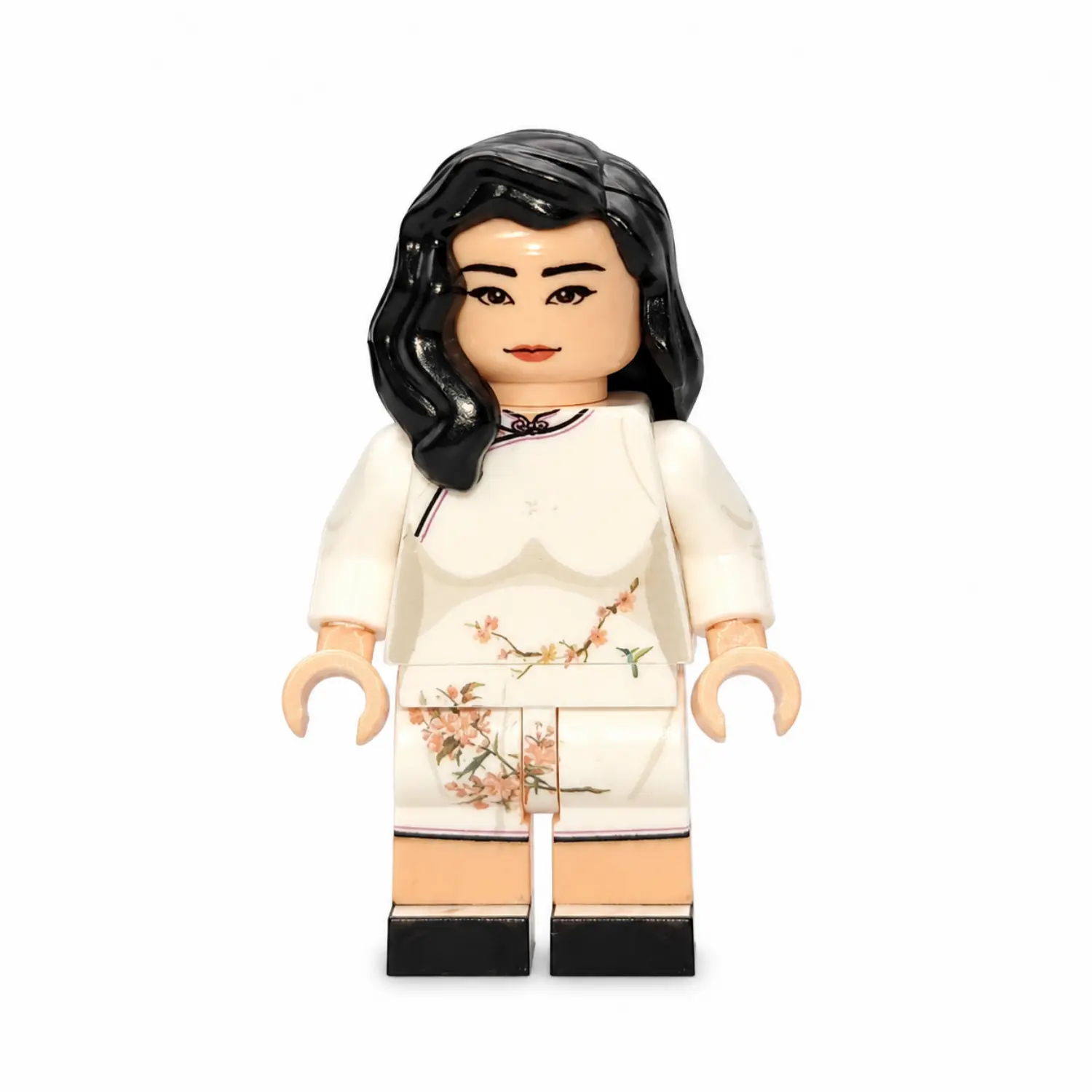
Specific Name and Visual Details
-
Specific Name: Shanghai Bund Elegance Qipao Lady (Republic of China Era)
-
Hairpiece (The Finger Wave Hairstyle): The figure features a glossy, side-parted wavy black hairpiece. This sculpted hairstyle perfectly mimics the iconic Western-influenced finger waves and permanent waves that were the height of sophistication among urban women in 1930s Shanghai.
-
Facial Features: She features a refined, serene expression with classic arched eyebrows and delicate red lipstick, capturing the glamour of vintage Chinese cinema stars.
-
The Qipao (Cheongsam) Design: * She wears a pristine white or ivory-colored modernized Qipao.
-
The crisp UV printing details a traditional high mandarin collar outlined with delicate dark pink and black piping.
-
It includes the signature diagonal closure across the right chest, fastened with a printed traditional frog button (Pankou) near the neckline.
-
-
Floral Printing: The dress is adorned with beautiful, asymmetric floral patterns—resembling delicate pink cherry or peach blossom branches—gracefully draped across the lower bodice and down onto the skirt.
-
Footwear: The hem of the dress transitions to show her legs, ending in a pair of classic, minimalist black high heels (pumps).
Historical Background: The Golden Age of the Shanghai Qipao
The uniform of this figure represents a profound cultural and fashion revolution that took place in early 20th-century China.
-
The Evolution of the Qipao: Originally, the qipao was a wide, loose-fitting, and concealing robe worn by Manchu women during the Qing Dynasty. In the 1920s, progressive female students and fashion-forward socialites in Shanghai revolutionized the garment. They combined traditional Chinese elements with Western tailoring techniques, taking in the waist, raising the hemline, and adding side slits to create a body-hugging silhouette that celebrated modern femininity.
-
The Shanghai Bund (上海滩) Culture: During the 1930s, Shanghai was known as the “Paris of the East.” It was a glamorous, cosmopolitan metropolis filled with jazz clubs, grand cinemas, and international commerce. The stylishly coiffed women walking the Bund in floral-printed silk qipaos became the definitive image of this dazzling era.
-
A Symbol of Liberation: Wearing the modernized qipao and adopting Western hairstyles was not just a fashion statement; it was a symbol of women’s liberation, higher education, and social independence in the newly formed Republic of China. This aesthetic remains heavily romanticized today in classic literature, vintage calendar posters, and period films like In the Mood for Love.
Reviews
There are no reviews yet