

Variations
Introduction
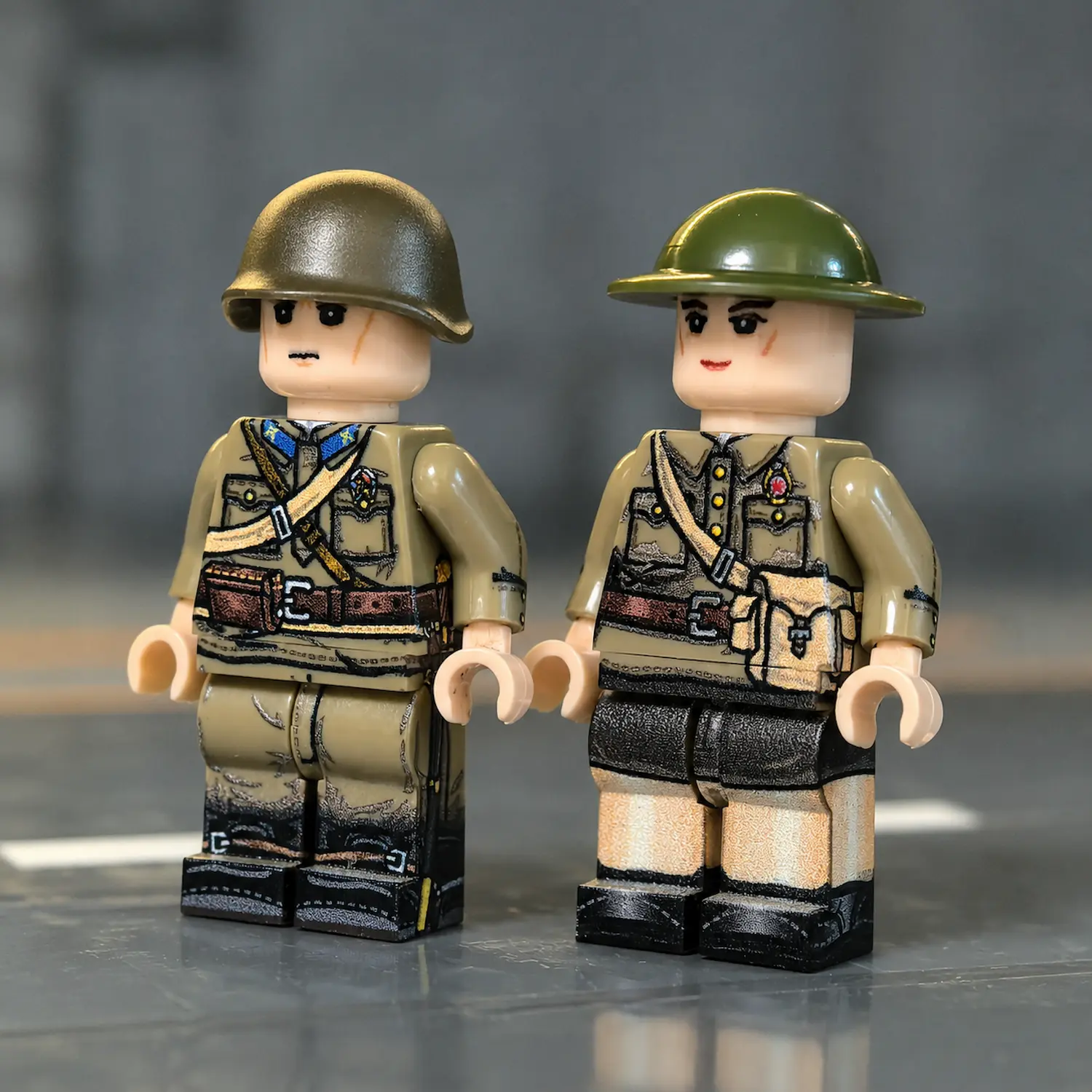
Together, they represent two vital but distinct elements of the Soviet Red Army during World War II (The Great Patriotic War): the urban air defense militias and the mobile mounted cavalry.
Here is the detailed, one-by-one breakdown of each character from left to right:
Individual Character Identifications
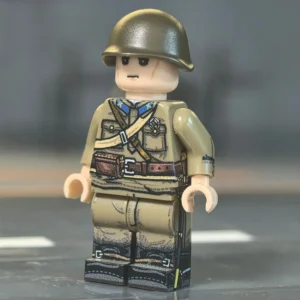
1. Left Figure: Soviet Air Defense Militia Soldier
-
Specific Name: Soviet Red Army Air Defense / PVO Militia Soldier (WWII)
-
Headgear: He wears the iconic olive-drab SSh-40 (Steel Helmet-40), the standard-issue spherical combat helmet that protected Soviet soldiers from shrapnel and urban debris.
-
Facial Features: He features a battle-weary expression with a neat mustache and a printed dirt smear or scar across his left cheek, portraying a hardened defender of the cities.
-
Uniform & Insignia: * He is dressed in a standard Soviet khaki field tunic (gymnastyorka).
-
The Blue Collar Tabs: The most critical identifying feature is his light blue collar tabs (petlitsy). In the pre-1943 Soviet uniform system, light blue designated the Aviation and Air Defense forces (PVO).
-
A highly detailed Soviet Red Star badge is printed on his left breast pocket.
-
-
Tactical Gear & Weathering: He wears a brown leather cross-strap harness. Uniquely, a slung rifle is printed running down his left side. His lower legs and boots are covered in heavy, 360-degree black soot and ash weathering, perfectly capturing the grim reality of fighting in burning, bombed-out urban environments.
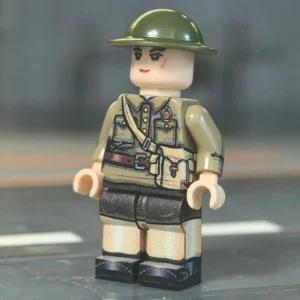
2. Right Figure: Soviet Female Cavalry Soldier
-
Specific Name: Soviet Red Army Female Cavalry Trooper (WWII)
-
Headgear: She wears an early-war olive-green SSh-36 helmet. Often called the “Khalkhin Gol” helmet, it is easily identified by its wide, flared brim designed to deflect shrapnel away from the neck.
-
Facial Features: The figure features distinctly feminine face printing, complete with red lipstick and defined eyelashes, contrasting sharply with a printed battle scar or dirt mark on her cheek—a testament to her frontline service.
-
Uniform & Insignia: She wears the same khaki tunic (gymnastyorka) as her counterpart, also adorned with the Soviet Red Star badge on the breast pocket.
-
Tactical Gear & Lower Body: * She wears a leather cross-strap harness that supports a printed khaki canvas dispatch satchel/map case resting on her left hip.
-
Riding Breeches: Her combat role is confirmed by her lower half. She wears dark blue/black riding breeches tucked into tall, black leather riding boots, the traditional uniform for Soviet cavalry and mounted infantry.
-
Historical Background: Defending the Motherland
This combination of figures beautifully captures the immense scale and diversity of the Soviet war effort on the Eastern Front.
-
The Air Defense Militias (MPVO): When the Luftwaffe began bombing major Soviet cities like Moscow and Leningrad, the regular anti-aircraft forces were heavily augmented by civilian militias. These soldiers and civilian volunteers manned anti-aircraft guns, operated searchlights, and acted as fire wardens. The light blue collar tabs on the left figure historically denote his attachment to this critical branch before the Red Army switched to shoulder boards in 1943.
-
Women in the Red Army: The Soviet Union was unique among the Allied powers for deploying hundreds of thousands of women into direct combat roles. While female snipers are famous, many women served as regular infantrymen, medics, and cavalry troopers.
-
The Red Cavalry: Due to the vast, muddy, and often roadless terrain of the Eastern Front, the Soviet Union maintained the largest cavalry force in the world. These troops, represented by the right figure, acted as highly mobile mounted infantry, riding horses to navigate difficult terrain before dismounting to fight on foot.
Reviews
There are no reviews yet