

Variations
-
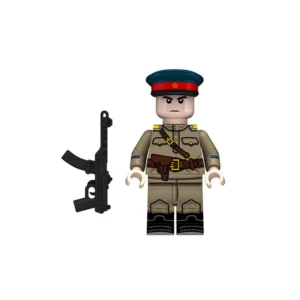
Soviet NKVD Staff Officer Major WWII – Custom Printed Brick Block Figure
$9.99 -
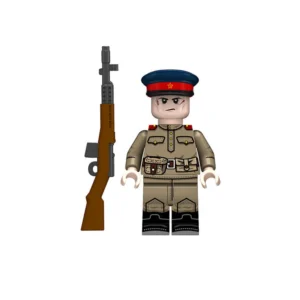
Soviet NKVD Private Enlisted Soldier WWII – Custom Printed Brick Block Figure
$9.99 -
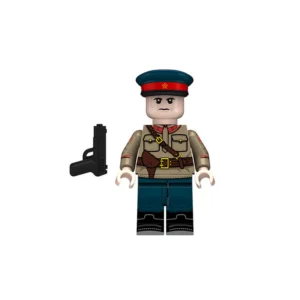
Soviet NKVD Lieutenant WWII – Custom Printed Brick Block Figure
$9.99 -
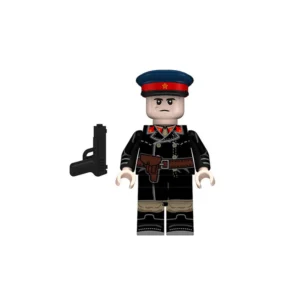
Soviet NKVD Junior Lieutenant WWII – Custom Printed Brick Block Figure
$9.99
Introduction
Soviet NKVD Command and Security Squad (WWII) – Custom Printed Brick Block Figure Collection
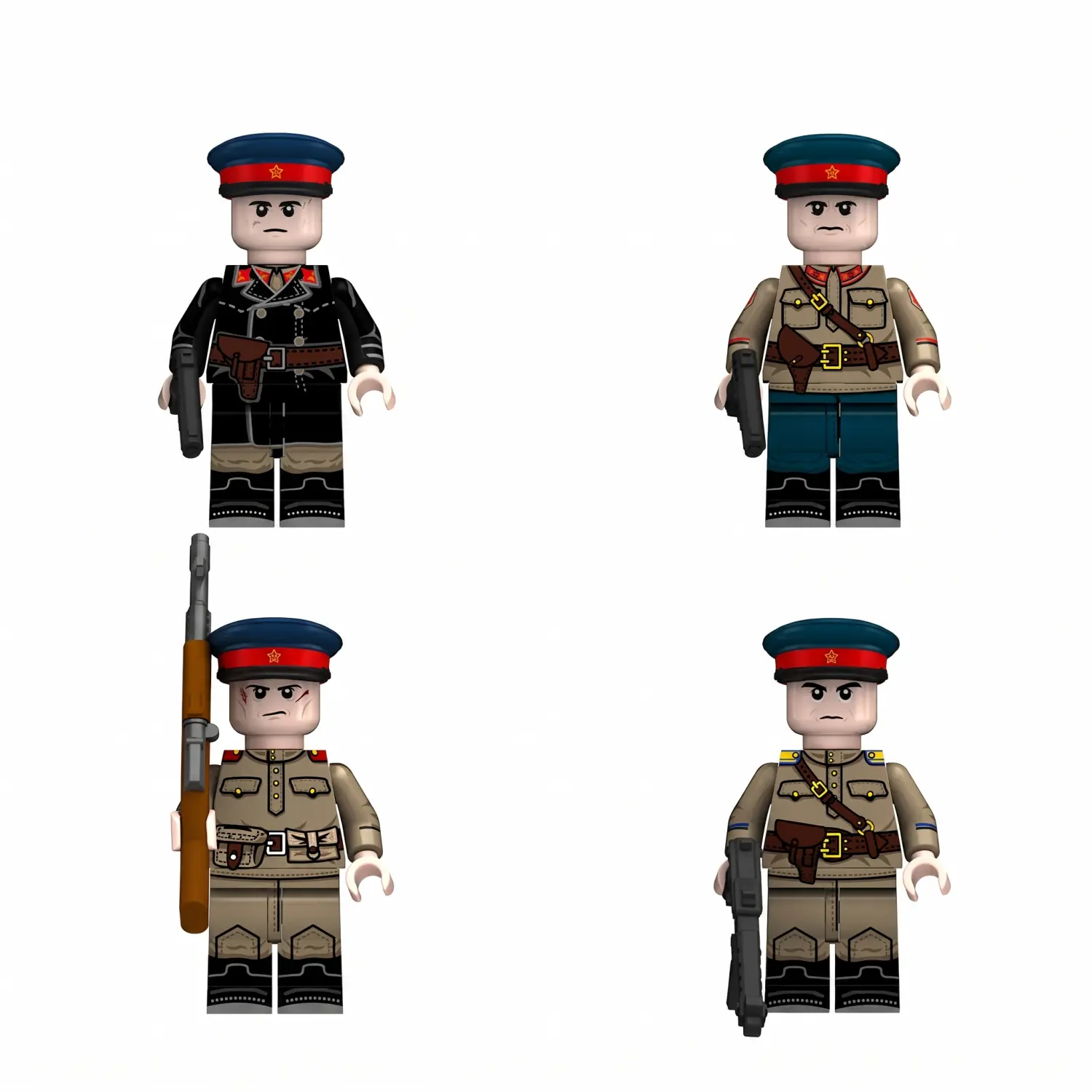
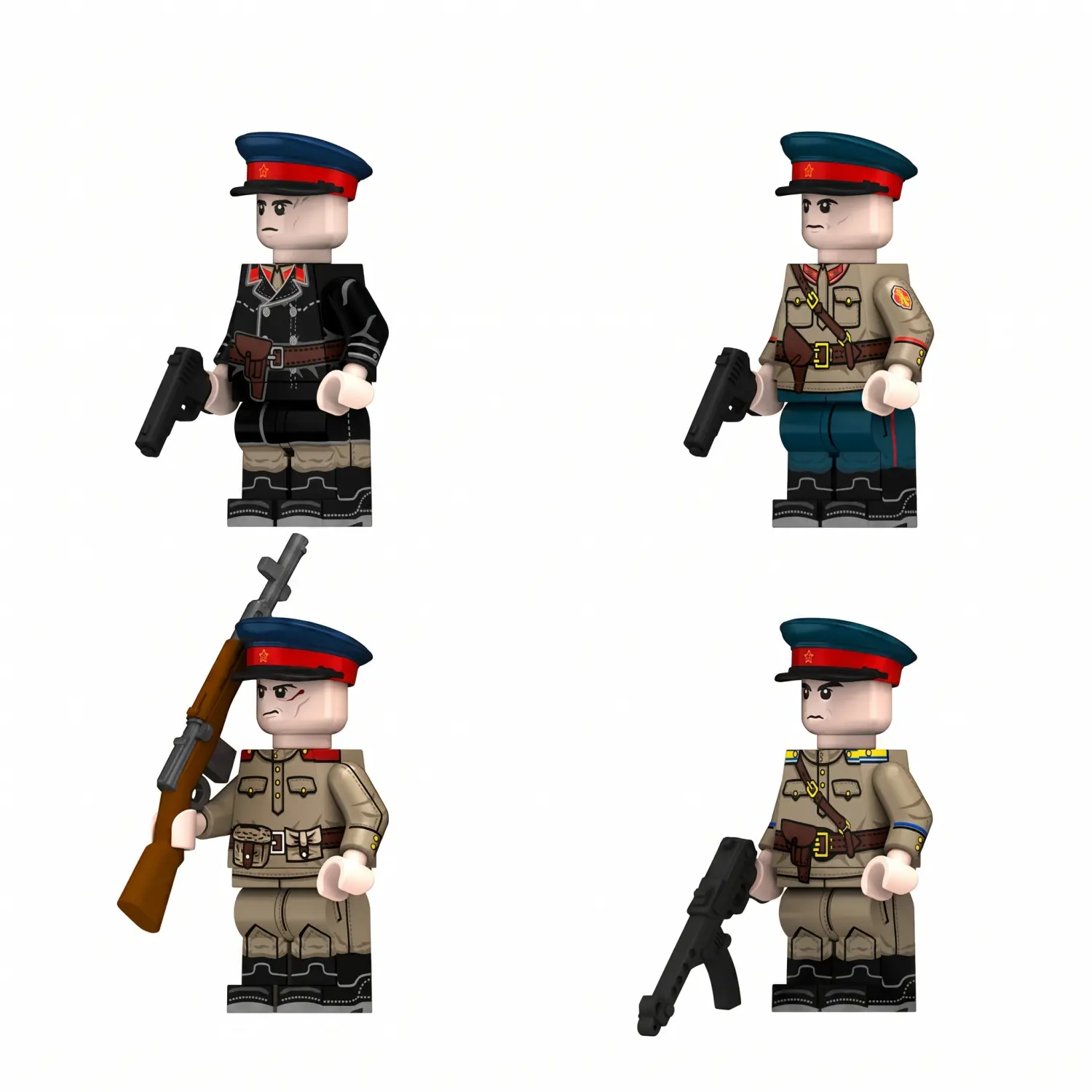
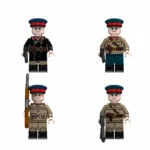
This collection displays a four-man command and security squad of Custom Printed Brick Block Figures representing the NKVD (People’s Commissariat for Internal Affairs) of the Soviet Union during World War II (The Great Patriotic War).
The unifying and defining feature of this entire squad is the iconic NKVD peaked cap (furazhka), instantly recognizable by its dark blue crown and bright red band with a central Soviet Star. This set showcases both early-war and late-war uniform variations, spanning rank-and-file infantry to high-ranking command staff.
Individual Character Introductions
1. Top Left: Soviet NKVD Junior Lieutenant (WWII)
-
Specific Name: Soviet NKVD Junior Lieutenant (WWII) – Early War Dress
-
Uniform & Insignia: This junior officer is dressed in an imposing, double-breasted black leather service coat. His collar features red patches with gold trim, which corresponds to the pre-1943 Soviet rank identification system where ranks were displayed on collar tabs rather than shoulder boards.
-
Gear & Weapon: He wears a brown leather belt equipped with a printed pistol holster on his right hip. He is armed with a standard-issue black Tokarev TT-33 semi-automatic pistol, a symbol of authority used for close-quarters protection and enforcing discipline.
2. Top Right: Soviet NKVD Lieutenant (WWII)
-
Specific Name: Soviet NKVD Lieutenant (WWII) – Field Officer Uniform
-
Uniform & Insignia: This figure wears a classic officer’s khaki summer tunic paired with dark blue breeches featuring red piping along the seams. Like the Junior Lieutenant, he features the pre-1943 red collar tabs with gold edging. A highly detailed NKVD shield emblem is cleanly printed on his upper left arm.
-
Gear & Weapon: He is outfitted with a comprehensive officer’s harness, including a diagonal leather cross-strap over his right shoulder and a waist belt with a printed pistol holster. He is armed with a Tokarev TT-33 pistol.
3. Bottom Left: Soviet NKVD Private (WWII)
-
Specific Name: Soviet NKVD Private (WWII) – Late War Enlisted Infantry
-
Uniform & Insignia: Representing the frontline enlisted security forces, this figure wears a standard khaki gymnastyorka (pullover tunic). Crucially, he features red shoulder boards, indicating the post-1943 uniform regulations when the Soviet military reintroduced traditional shoulder insignia. His trousers feature printed reinforced knee stitching.
-
Gear & Weapon: As an infantryman, his belt is equipped with printed ammunition pouches rather than a pistol holster. He is armed with a highly detailed SVT-40 semi-automatic rifle, complete with its signature 10-round box magazine and ventilated metal upper handguard.
4. Bottom Right: Soviet NKVD Major (WWII)
-
Specific Name: Soviet NKVD Major (WWII) – Senior Field Commander
-
Uniform & Insignia: This high-ranking officer wears a khaki tunic and matching khaki trousers. He represents the late-war command staff, featuring beautifully printed red and gold shoulder boards introduced in 1943 that denote the rank of Major.
-
Gear & Weapon: He wears a full officer’s leather harness with a diagonal cross-strap and a sidearm holster. To signify his high command status on the battlefield, he is armed with the legendary Soviet submachine gun: the PPSh-41, instantly recognizable by its ventilated barrel shroud and massive 71-round drum magazine.
Historical Background
The NKVD was the elite internal security, border guard, and state police apparatus of the Soviet Union under Joseph Stalin. Their presence on the Eastern Front was both vital and terrifying.
-
Evolution of the Uniform (1943 Reform): This collection perfectly demonstrates a major historical transition in Soviet military history. Prior to 1943, the Red Army and NKVD rejected traditional imperial styles, using collar tabs to show rank (as seen on the top two figures). However, in 1943, amid a wave of intense wartime patriotism, Stalin reinstated traditional shoulder boards (pogony) (as seen on the bottom two figures) to boost troop morale and prestige.
-
The Role of the “Blue Caps”: While regular Red Army soldiers bore the brunt of fighting the German Wehrmacht, NKVD rifle divisions were deployed for specialized tasks. They guarded vital supply lines, hunted spies behind the lines, and famously acted as Barrier Troops (Zagradotryady). Under Stalin’s ruthless Order No. 227 (“Not a step back!”), NKVD units were positioned behind frontline troops to stop unauthorized retreats and maintain absolute compliance.
-
Weaponry Preferences: The weapon choices here reflect historical reality. Enlisted infantrymen in elite or specialized units like the NKVD were frequently issued the advanced SVT-40 rifle for increased semi-automatic firepower. Meanwhile, senior commanders favored the PPSh-41 submachine gun for devastating, reliable close-range defense in urban combat zones like Stalingrad.
Reviews
There are no reviews yet