

English Name & Translation
-
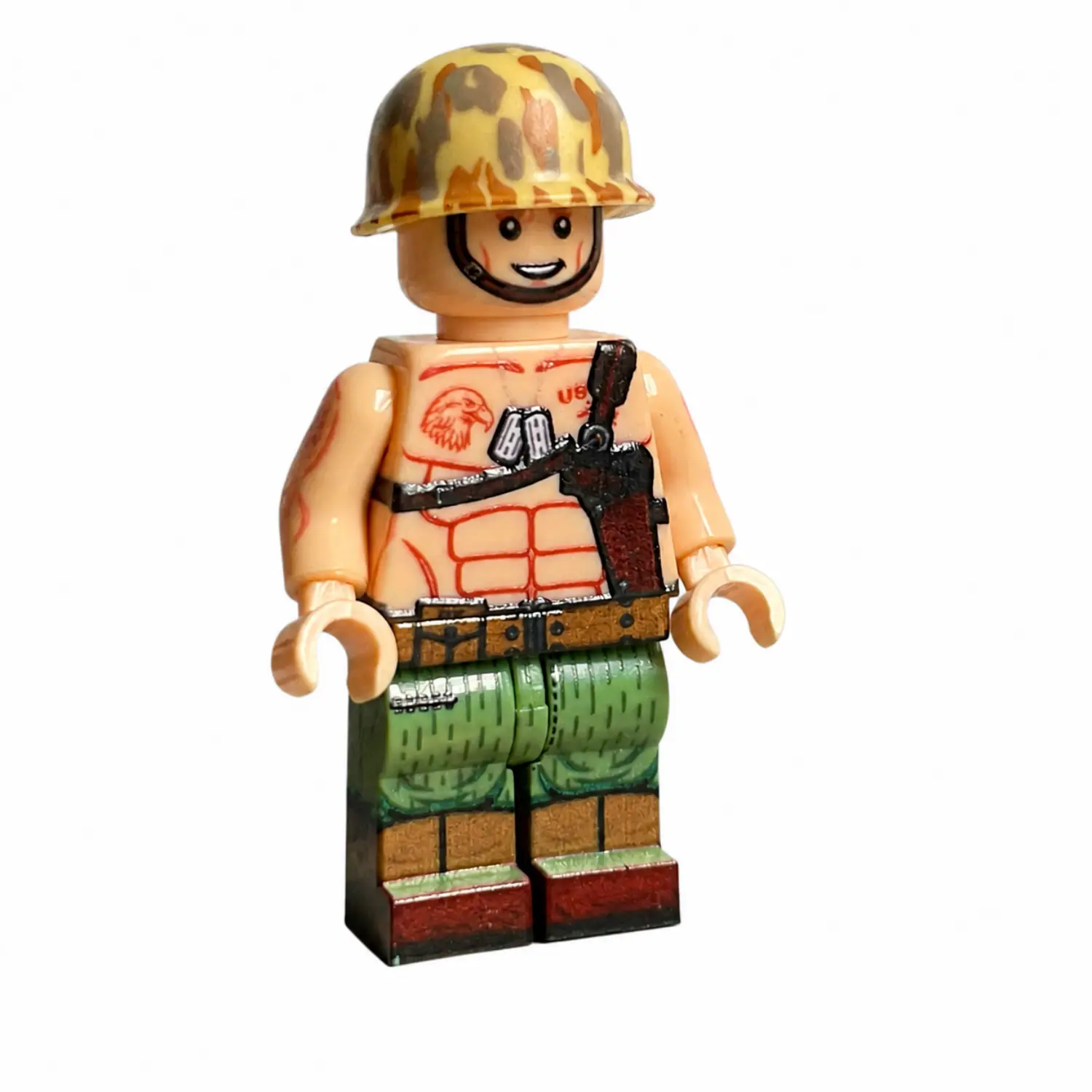
English Translation: WWII US Military Bare-Chested Gunner / Artilleryman (Pacific Theater)
-
Faction / Military Branch: United States Marine Corps (USMC) / US Army
-
Historical Era: World War II (1942–1945)
Character Identification, Description, and Historical Background
Character Identification This custom building block figure represents a World War II United States Marine or Army Gunner fighting in the grueling tropical conditions of the Pacific Theater. Shedding his heavy uniform jacket to survive the oppressive heat, this figure epitomizes the gritty, battle-hardened reality of the island-hopping campaigns.
Detailed Character Description (This premium custom building block figure uses high-quality 360-degree UV printing to capture the rugged, customized appearance of an American artilleryman or machine gunner in the tropics.)
-
Headgear & Face: The figure is equipped with the iconic M1 Steel Helmet stretched with a “Frogskin” camouflage cover, a signature piece of gear for US Marines in the Pacific. The face print features a confident smile, prominent cheek lines, and a printed leather chin strap resting on the jaw.
-
Torso (Bare-Chested & Tattoos): The torso is distinctly bare-chested to combat the tropical heat, featuring meticulous muscle definition printing (abs and pectorals). It is heavily customized with classic WWII-era military tattoos: a bald eagle on the right pectoral, bold “US” lettering on the left, and a wrapping snake or tribal design on the right arm. Around his neck hangs a classic set of silver military dog tags.
-
Tactical Gear: Strapped diagonally across his bare chest is a black leather M3 shoulder holster holding a sidearm (historically the M1911A1 .45 caliber pistol). This was a practical and popular carrying method for troops operating heavy machinery or artillery who needed their hands completely free.
-
Legs & Footwear: He wears standard olive drab Herringbone Twill (HBT) trousers, secured by a printed M1936 pistol belt. The lower legs are wrapped in tan canvas leggings (gaiters) to protect against jungle brush, which transition into sturdy brown roughout combat boots.
Historical Background The Pacific War was characterized by extreme tropical heat, oppressive humidity, and dense jungle environments. US Marines and Army soldiers fighting on islands like Guadalcanal, Tarawa, and Okinawa frequently discarded their heavy HBT uniform shirts to prevent heatstroke and jungle rot. Artillery crews, mortarmen, and heavy machine gunners—who performed exhausting physical labor while loading and firing—were especially known for fighting bare-chested.
The Frogskin camouflage helmet cover was introduced in 1942 and quickly became synonymous with the Marines’ island campaigns. Traditional military tattoos, like the eagle printed on this figure, were incredibly popular among servicemen of the Greatest Generation, serving as permanent symbols of patriotism and brotherhood. Furthermore, the M3 shoulder holster was heavily issued to troops whose primary combat roles made carrying a standard M1 Garand rifle cumbersome, allowing them quick access to personal defense.
Reviews
There are no reviews yet