

English Title & Specific Name
-
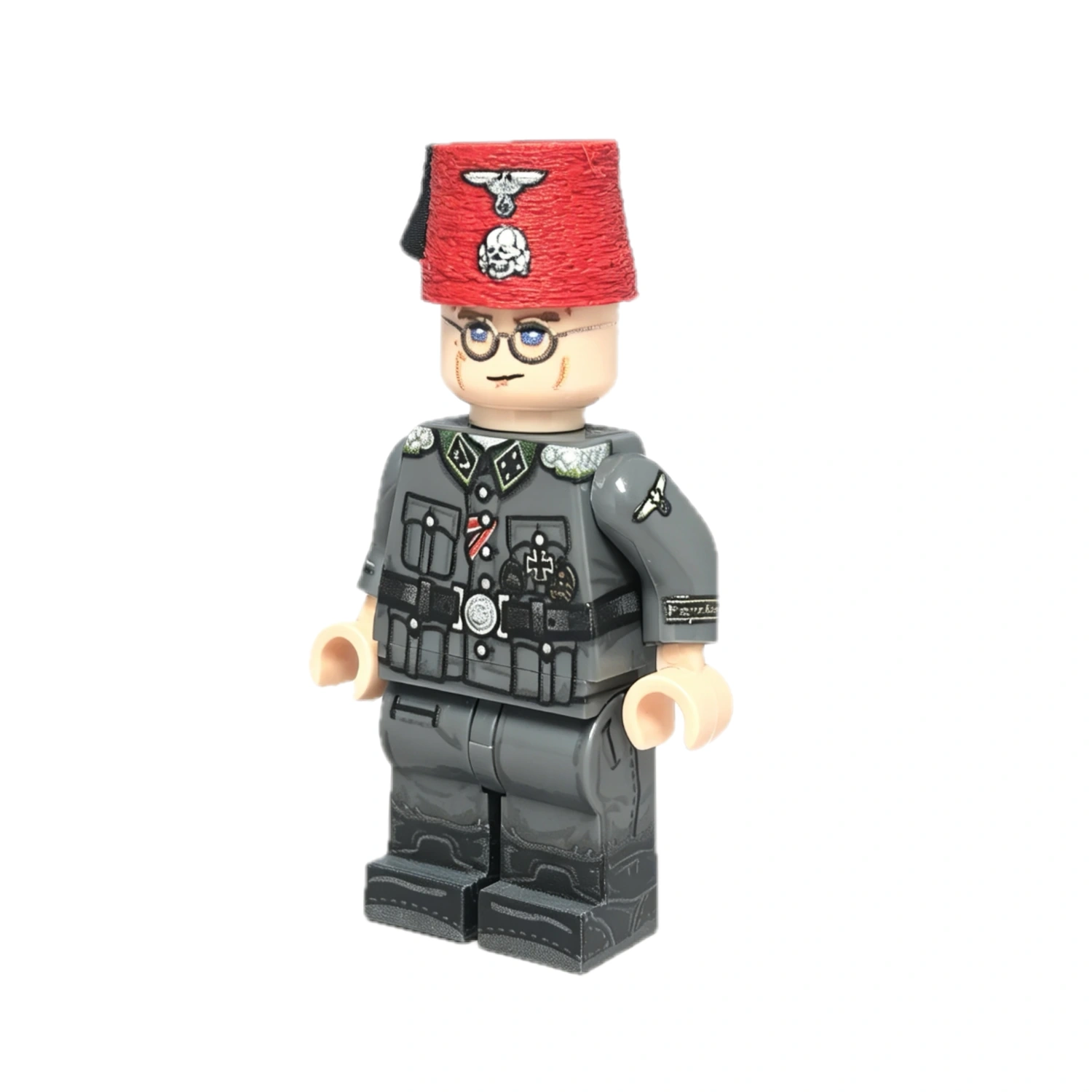
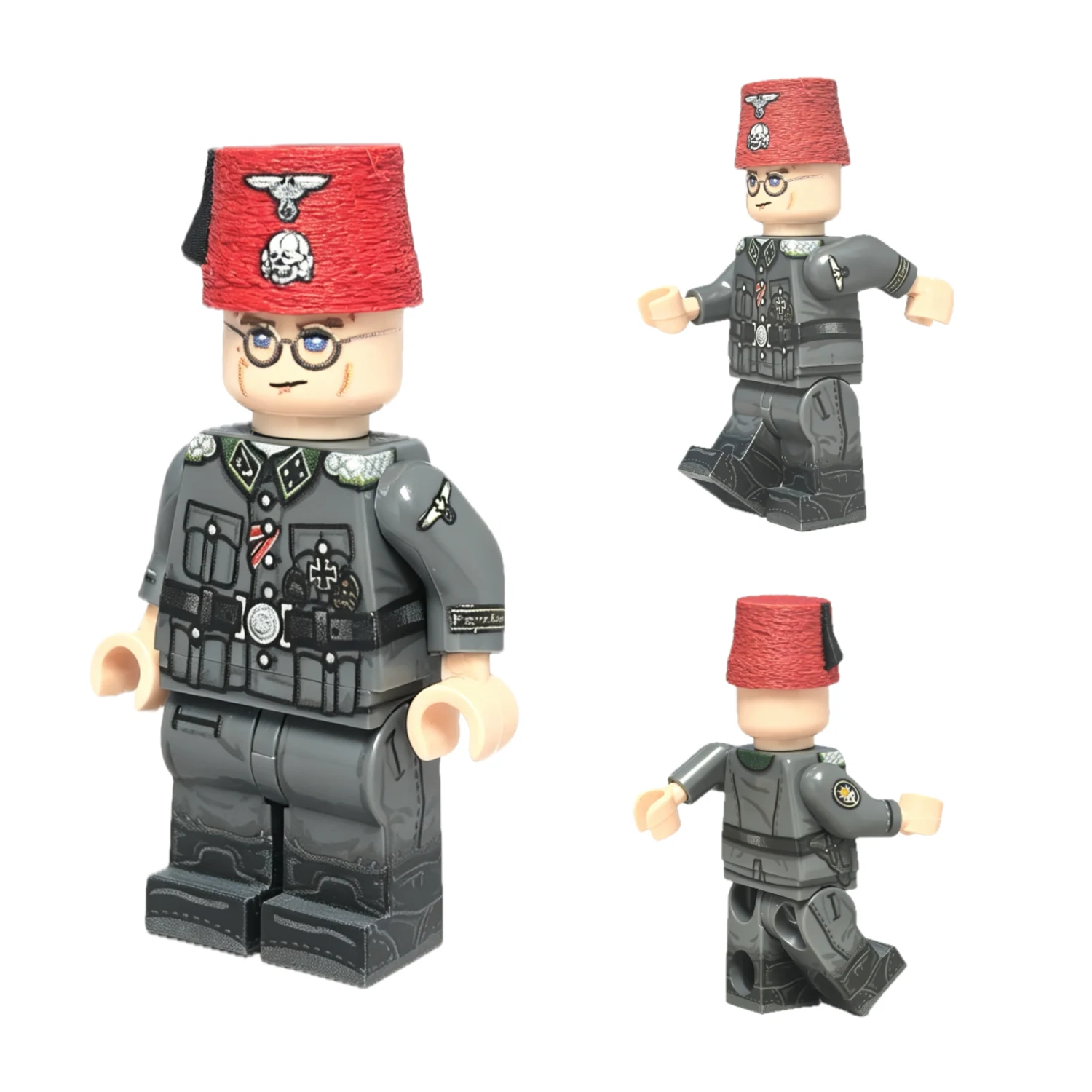
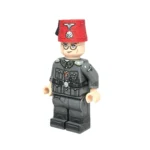
Figure Title: WWII Waffen-SS Bosnian Mountain Troop “Handschar” Officer
-
Historical Era: World War II (1939–1945)
-
Faction / Military Branch: Waffen-SS / 13th Waffen Mountain Division “Handschar” (1st Croatian)
Detailed Character Identification, Description, and Historical Background
Character Identification This custom building block figure represents a Commissioned Officer of the 13th Waffen Mountain Division of the SS “Handschar.” Unlike the enlisted men who were primarily Bosnian and Croatian volunteers, the officers of this division were overwhelmingly German Reichsdeutsche (native Germans) or Volksdeutsche (ethnic Germans). This figure is distinctly identified as a German officer cadre member by his standard SS runic collar tabs, silver officer shoulder boards, and the traditional German academic dueling scars on his face, all while wearing the division’s signature red fez.
Detailed Character Description (Utilizing pristine 360-degree UV printing, this figure meticulously captures the unique blend of traditional German officer tailoring with the distinct cultural headgear of the Balkan mountain troops.)
-
Headgear & Face: The officer wears the division’s iconic Red Fez, complete with a printed black tassel at the rear. The front prominently displays the silver SS national eagle (Hoheitszeichen) above the Death’s Head (Totenkopf). His face print is highly characterful, featuring round, wire-rimmed spectacles and striking dueling scars (Schmiss) on his cheeks. These scars were a prestigious mark of honor among aristocratic and upper-class German officers who participated in academic fencing at universities.
-
Torso (Officer’s Tunic & Medals): He is dressed in a tailored, field-grey M36-style Officer’s Tunic, noted for its contrasting dark green collar. The right collar tab features the standard silver SS runes (retained by many German cadre instead of the Handschar scimitar patch), while the left tab displays officer rank pips. His shoulders bear braided silver officer shoulder boards. His chest is decorated with combat awards, including the Iron Cross 1st Class and an Infantry Assault Badge pinned to the left pocket, with an Iron Cross 2nd Class ribbon woven through the second buttonhole. A black officer’s belt with a circular SS buckle secures his waist.
-
Arm Insignia: The left sleeve features the standard SS silver eagle and a printed cuff title near the wrist. The right sleeve displays the Edelweiss patch, the coveted badge of elite mountain troops (Gebirgsjäger), signifying his specialized training for rugged terrain.
-
Legs & Footwear: His lower half features matching field-grey riding breeches that tuck elegantly into a pair of high, polished black officer’s jackboots (Knobelbecher or riding boots), a standard footwear choice for German commissioned officers.
Historical Background The 13th Waffen Mountain Division “Handschar” was a unique formation in the German military, representing the first non-Germanic SS division. Created in 1943 to combat Yugoslav Partisans in the treacherous mountains of the Balkans, its enlisted ranks were filled with Bosnian Muslims and Catholic Croats. However, the leadership was almost entirely German.
To bridge the cultural gap and respect the religious traditions of the volunteers, SS leadership authorized the use of the fez. While a field-grey version was meant for combat, the red fez seen on this figure was officially designated for dress uniforms, parades, and off-duty wear, though officers occasionally wore them in the field to build camaraderie with their men. The presence of the Schmiss (fencing scars) and the Iron Cross on this figure tells the historical story of a highly educated, veteran German officer transferred from a standard frontline unit to command this specialized, foreign-volunteer mountain division in the brutal guerrilla theater of Yugoslavia.
Reviews
There are no reviews yet