Variations
-

Wehrmacht Artilleryman Soldier Artillerist (WWII) – Custom Printed Brick Block Figure
$14.99 -
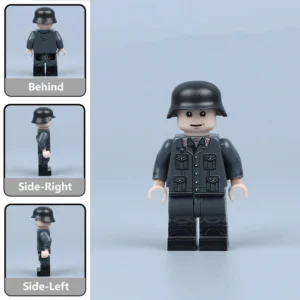
Wehrmacht Artillery Soldier Off-Duty Variant in Relaxed Attire (WWII) – Custom Printed Brick Block Figure
$14.99 -
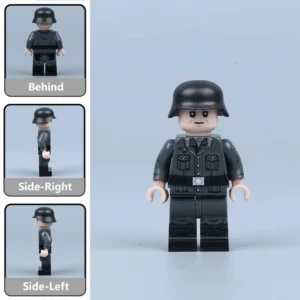
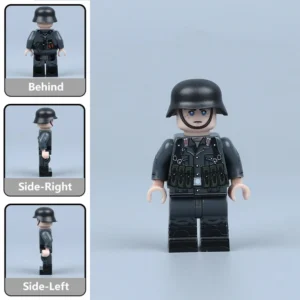
Wehrmacht Artillery Soldier Off-Duty Variant in in Light Duty Attire (WWII) – Custom Printed Brick Block Figure
$14.99 -
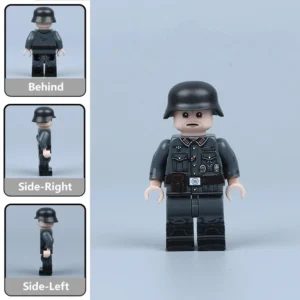
Wehrmacht Artillery Officer / NCO (Artillerie Offizier / Unteroffizier) (WWII) – Custom Printed Brick Block Figure
$14.99 -
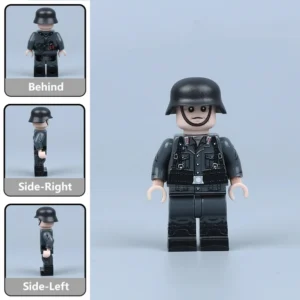
Wehrmacht Artillery Artilleryman Artillerist Soldier (WWII) – Custom Printed Brick Block Figure
$14.99
Introduction
Group Identification: Wehrmacht Artillery Unit (Artillerie)
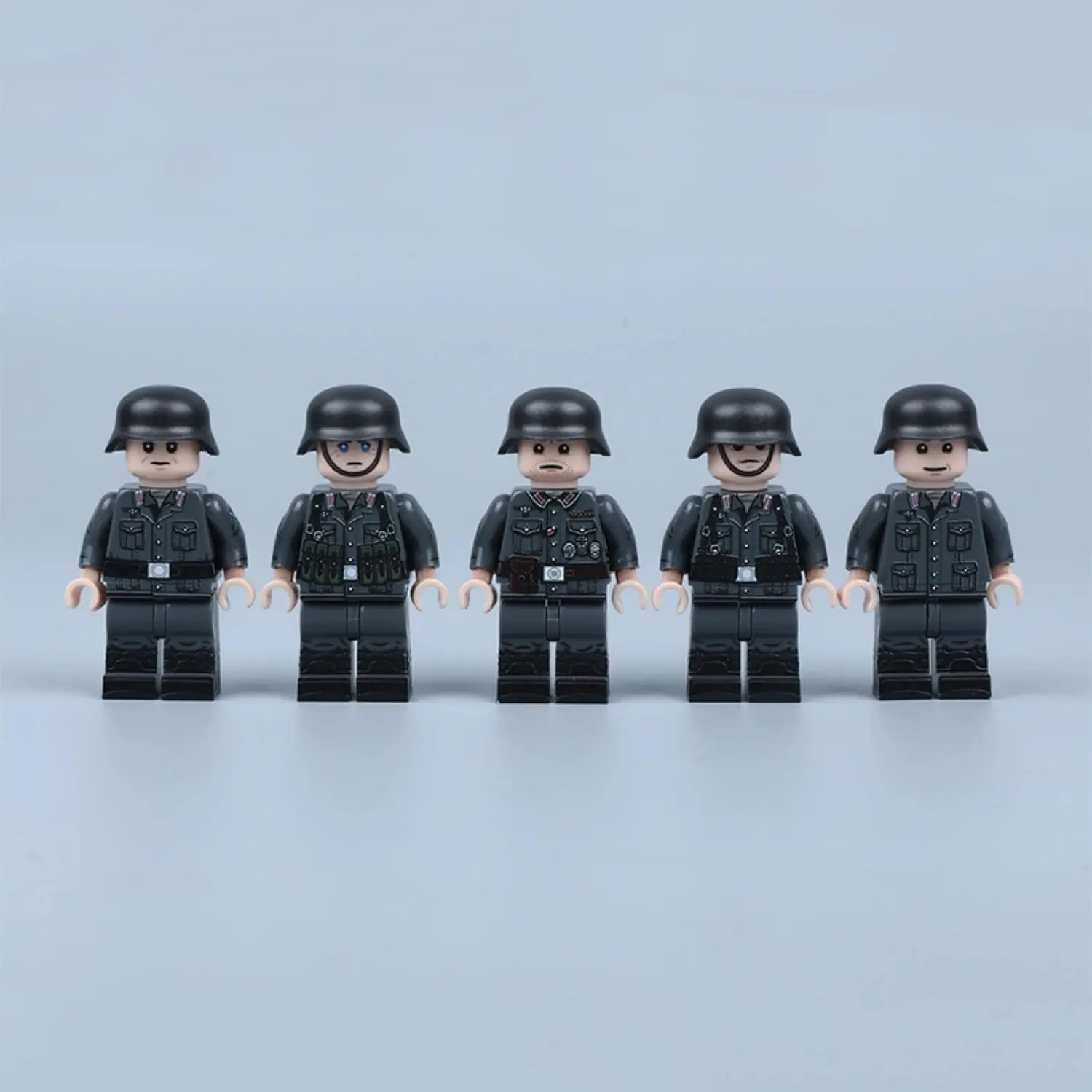
This image displays a highly detailed, five-man squad of Custom Printed Brick Block Figures representing a gun crew of the German Wehrmacht’s Artillery Branch during World War II.
Before breaking them down individually, the defining feature that unifies this squad is the bright red piping (Hochrot) outlining all of their collar tabs (Litzen). In the German military’s Waffenfarbe (branch color) system, red officially designated the wearer as an artilleryman.
Here is a detailed, one-by-one breakdown from left to right:
1. Far Left: Artillery Soldier (Light Duty)
-
Visual Details: This figure represents a soldier performing camp maintenance or garrison duties. He features a clean-shaven, serious expression.
-
Tactical Gear: He wears his standard Feldgrau (field grey) tunic secured by a bare black leather equipment belt. He lacks the heavy combat suspenders (Y-straps) and ammunition pouches, indicating a “light duty” uniform configuration.
2. Mid-Left: Artillery Soldier (Combat Equipped)
-
Visual Details: This figure represents a young, frontline-ready gunner. He features a youthful face with printed freckles, striking blue eyes, and a printed leather helmet chinstrap.
-
Tactical Gear: He is fully equipped to defend the gun line, wearing black Y-straps and carrying printed dark green ammunition pouches on his combat belt.
3. Middle: Artillery Officer / NCO (Crew Commander)
-
Visual Details: Positioned in the center, this is the veteran commander of the gun crew. He features a battle-hardened face with printed stubble.
-
Tactical Gear & Medals: He is highly decorated, featuring a buttonhole ribbon for the Iron Cross 2nd Class and silver breast badges (likely General Assault and Wound badges). Instead of infantry webbing, he wears a brown officer’s belt with a printed map case/holster on his right hip, essential for calculating artillery firing coordinates.
4. Mid-Right: Artillery Soldier (Combat Equipped)
-
Visual Details: Another frontline combatant, this figure features a seasoned, mustached face and a printed helmet chinstrap.
-
Tactical Gear: Like the second figure, he is fully geared up for an engagement, wearing black Y-straps and black leather ammunition pouches across his chest to feed his personal weapon.
5. Far Right: Artillery Soldier (Off-Duty/Relaxed)
-
Visual Details: This figure portrays a soldier in a relaxed state, featuring a clean-shaven face with a subtle smile.
-
Tactical Gear: He is completely unencumbered. He wears no external tactical webbing or belts whatsoever, showcasing the crisp tailoring of the base Feldbluse tunic. This represents a soldier resting behind the gun line after a grueling firing mission.
Historical Background: The God of War
The Artillery (Artillerie) was a massive, highly respected, and absolutely indispensable component of the German war machine during World War II.
-
The Red Waffenfarbe: The bright red piping worn by these figures was a point of immense pride. It was worn by crews manning traditional horse-drawn field guns, massive heavy siege howitzers, and the highly dangerous Anti-Tank (Panzerjäger) and Assault Gun (Sturmgeschütz) units.
-
Crew Dynamics: Operating a 10.5cm or 15cm howitzer was a team effort. The Officer/NCO (center figure) calculated the complex math for firing trajectories using maps and forward observer reports. The enlisted men performed the exhausting physical labor of hauling heavy shells, loading the breech, and maintaining the gun.
-
Uniform Variations: Because artillery crews operated slightly behind the immediate frontline but were still highly vulnerable to enemy breakthroughs, they needed varying states of gear. They would strip off their heavy webbing to move massive artillery shells comfortably (like the outer figures), but always kept their combat webbing and rifles nearby (like the inner figures) to repel sudden infantry assaults.


Reviews
There are no reviews yet