

Variations
Introduction
This 2-pack collection represents late-war World War II German infantrymen outfitted in specialized Sumpfmuster (Marsh/Swamp) camouflage smocks, representing the desperate defensive operations on the Eastern and Western fronts between 1943 and 1945.
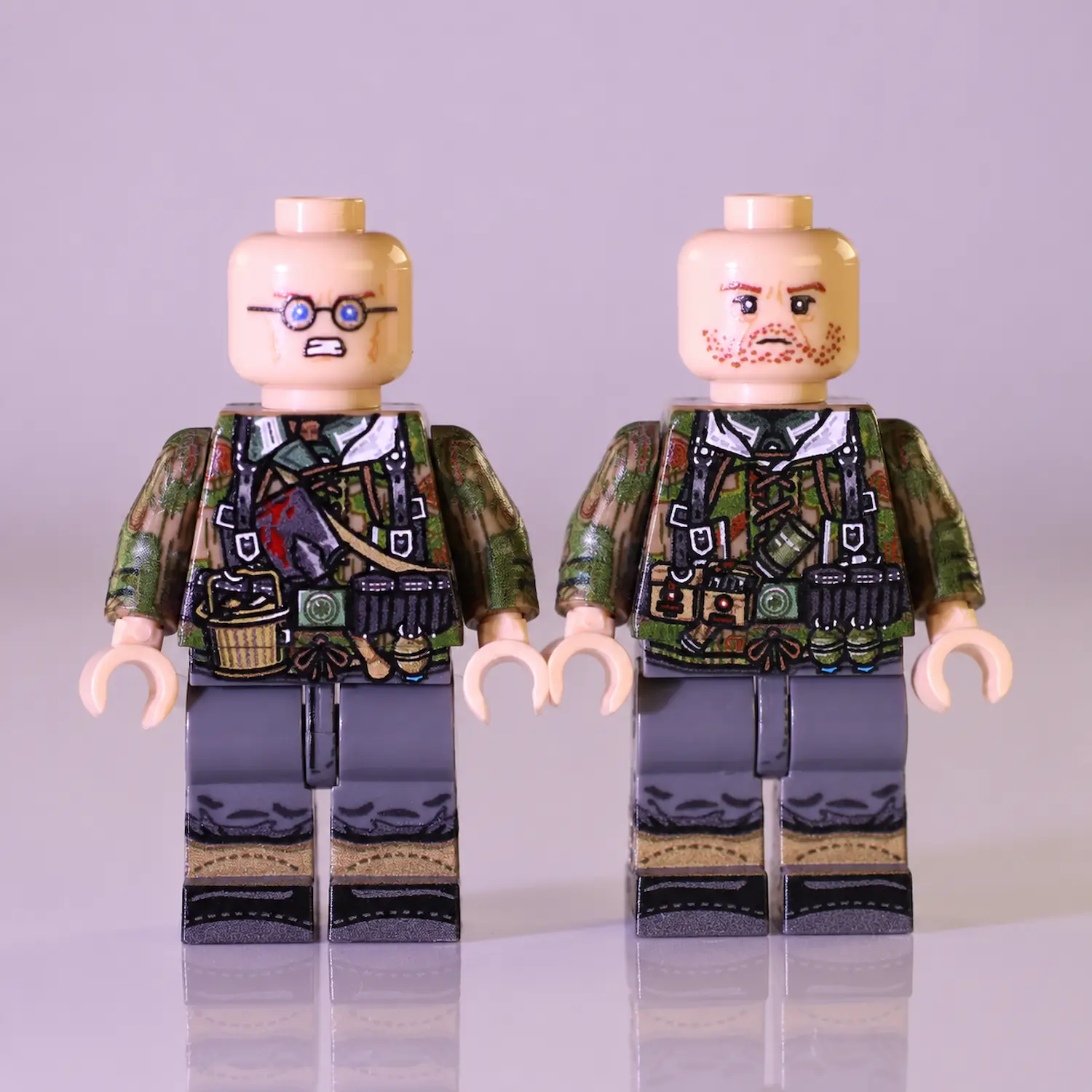
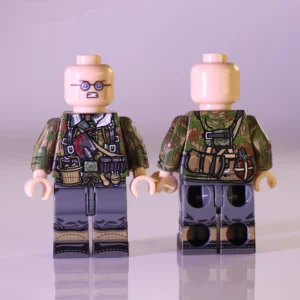
1. Left Figure: WWII German Sumpfmuster Kar98k Rifleman (with Glasses & Bloodied Spade)
-
Character Identification: WWII German Army (Heer) Frontline Infantryman / Kar98k Rifleman
-
Detailed Description: This custom building block figure features extensive 360-degree UV printing depicting a battle-scarred veteran. The light nougat face is printed with a grimacing expression, blood splatters across the cheek and forehead, and blue-tinted round wire-rimmed prescription glasses (Dienstbrille). He wears a Sumpfmuster (marsh pattern) camouflage smock over an open-collared field-grey (Feldgrau) tunic. Black leather Y-strap suspenders support a combat belt fitted with a triple-cell black leather ammunition pouch on the left side, designed for Karabiner 98k stripper clips. The most striking detail is a blood-stained entrenching tool (spade) blade strapped diagonally across his right chest under the Y-straps for immediate melee access. The lower legs consist of field-grey trousers ending in canvas gaiters (Gamaschen) over brown ankle boots, complete with printed mud and dirt textures.
-
Historical Background: The Sumpfmuster (Marsh/Swamp) camouflage pattern was introduced in 1943 as an improvement over the earlier Splintermuster, using softened, blurred edges in tan, reddish-brown, and green to break up a soldier’s silhouette in muddy forests and marshes. The Karabiner 98k bolt-action rifle was the backbone of the German military, requiring infantrymen to carry three-cell leather pouches on their belts. During intense, close-quarters combat in trenches and ruined cities, soldiers frequently strapped sharpened shovels to their chests for instant use in hand-to-hand fighting. The inclusion of standard-issue military glasses (Dienstbrille) and late-war canvas gaiters (issued due to severe leather shortages) adds high historical accuracy.
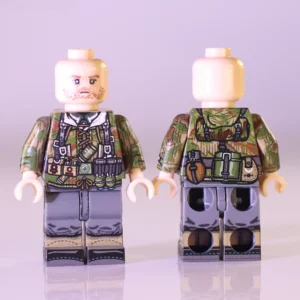
2. Right Figure: WWII German Sumpfmuster G43 Marksman (with Stubble & Grenades)
-
Character Identification: WWII German Army (Heer) Designated Marksman / G43 Rifleman
-
Detailed Description: This figure represents an experienced assault rifleman. The head print displays a stern, battle-weary face detailed with realistic reddish beard stubble and furrowed brow lines. He is dressed in the Sumpfmuster camouflage smock featuring a lace-up neck closure over his Feldgrau collar. Black leather Y-straps cross his shoulders, anchoring a belt equipped with specialized black leather G43 semi-automatic rifle magazine pouches on his left side and utility pouches on his right. Tucked directly into his front belt are two Model 24 stick grenades (Stielhandgranaten), ready for immediate throwing. The leg blocks continue the field-grey trousers, terminating in tan canvas gaiters over brown ankle boots with realistic field-dirt printing around the soles.
-
Historical Background: The Gewehr 43 (G43) was a 10-round semi-automatic rifle introduced in 1943 to counter superior Allied semi-automatic small arms like the Soviet SVT-40 and American M1 Garand. Because production numbers were limited compared to standard bolt-action rifles, G43s were prioritized for squad leaders, assault teams, and designated marksmen. Soldiers carrying the G43 were issued special oversized belt pouches to hold its box magazines. The Model 24 stick grenades tucked into his belt—nicknamed “potato mashers” by Allied troops—were essential weapons for clearing enemy dugouts and defensive positions during the brutal retreat campaigns of 1944–1945.
Reviews
There are no reviews yet