

Variations
-
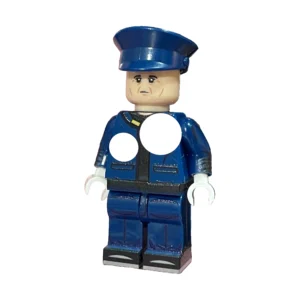
Vice Admiral Chuichi Nagumo Pacific Theater WWII – Custom Printed Brick Block Figure
$19.99 -
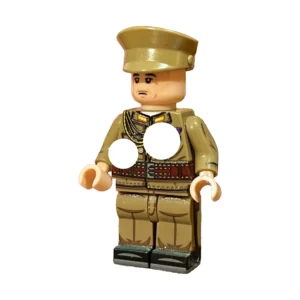
General Tadamichi Kuribayashi Pacific Theater WWII – Custom Printed Brick Block Figure
$19.99 -
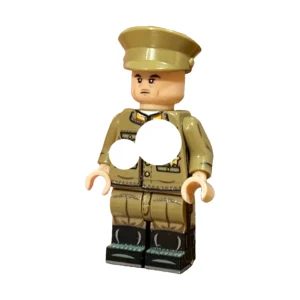
General Mitsuru Ushijima Pacific Theater WWII – Custom Printed Brick Block Figure
$19.99 -
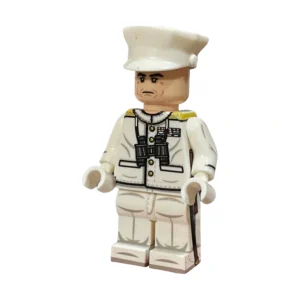
Admiral Isoroku Yamamoto Pacific Theater WWII – Custom Printed Brick Block Figure
$19.99
Introduction
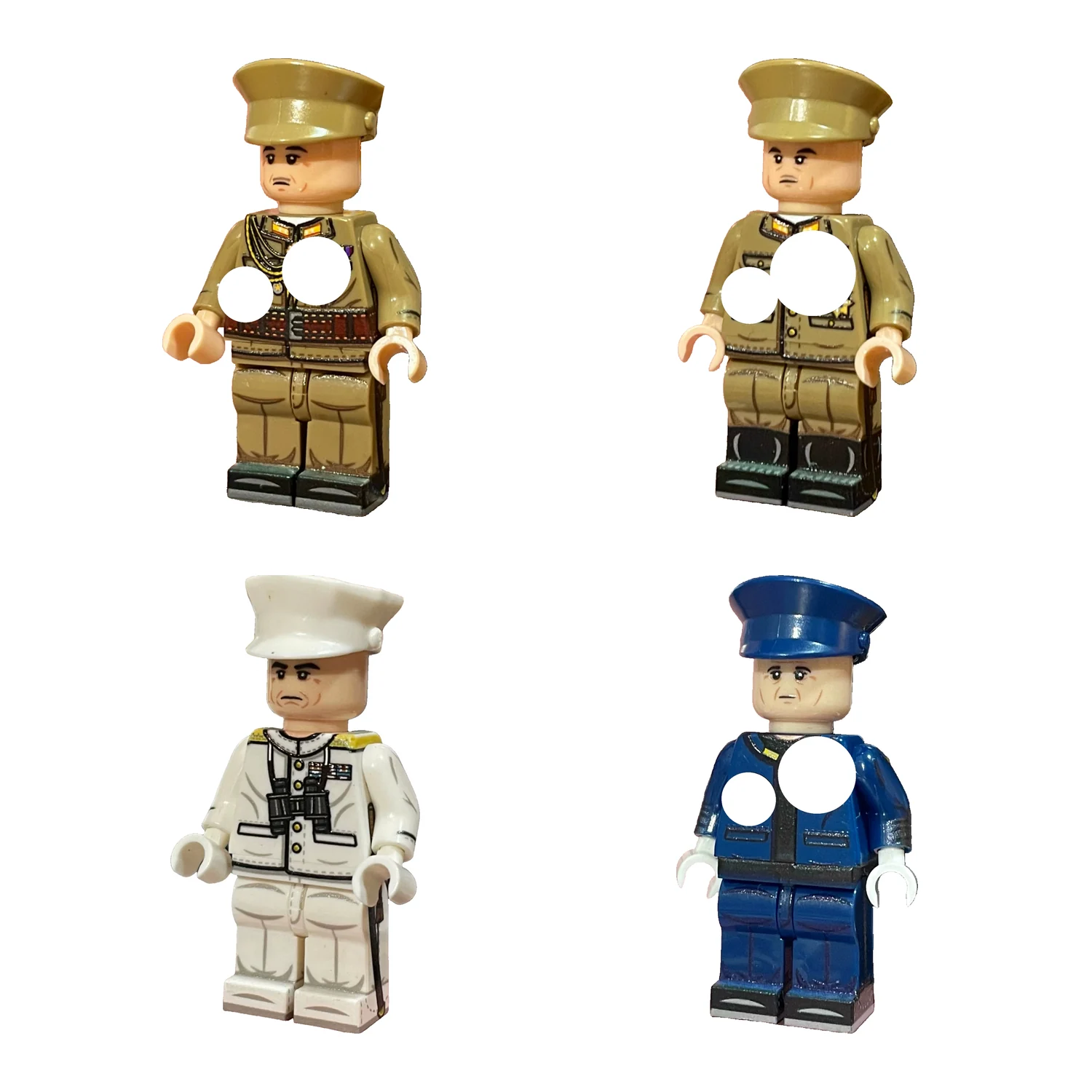
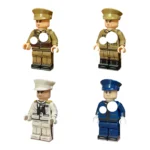
This four-figure collection brings together two Japanese army commanders and two Japanese naval admirals from the Pacific theater of World War II. It is a curated historical group, not a claim that all four served together in one headquarters or battle.
1. General Tadamichi Kuribayashi
Character Identification: This named custom printed brick block figure portrays Tadamichi Kuribayashi, the Japanese army commander associated with the defense of Iwo Jima. An olive peaked cap, olive uniform, printed gold-colored cords and brown belt distinguish this miniature.
Detailed Character Description
- Headgear & Face: An olive peaked cap accompanies a serious face with dark brows, a downturned mouth and sparse cheek lines.
- Uniform & Printed Detail: The olive tunic has yellow-and-red collar accents, gold-colored cord printing, visible colored chest details and outlined seams.
- Belt & Lower Uniform: A broad brown belt has repeated light studs and a dark buckle. Matching olive trousers carry crease printing above dark footwear.
- Included Headgear: The pictured olive cap is included with this full figure. All depicted cords and belt details are printed.
Historical Background: Tadamichi Kuribayashi commanded Japanese forces defending Iwo Jima during the 1945 Pacific campaign. After taking up the island command in 1944, he directed extensive preparations before American troops landed on 19 February 1945. The island’s defense became associated with fortified positions that were difficult to see and suppress from the surface.
2. General Mitsuru Ushijima
Character Identification: This custom printed brick block figure portrays Mitsuru Ushijima, the commander of the Japanese 32nd Army on Okinawa. Its olive cap and tunic, yellow-and-red collar accents and tall dark boot printing give it a distinct officer appearance.
Detailed Character Description
- Headgear & Face: An olive peaked cap sits above dark brows, a small downturned mouth and sparse cheek lines.
- Uniform: The olive tunic shows collar accents, outlined pockets, central buttons and visible colored chest details.
- Legs & Footwear: Olive trousers end in tall black boot panels with gray highlights and dark feet.
- Included Headgear: The pictured olive cap is included with the full figure. No separate handheld accessory is pictured.
Historical Background: Mitsuru Ushijima commanded the Japanese 32nd Army during the Okinawa campaign of 1945. The Allied assault began on 1 April and continued through June in the closing months of the Pacific war. Okinawa’s airfields and position near Japan gave the island strategic importance, while its populated landscape made the battle devastating for civilians as well as military personnel.
3. Admiral Isoroku Yamamoto
Character Identification: This custom printed brick block figure portrays Admiral Isoroku Yamamoto, commander of the Japanese Combined Fleet. A white peaked cap and matching white naval uniform make the figure immediately distinct from the olive-clad army officers.
Detailed Character Description
- Headgear & Face: A white peaked cap accompanies heavy brows, a downturned mouth and age-line printing.
- Naval Uniform: A white tunic has gold-colored shoulder accents, a vertical row of gold-colored buttons, pocket outlines and small ribbon-like chest rectangles.
- Printed Equipment: Black binocular printing hangs across the front on dark straps; a narrow brown equipment motif is visible down one outer leg.
- Legs & Hands: The white trousers have gray fold outlines. The hands and footwear are white.
- Included Headgear: The pictured white cap is included. Binocular and side-equipment details are printing rather than pictured loose accessories.
Historical Background: Isoroku Yamamoto was commander in chief of Japan’s Combined Fleet during the early Pacific war. He devised the naval plan for the attack on Pearl Harbor on 7 December 1941, while Vice Admiral Chuichi Nagumo commanded the carrier force that carried it out. Their different responsibilities illustrate the distinction between fleet-level planning and the command of a striking force at sea.
4. Vice Admiral Chuichi Nagumo
Character Identification: This custom printed brick block figure portrays Vice Admiral Chuichi Nagumo, the Japanese carrier-force commander associated with Pearl Harbor and Midway. Its dark blue peaked cap, matching naval uniform and white hands distinguish this design.
Detailed Character Description
- Headgear & Face: A dark blue peaked cap accompanies a subdued face with dark eyes, a small mouth and fine cheek lines.
- Naval Uniform: The blue tunic shows a dark central panel, yellow collar accents, lower-pocket outlines and silver-gray cuff details.
- Legs & Footwear: Matching blue trousers have seam and crease lines above dark footwear with light highlights.
- Included Headgear: The pictured blue cap is included with the full figure. The hands are white; no loose weapon is shown.
Historical Background: Chuichi Nagumo commanded the Japanese carrier force that attacked Pearl Harbor on 7 December 1941. The operation had been planned under Combined Fleet commander Isoroku Yamamoto. Nagumo’s place in the early Pacific war is therefore closely linked to the practical command of carrier striking forces, rather than the broader fleet-level planning role represented by Yamamoto.
Historical / Thematic Background
The Pacific war involved distinct army and naval commands across widely separated campaigns. This collection brings together Kuribayashi, associated with Iwo Jima’s defense in 1945; Ushijima, commander of the 32nd Army on Okinawa; Yamamoto, commander of the Combined Fleet; and Nagumo, commander of major early-war carrier striking forces. Their subjects connect different stages and responsibilities within the conflict.
The two army figures offer a theme of late-war island defense, while the naval pair points to fleet planning and carrier operations at Pearl Harbor and Midway. These were different settings, so the collection is best read as a comparative display of command roles. The named members allow a builder to explore the difference between strategic planning, the direction of naval forces and the organization of ground defenses.
Uniform colors make that comparison visible: olive clothing and caps distinguish the army officers, while white and blue naval dress separate Yamamoto and Nagumo. Face expressions, belt details and printed equipment provide further individuality. The set can form the center of a Pacific-theater history display, with the figures arranged by branch or campaign. Each member represents a separate command role and historical setting. Together, their subjects illustrate different aspects of wartime leadership and the consequences of military decisions across the Pacific theater.
Reviews
There are no reviews yet