
Variations
-
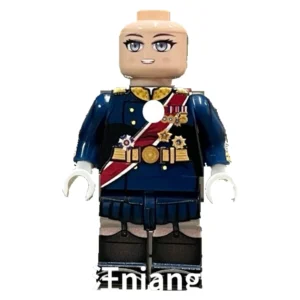
Wangniang Ceremonial Uniform 20th Century Inspired – Custom Printed Brick Block Figure
$19.99 -
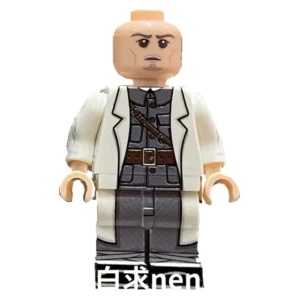
Norman Bethune Medical Coat Second Sino-Japanese War – Custom Printed Brick Block Figure
$19.99 -

Naval Officer Ceremonial Dress 20th Century – Custom Printed Brick Block Figure
$19.99 -
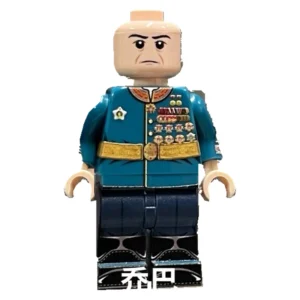
Khorloogiin Choibalsan Mongolian Marshal 20th Century – Custom Printed Brick Block Figure
$19.99
Introduction
Overall Collection Introduction
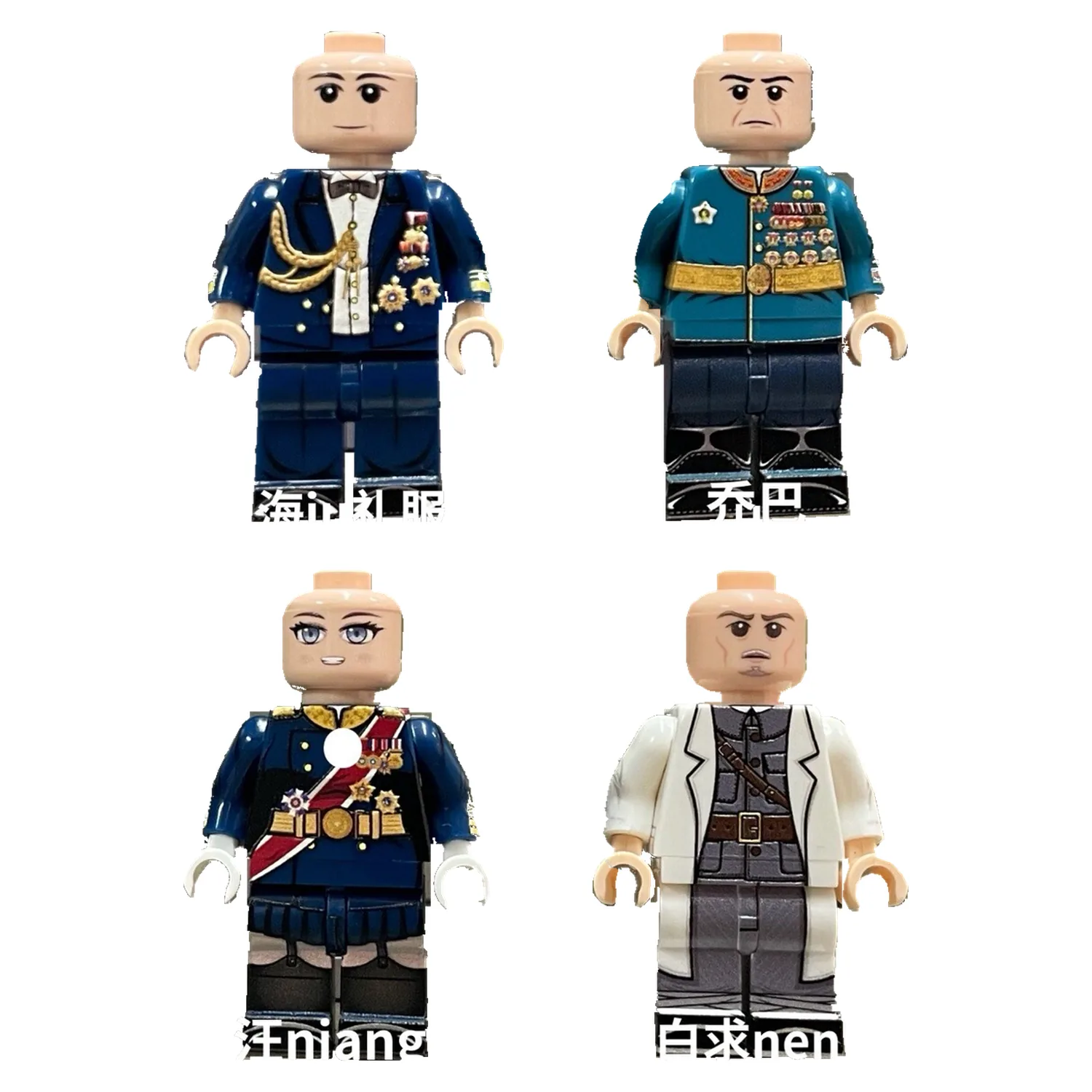
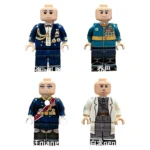
Historical Personalities and Ceremonial Figures 20th Century Collection – Custom Printed Brick Block Figure brings together four distinct characters: a naval ceremonial officer, a Choibalsan-inspired Mongolian marshal, Wangniang and Norman Bethune. Decorated navy and teal uniforms sit alongside a white medical coat, giving each member a different visual identity and a different story to tell.
The collection contains one of each of the four figures described below. All are shown with unadorned heads and empty hands. Clothing, decorations, belts and straps are printed artwork; separate headgear, weapons and medical equipment are not included.
1. Naval Ceremonial Officer
Character Identification
A generic naval officer in twentieth-century-inspired evening dress, with an open-ended identity for ceremonial scenes.
Detailed Character Description
A slight smile and clean-shaven face accompany a dark navy jacket and trousers. The white buttoned front and shirt collar, dark bow tie, sweeping gold-colored cord motifs, sleeve stripes and star-shaped decorations give the uniform its formal character.
Historical / Thematic Background
This member introduces the theme of ceremony at sea through the styling of an officer’s evening uniform. The bow tie and white shirt front suggest a formal reception or official dinner, while the concentrated decoration gives the otherwise restrained outfit a sense of occasion. As a generic naval character, the figure can occupy an imaginative reception scene or stand in a lineup exploring different forms of official dress, without tying the display to one named commander or navy.
2. Choibalsan-Inspired Mongolian Marshal
Character Identification
A stylized interpretation of Khorloogiin Choibalsan, the Mongolian marshal and premier whose career combined political and military leadership.
Detailed Character Description
A stern expression sits above a teal jacket with red-and-gold collar decoration, a star-shaped motif and dense rows of ribbons and medals. A broad gold-colored belt, dark trousers and contrasting boot artwork complete the printed outfit.
Historical / Thematic Background
Choibalsan (1895–1952) took part in Mongolia’s 1921 revolution and later held senior government and army positions. He became marshal in 1936, commander-in-chief of the Mongolian People’s Army in 1937 and premier in 1939, remaining premier until 1952. His military leadership was associated with Khalkhin Gol and Mongolia’s Liberation War. Within this collection, he brings a specific Mongolian historical subject to the broader ceremonial theme. The figure’s elaborate clothing interprets that leadership role without claiming an exact historical uniform or set of awards. His legacy remains contested, including his responsibility for political purges and mass killings.
3. Wangniang Ceremonial Character
Character Identification
A Chinese alternate-history-inspired Wangniang character, which appears associated with the fictional female Wang Jingwei reinterpretation tradition. Its stylized face and ceremonial dress represent an imaginative character rather than a documented historical woman.
Detailed Character Description
Large pale gray-blue eyes, eyelashes and a small smile contrast with a navy uniform. A white-edged burgundy sash, gold-colored collar and shoulder details, visible star and medal motifs and a broad belt decorate the torso. White hands and skirt-style leg printing with stocking and dark footwear details distinguish the silhouette.
Historical / Thematic Background
Wangniang adds a Chinese alternate-history character-design interpretation of ceremonial dress. The animated expression gives the formal outfit a playful personality, while the sash and gold-colored decoration provide a clear visual connection to the collection’s officer figures. A fictional gathering or character lineup suits this combination of imaginative styling and uniform inspiration. The character’s own identity remains open-ended, as a fictional interpretation apparently related to the Wangniang character family, without an authentic uniform, specific military service or official game attribution.
4. Norman Bethune
Character Identification
The Canadian physician Norman Bethune, represented through the medical-coat theme of his wartime work in China during 1938–1939.
Detailed Character Description
A concerned expression and small printed facial-hair detail accompany a white medical coat over gray clothing. Outlined lapels and pockets, a brown belt, diagonal strap and coordinated gray leg printing create the medical-service appearance.
Historical / Thematic Background
Bethune (1890–1939) served as a Canadian army medical-corps stretcher-bearer during the First World War and was wounded at Ypres. He later worked as a thoracic surgeon in Canada and developed medical instruments before taking his skills overseas. During the Spanish Civil War, he led a Canadian team working on mobile blood transfusion services. In China, he served as a battlefield surgeon and medical adviser with the Eighth Route Army, using portable facilities and training other medical workers. His white coat brings the work of a doctor into a collection otherwise dominated by formal uniforms, connecting its twentieth-century themes with treatment and medical teaching.
Historical / Thematic Background
The collection places different kinds of twentieth-century-inspired public roles side by side. The naval officer suggests ceremony and formal presentation; Choibalsan introduces a named Mongolian political and military leader; Wangniang explores a Chinese alternate-history-inspired ceremonial personality; and Bethune represents medical work in a wartime setting. Their contrasting expressions and clothing make those differences visible in a compact four-character display.
Arrange the figures as individual portraits, a comparative uniform lineup or separate small scenes. Their shared place in the collection is thematic: elaborate dress, recognizable personalities and the visual storytelling of printed clothing. Each member retains its own historical or imaginative context, allowing the display to bring varied subjects together without suggesting that all four belonged to the same country, organization or event.
Reviews
There are no reviews yet