

Variations
Introduction
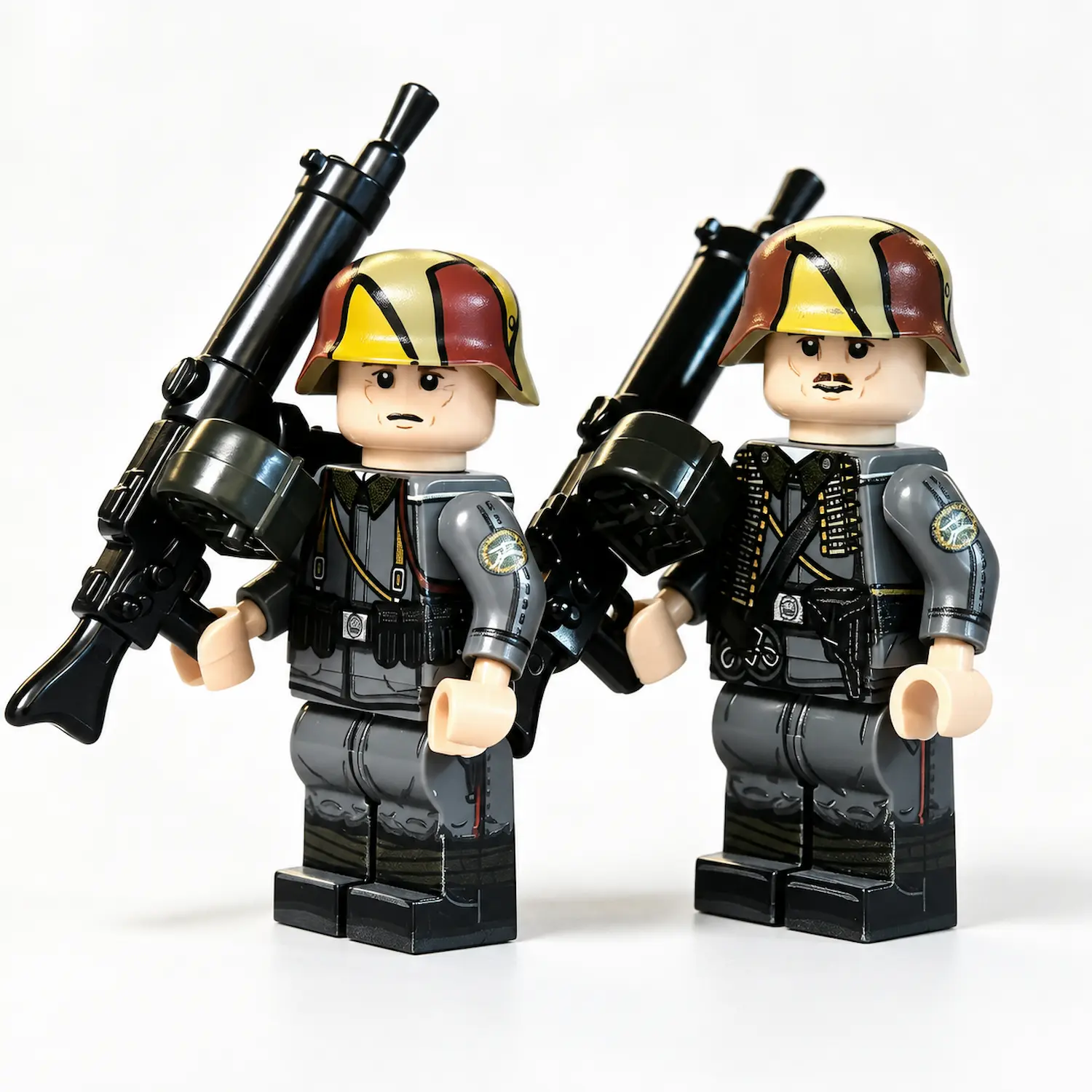
this image showcases two highly detailed custom building block figures standing side-by-side.
Together, they represent a heavy weapons heavy team from the Imperial German Army during the late stages of World War I (circa 1917–1918). While they belong to the same unit, their specialized gear indicates different roles within the machine gun squad.
Here is the detailed English description, specific character identification, and historical background for both trench soldiers, introduced one by one from left to right.
1. Left Figure: The Trench Gunner / Assault Guard
-
Specific Name: WWI Imperial German Army Machine Gunner / Trench Guard (Maschinengewehr-Schütze)
-
Role: The primary operator of the squad’s light machine gun or a dedicated guard tasked with protecting the heavy weapons team during trench assaults.
Detailed Visual Breakdown:
-
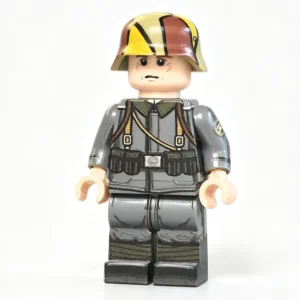
Headgear: He wears the iconic German steel helmet (Stahlhelm). It features the distinct 1918 Buntfarbenanstrich (camouflage pattern)—geometric blocks of yellow, brown, and green separated by thick black lines, designed to break up his silhouette in the muddy trenches. The side ventilation lugs (horns) are clearly visible.
-
Uniform & Gear: He is dressed in the standard Field Grey (Feldgrau) tunic. On his waist belt, he wears standard black leather rifle ammunition pouches, indicating he may carry a standard rifle when not operating the machine gun.
-
Sleeve Insignia: On his left upper arm is an oval printed badge featuring a machine gun motif, the Machine Gunner Proficiency Badge, marking him as an elite specialist.
-
Weapon: He is carrying a massive black plastic accessory representing the MG 08/15 Light Machine Gun, fitted with a side-mounted 100-round drum magazine (Trommelmagazin).
2. Right Figure: The Ammunition Bearer
-
Specific Name: WWI Imperial German Army Machine Gun Ammunition Bearer (Munitionsschütze / Patronenträger)
-
Role: A critical lifeline for the machine gun squad. His primary job was hauling incredibly heavy belts of ammunition through the mud and enemy fire to ensure the gun never ran dry during a battle.
Detailed Visual Breakdown:
-
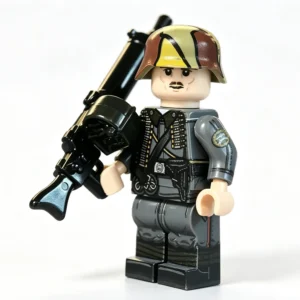
Headgear & Base Uniform: Like his squadmate, he wears the same camouflage Stahlhelm, Field Grey tunic, and Machine Gunner Proficiency Badge. He also carries an MG 08/15 accessory in this display.
-
The Defining Feature (Ammo Belts): The most distinct difference is his torso printing. He has heavy machine gun ammunition belts draped over his shoulders and chest. Carrying ammo in wooden crates was too slow for an advancing assault, so bearers wore the belts directly on their bodies.
-
Belt & Gear: Because he is weighed down by ammo belts, carrying a long bolt-action rifle was impractical. Therefore, instead of rifle ammo pouches, his waist belt features a printed black leather pistol holster on his left hip, providing him with a close-quarters self-defense weapon (like a Luger P08).
Historical Background: The Maschinengewehr-Kompagnie
These two figures perfectly capture the tactical evolution of the Imperial German Army during the brutal stalemate of the Western Front.
-
The Need for Mobile Firepower: Early in WWI, machine guns were massive, defensive weapons mounted on heavy sleds. As the German army developed Stormtrooper (Sturmtruppen) tactics for rapid trench raids, they desperately needed portable firepower that could advance with the infantry.
-
The MG 08/15 Team: The solution was the MG 08/15. While designated as a “light” machine gun, it still weighed nearly 40 lbs (18 kg) with its water-cooling jacket filled. Because of its massive weight and high rate of fire, it was never a one-man weapon. It required a highly coordinated team: a primary gunner to fire it, and several ammunition bearers to carry the heavy 7.92mm belts and spare water cans.
-
Camouflage in the Mud: By July 1918, General Erich Ludendorff officially ordered that steel helmets be painted in the geometric camouflage patterns seen on these figures. The shattered, crater-filled landscape of No Man’s Land was a visual nightmare; the sharp geometric lines helped hide the rounded shape of a soldier’s helmet from enemy snipers.
Reviews
There are no reviews yet