

Variations
-
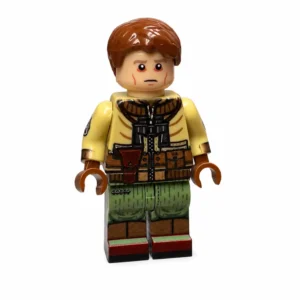
US Military Tank Commander with Binoculars (Pacific Theater) WWII – Custom Printed Brick Block Figure
$19.99 -
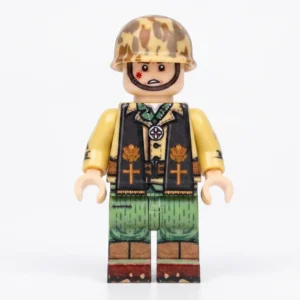
US Military Pacific Theater Chaplain (Christian) WWII – Custom Printed Brick Block Figure
$19.99 -
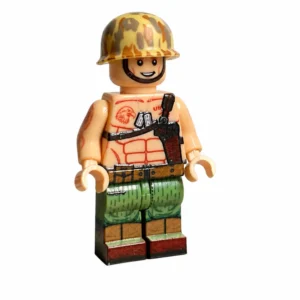
US Military Bare-Chested Gunner / Marine Artilleryman (Pacific Theater) WWII – Custom Printed Brick Block Figure
$19.99 -
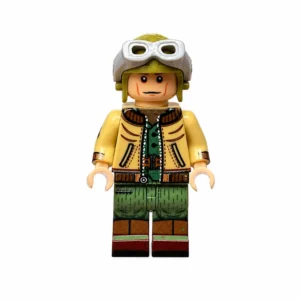
United States Military Aviator Pilot (Pacific Theater) WWII – Custom Printed Brick Block Figure
$19.99
Introduction
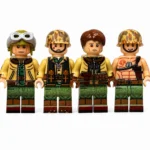
1. WWII US Military Aviator / Pilot (Pacific Theater)
-
English Name: WWII US Military Aviator / Pilot (Pacific Theater)
-
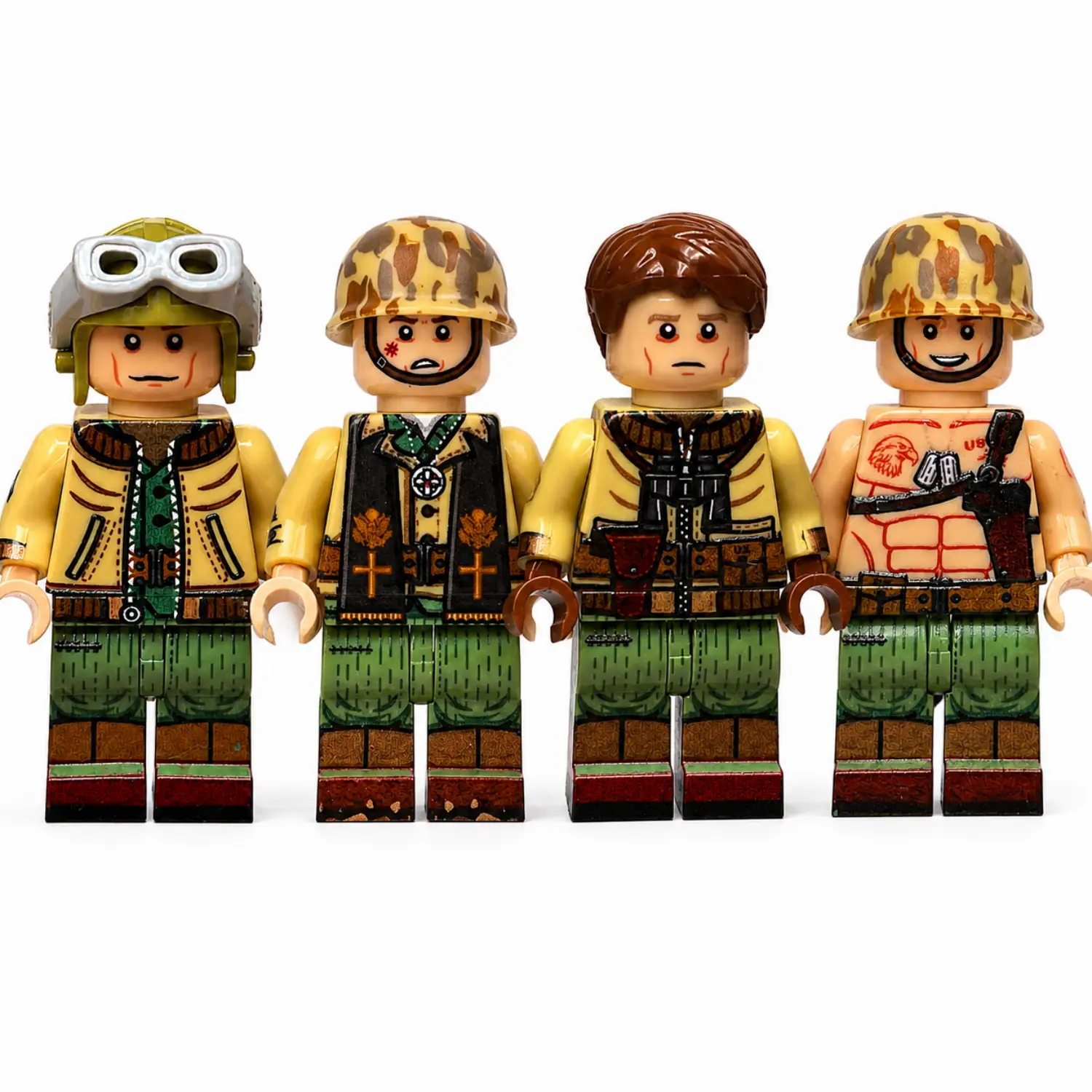
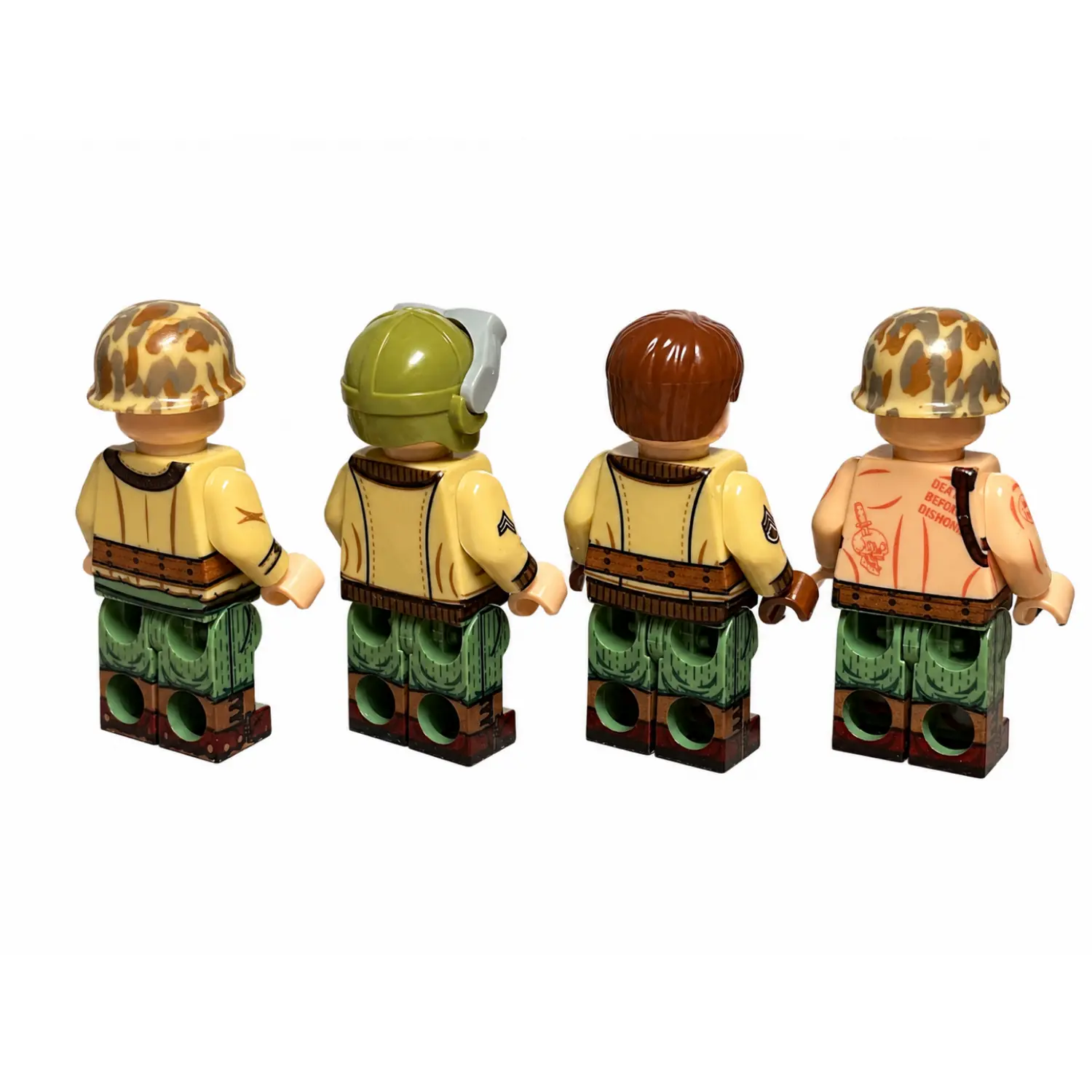
Position in Image: First from the left (Front view) / Second from the left (Back view)
Character Identification & Detailed Description This figure represents a US Naval Aviator or Army Air Forces Pilot outfitted for operations in the tropical Pacific environment.
-
Headgear & Face: He wears an olive-green canvas flight helmet with highly detailed white and grey flying goggles pushed up onto his forehead. His expression is a confident, battle-ready smirk.
-
Torso (Front & Back): He is dressed in a lightweight tan summer flight jacket worn open to reveal a dark green flight suit underneath. Intricately printed over the green suit is a heavy-duty parachute survival harness with metallic buckles. The back of the figure shows the continuation of the tan jacket and a printed enlisted rank chevron on the sleeve.
-
Legs & Footwear: He wears olive green flight trousers paired with sturdy brown leather aviator boots, essential for gripping aircraft rudder pedals.
Historical Background Pilots in the Pacific Theater operated in extreme heat and humidity, making the heavy sheepskin bomber jackets used in Europe unbearable. Instead, they relied on lightweight cotton or thin leather jackets (like the ANJ-2) and canvas flight helmets. These aviators flew legendary aircraft like the F4U Corsair and F6F Hellcat, engaging in grueling dogfights and carrier-based strikes across the vast Pacific Ocean.
2. WWII US Military Combat Chaplain
-
English Name: WWII US Military Combat Chaplain (Pacific Theater)
-
Position in Image: Second from the left (Front view) / First from the left (Back view)
Character Identification & Detailed Description This figure represents a brave US Military Chaplain, deploying directly to the front lines to provide spiritual support to troops during the brutal island-hopping campaigns.
-
Headgear & Face: He wears the standard M1 Steel Helmet featuring a “Frogskin” camouflage cover. His face is printed with prominent combat scars and blood splatters, highlighting the immense danger of his frontline deployment.
-
Torso (Front & Back): Over his standard tan uniform shirt, he wears a specialized black tactical vest or stole. The vest is prominently adorned with Gold Christian Crosses and military branch insignia on the lapels. Underneath, a silver cross pendant hangs around his neck. The back view shows his standard tan field shirt supported by canvas suspenders.
-
Legs & Footwear: He is outfitted in standard olive drab Herringbone Twill (HBT) trousers, canvas leggings, and brown roughout boots.
Historical Background During WWII, military chaplains were non-combatants who did not carry weapons, yet they endured the exact same artillery barrages and sniper fire as regular infantrymen. Chaplains provided emotional counseling, held field services, administered last rites, and frequently assisted medical personnel with the wounded. Their presence on bloody battlefields like Iwo Jima and Okinawa was vital for maintaining troop morale.
3. WWII US Military Tank Commander (with Binoculars)
-
English Name: WWII US Military Tank Commander (Pacific Theater)
-
Position in Image: Third from the left (Front and Back views)
Character Identification & Detailed Description This figure portrays a highly fatigued US Tank Commander, likely commanding an M4 Sherman or M3 Stuart tank in support of Marine infantry.
-
Headgear & Face: Displayed bare-headed with a textured brown hairpiece. His face is incredibly expressive, featuring bloodshot, red-rimmed eyes and a stoic frown, perfectly capturing extreme combat fatigue and sleep deprivation.
-
Torso (Front & Back): He wears the highly coveted light tan Winter Combat Jacket (Tanker Jacket). Printed over his chest is a pair of black M3 binoculars, a vital tool for spotting enemy positions. He is armed with an M3 leather shoulder holster (housing an M1911 pistol) strapped tightly to his chest for quick access inside a cramped tank.
-
Legs & Footwear: Standard olive green HBT trousers transition into canvas leggings (gaiters) and dark reddish-brown combat boots.
Historical Background Despite the tropical heat, the Tanker Jacket was universally loved across all WWII theaters because its snug, elastic cuffs prevented it from snagging on the cramped, dangerous interior machinery of a tank. Tank commanders frequently had to pop their heads out of the top cupola hatch with binoculars to spot deeply entrenched and camouflaged Japanese anti-tank positions, exposing themselves to deadly sniper fire.
4. WWII US Military Bare-Chested Gunner
-
English Name: WWII US Marine Bare-Chested Gunner (Pacific Theater)
-
Position in Image: Fourth from the left (Front and Back views)
Character Identification & Detailed Description This figure represents a gritty US Marine Artilleryman or Heavy Machine Gunner, stripped down to survive the sweltering jungle heat.
-
Headgear & Face: Wears the iconic Frogskin camouflage M1 helmet. His face bears a confident smile and a printed leather chin strap resting on his jaw.
-
Torso (Front & Back): The torso is bare, featuring detailed muscle printing. It is heavily customized with authentic military tattoos: a bald eagle and “US” text on his chest, and a massive Skull and Dagger tattoo on his back reading “DEATH BEFORE DISHONOR”. He wears silver dog tags and a chest-mounted M3 shoulder holster.
-
Legs & Footwear: He is secured with an M1936 pistol belt over green HBT trousers, finishing with standard leggings and brown combat boots.
Historical Background The intense heat and suffocating humidity of the Pacific islands led many Marines and artillery crews to discard their heavy uniform jackets to prevent heat exhaustion while loading heavy shells or feeding machine guns. Military tattoos were incredibly popular among troops of this era, serving as permanent badges of brotherhood, patriotism, and defiance in the face of death.
Reviews
There are no reviews yet