

Variations
-
Waffen-SS Bosnian Mountain Troop “Handschar” Veteran Rifleman (Oak Leaf Camouflage) WWII – Custom Printed Brick Block Figure
$19.99 -
Waffen-SS Bosnian Mountain Troop “Handschar” Squad Leader (Oak Leaf Camouflage Smock) WWII – Custom Printed Brick Block Figure
$19.99 -
Waffen-SS Bosnian Mountain Troop “Handschar” Sergeant Major (Summer Uniform) WWII – Custom Printed Brick Block Figure
$19.99 -
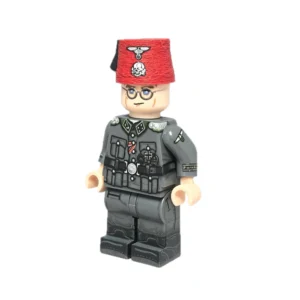
Waffen-SS Bosnian Mountain Troop “Handschar” Officer WWII – Custom Printed Brick Block Figure
$19.99 -
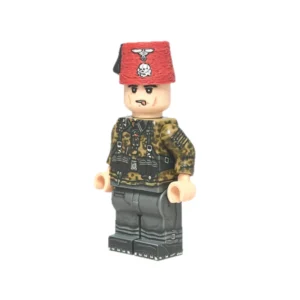
Waffen-SS Bosnian Mountain Troop “Handschar” Infantryman (Oak Leaf Camouflage Smock) WWII – Custom Printed Brick Block Figure
$19.99
Introduction
Overall Set Title & Historical Era
-
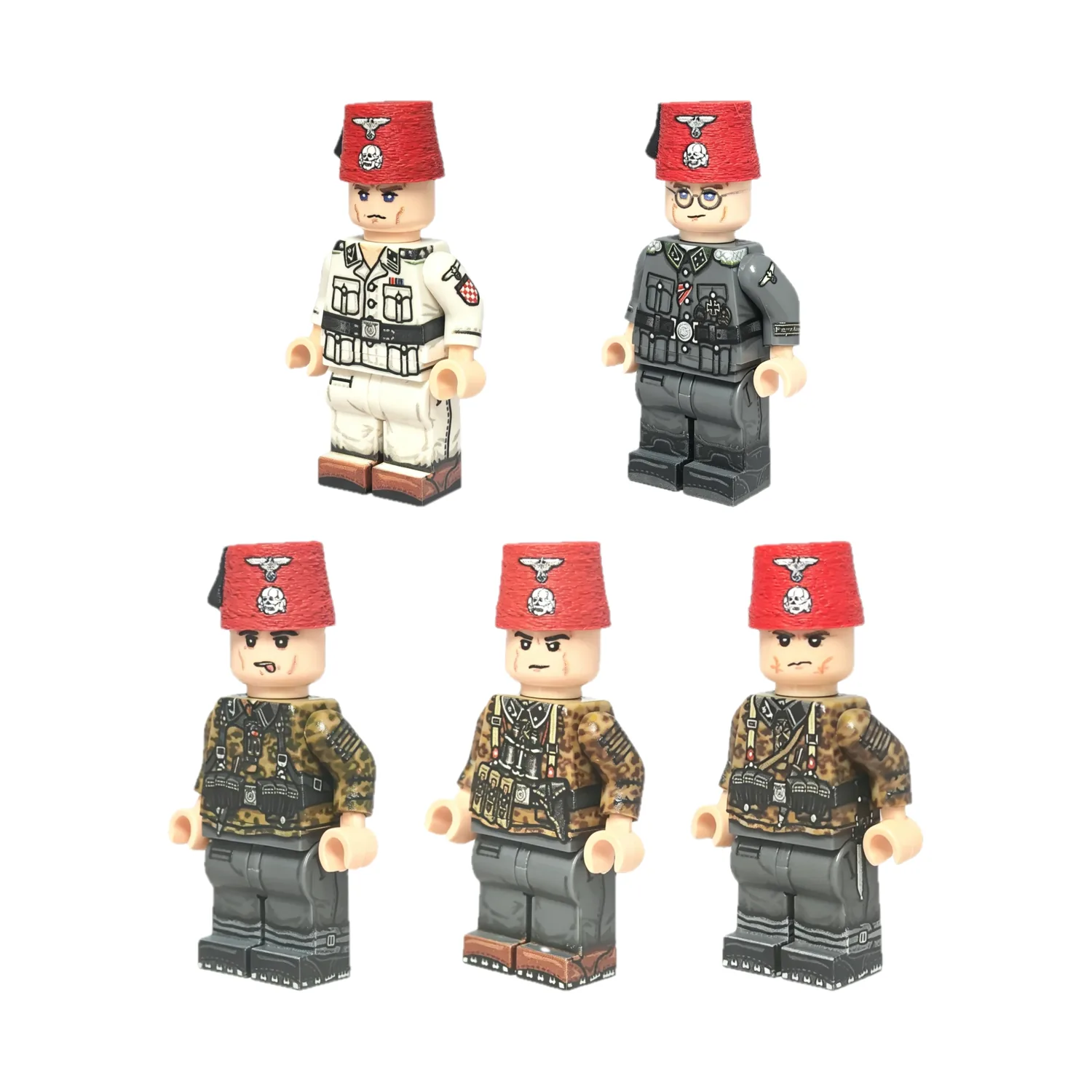
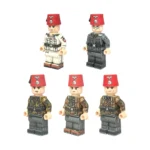
Set Title: WWII Waffen-SS Bosnian Mountain Troop “Handschar” Collection (5-Figure Set)
-
Historical Era: World War II (1939–1945)
-
Faction / Military Branch: Waffen-SS / 13th Waffen Mountain Division “Handschar” (1st Croatian)
Detailed Character Identification, Description, and Historical Background
This comprehensive custom building block set captures the unique command structure and infantry composition of the Third Reich’s first non-Germanic SS division. Deployed to the rugged Balkan theater, these troops combined standard German military hardware with distinctive cultural uniform modifications.
1. Sergeant Major in Summer Uniform (Top Left)
-
Character Identification: A Non-Commissioned Officer (NCO) wearing the lightweight summer fatigue uniform.
-
Detailed Description: This figure wears the vibrant Red Fez featuring the silver SS national eagle and Death’s Head (Totenkopf) insignia. He is dressed in a crisp white summer fatigue tunic (Drillichanzug) with an open collar revealing SS runic collar tabs. His sleeves feature highly specific printed insignia: the Croatian red-and-white checkerboard shield on the left and the mountain troop Edelweiss on the right. His white trousers break over brown, heavy-duty mountain combat boots (Bergschuhe).
-
Historical Background: The 13th SS “Handschar” Division was heavily recruited from Bosnian Muslim volunteers to fight communist Partisans in the Independent State of Croatia. The red fez was an official uniform concession to accommodate Islamic religious practices. The white summer uniform was typically reserved for hot weather garrison duty, rear-echelon roles, or formal summer walking-out dress.
2. Commissioned Officer (Top Right)
-
Character Identification: A German cadre commanding officer of the volunteer division.
-
Detailed Description: Crowned with the same Red Fez, this officer’s face print tells a distinct story, featuring round wire-rimmed spectacles and prominent academic dueling scars (Schmiss) on his cheeks. He wears a tailored, field-grey M36-style Officer’s Tunic with a dark green collar, silver officer shoulder boards, and SS collar tabs. His chest is decorated with an Iron Cross 1st Class and an Iron Cross 2nd Class ribbon. He wears field-grey riding breeches tucked into high, black officer’s jackboots.
-
Historical Background: While the enlisted men were Balkan volunteers, the officer cadre of the Handschar division was almost exclusively comprised of German Reichsdeutsche or Volksdeutsche. The dueling scars on this figure perfectly represent the aristocratic, highly educated German officers who brought their rigid military traditions into the brutal guerrilla warfare of the Yugoslavian mountains.
3. Infantryman in Oak Leaf Smock (Bottom Left)
-
Character Identification: A frontline enlisted rifleman heavily engaged in combat.
-
Detailed Description: Wearing the division’s signature Red Fez, this figure’s face print features a rugged, open-mouthed expression. He is equipped with a standard SS pull-over camouflage smock printed in the autumnal Eichenlaubmuster (Oak Leaf Pattern). Worn over the smock is standard infantry webbing, featuring dual Kar98k rifle ammunition pouches on his belt. His field-grey trousers tuck into heavily cleated, dark grey mountain combat boots.
-
Historical Background: Operating in the dense forests and steep ravines of the Dinaric Alps, these soldiers required the advanced concealment of SS camouflage. The heavy hobnailed boots were vital for traversing steep, icy rocks during sudden anti-partisan sweeps.
4. Squad Leader in Oak Leaf Smock (Bottom Center)
-
Character Identification: A veteran Squad Leader (Gruppenführer) equipped for command and close-quarters combat.
-
Detailed Description: Distinguished by a scarred, stern face print beneath his Red Fez, this NCO wears the same Oak Leaf camouflage smock but carries specialized command gear. Printed across his chest is a pair of military field binoculars. His belt features a three-cell MP40 submachine gun magazine pouch on the right and a hard-shell leather pistol holster on the left. He wears brown mountain boots equipped with printed metal cleats.
-
Historical Background: In the brutal, close-range ambush environment of the Balkans, squad leaders relied on binoculars to spot hidden guerrilla fighters. They were typically issued MP40 submachine guns instead of bolt-action rifles to provide crucial high-volume suppressive fire during sudden engagements.
5. Veteran Rifleman in Oak Leaf Smock (Bottom Right)
-
Character Identification: A highly experienced Senior Private (Sturmmann).
-
Detailed Description: This figure’s face features distinct cross-shaped combat scars beneath his Red Fez. He is outfitted in the Oak Leaf camouflage smock and wears printed rank chevrons on his left sleeve. His webbing features standard Kar98k ammunition pouches, with a printed combat knife tucked pragmatically into the left side of his belt. His heavy mountain boots are secured with canvas gaiters.
-
Historical Background: Surviving long campaigns against Tito’s Partisans required immense physical endurance. Veteran riflemen relied on their Kar98k rifles for medium-to-long range engagements across mountain valleys, while combat knives were essential tools for both wilderness survival and desperate hand-to-hand combat in the dense brush.
Reviews
There are no reviews yet